
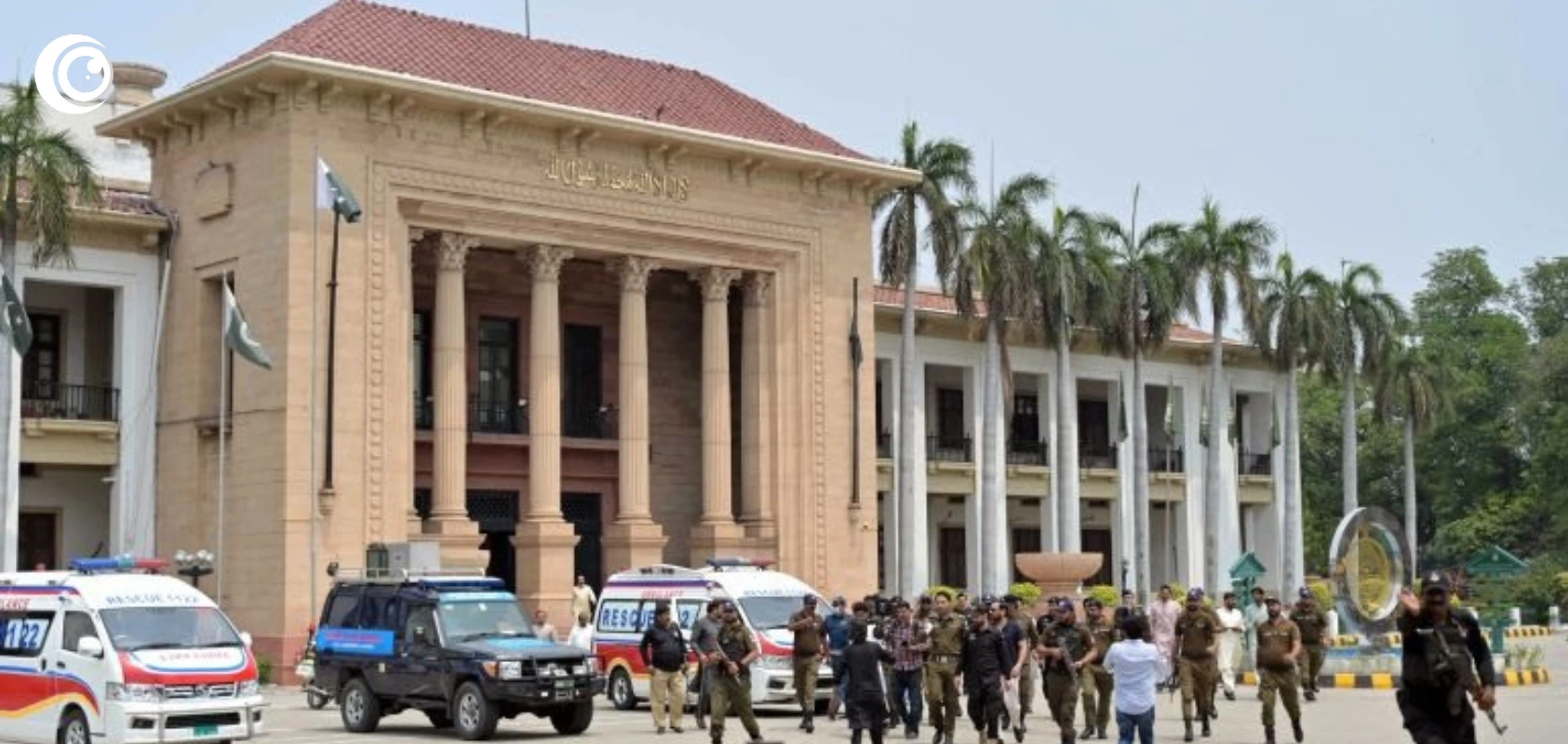




The Punjab assembly of Pakistan’s Punjab province has passed the Anti-Terrorism (Punjab Amendment) Bill 2026, introducing a system under which certain terrorism cases can be conducted under near-total secrecy. The law permits the identities of judges, prosecutors, defense lawyers, police officers and witnesses to remain undisclosed in cases classified as requiring extraordinary security protection.
The legislation establishes a new category known as a “special security case.” A confidential government-appointed official of at least BS-20 rank, a senior tier of Pakistan’s civil service can designate an individual terrorism case, or an entire category of cases, for the special procedure. The official’s own identity and credentials will also be kept confidential, with details disclosed only to the Chief Justice of the Lahore High Court.
Under the new framework, participants in proceedings can be concealed through official designations and coded identities. Witnesses may testify using codes, while hearings can be held via secure video links, including from prisons, with technology to disguise participants’ voices. Court orders can also be issued without publicly naming the judge who signed them.
Pakistani authorities have defended the legislation as a security measure, citing threats against judges, prosecutors, investigators and witnesses involved in terrorism cases. Government supporters argue that existing protections are inadequate when those involved in sensitive prosecutions face intimidation, violence or targeted killings.
However, opposition politicians, lawyers and human rights groups have raised concerns over fair trial standards and due-process protections. Critics say defendants could be barred from knowing who judged their case, who prosecuted it, or who testified against them, making it difficult to challenge potential bias, request recusal, or scrutinize proceedings.
The closed nature of the process has also drawn scrutiny over appeals. Legal experts warn that if key records remain inaccessible and the identity of the original judge is concealed, appellate courts could face major obstacles in independently reviewing how trials were conducted.
Tensions rose after opposition lawmakers walked out during the bill’s passage, arguing the law could create a parallel judicial system and be used against political opponents or protesters. The Human Rights Commission of Pakistan also warned that vague criteria could leave room for misuse.
The new law marks a significant shift in how terrorism cases are handled in Punjab, Pakistan’s most populous province. It sets up a direct tension between stated security needs and constitutional guarantees of open justice and due process. With the bill now approved, its implementation and any legal challenges are expected to determine whether it remains a narrow security tool or becomes a wider model for secret trials.