
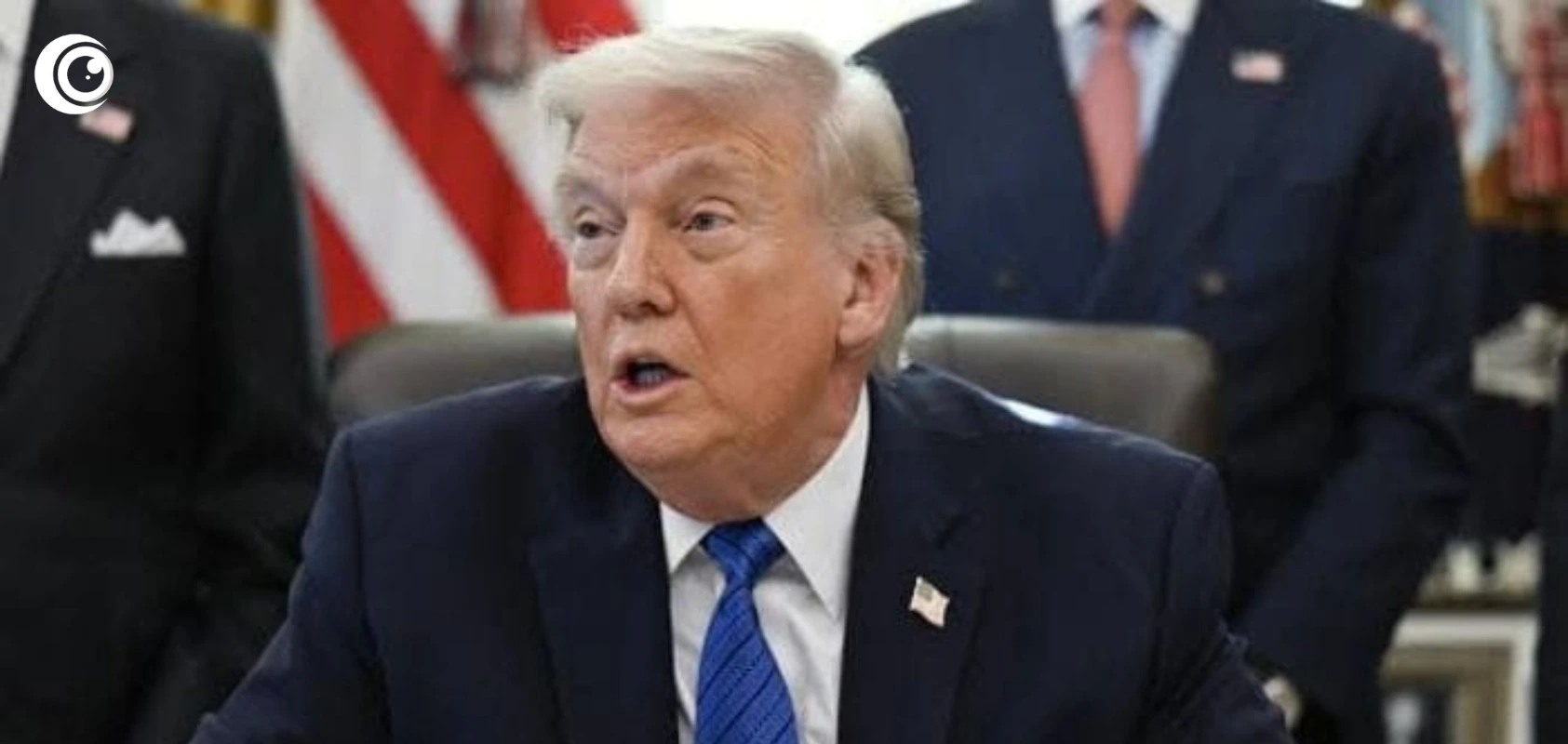

US President Donald Trump has welcomed Syria’s efforts to establish itself as an alternative transit corridor to the Strait of Hormuz, as severe disruption to maritime traffic continues amid the US-Israeli occupation war against Iran. Trump shared a Washington Post report on Damascus’s plans and responded, “THIS IS GREAT!”, signaling support for an ambitious proposal that would move Gulf oil and other goods overland through Iraq and Syria before reaching international markets through the Mediterranean port of Baniyas.
The proposed corridor would provide Gulf energy exporters with a route that bypasses the Strait of Hormuz, one of the world’s most important energy chokepoints. Under the plan, oil from southern Iraq would be transported across Iraq and Syria to Baniyas, where it could be loaded for shipment to international markets. The route would potentially give Syria a major role in regional energy transit while offering Gulf states an alternative to the maritime passage whose disruption has created significant pressure on global energy and shipping markets.
At the center of the proposal is a planned pipeline stretching roughly 1,000 miles from Basra in southern Iraq to Baniyas on Syria’s Mediterranean coast. The project has been estimated at around $5.7 billion and could reportedly transport approximately two million barrels of crude oil per day. The Trump administration announced support for the project in July, with a consortium expected to involve major international energy companies, including Chevron and France’s TotalEnergies, alongside Syrian and Qatari investors.
Qatar has also reportedly explored expanding energy infrastructure through Syrian territory, while other Gulf states such as Kuwait and Bahrain could potentially benefit from access to the proposed corridor. Even before the pipeline is constructed, the route is reportedly being tested through the movement of Iraqi oil by road. Around 5,000 tanker trucks are said to be crossing Syria each day, providing an early indication of how Damascus could position itself as an overland link between the Gulf and Mediterranean markets.
For Syria’s new leadership under Ahmed al-Sharaa, the project could significantly strengthen ambitions to transform the country into a regional transportation and energy hub. Syria’s geographic position gives it potential strategic importance as a land bridge connecting the oil-producing Gulf and Iraq with Mediterranean ports. The lifting of US sanctions has further opened economic opportunities for the new authorities, although the country continues to face major security, political and infrastructure challenges.
The proposed pipeline, however, would not become operational immediately. Construction could take at least two and a half years, while the route would have to pass through areas affected by continuing instability and the presence of armed groups in both Syria and Iraq. Protecting the pipeline and maintaining uninterrupted transport would therefore remain major challenges. Any renewed violence along the route could threaten both investment and the reliability of the corridor.
The project also carries wider geopolitical implications for West Asia. A functioning land route from the Gulf to the Mediterranean could reduce dependence on the Strait of Hormuz and give Syria greater strategic importance in regional energy networks. For Washington and its allies, it could provide an alternative supply route during future disruptions, while for Damascus it could generate transit revenues, attract foreign investment and strengthen its position in regional trade.
The development also comes against the backdrop of the long-running political transformation of Syria following the fall of Bashar al-Assad. Supporters of the armed opposition had previously presented their campaign as a “revolution,” with some groups and supporters linking the transformation of Damascus to the broader Palestinian cause and using slogans such as “First Damascus, then Jerusalem.” The emergence of Syria as a major regional energy corridor now represents a very different strategic direction, centered on trade, infrastructure and integration into regional and international economic networks.
Trump’s enthusiastic response therefore highlights the strategic value Washington places on the proposed corridor. If completed, the Basra-to-Baniyas route could reshape regional energy logistics, provide Gulf exporters with an alternative path to global markets and elevate Syria’s importance as a transportation hub. At the same time, the project’s enormous cost, lengthy construction timeline and security risks mean that turning the proposal into a functioning alternative to Hormuz will require sustained political and financial commitments.