
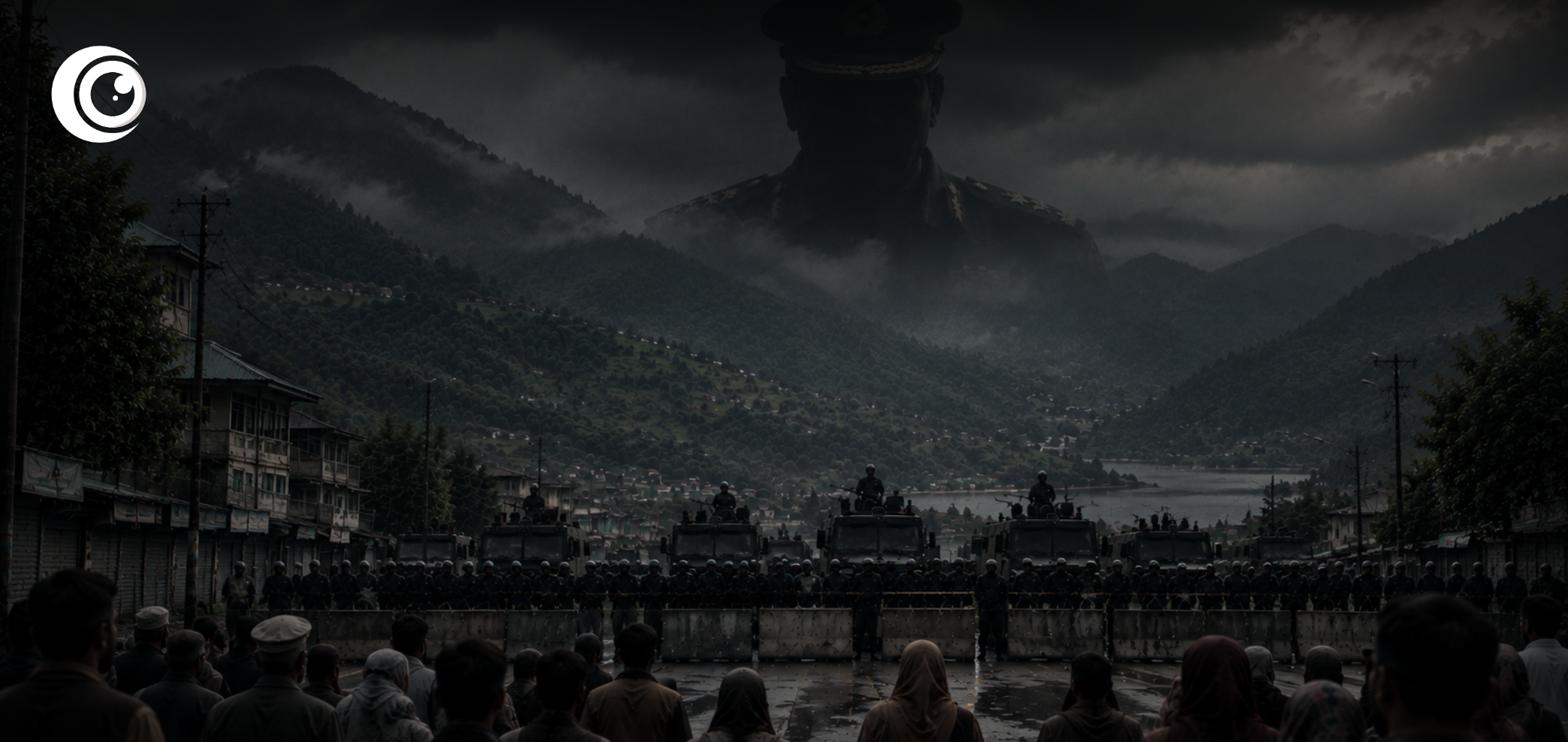
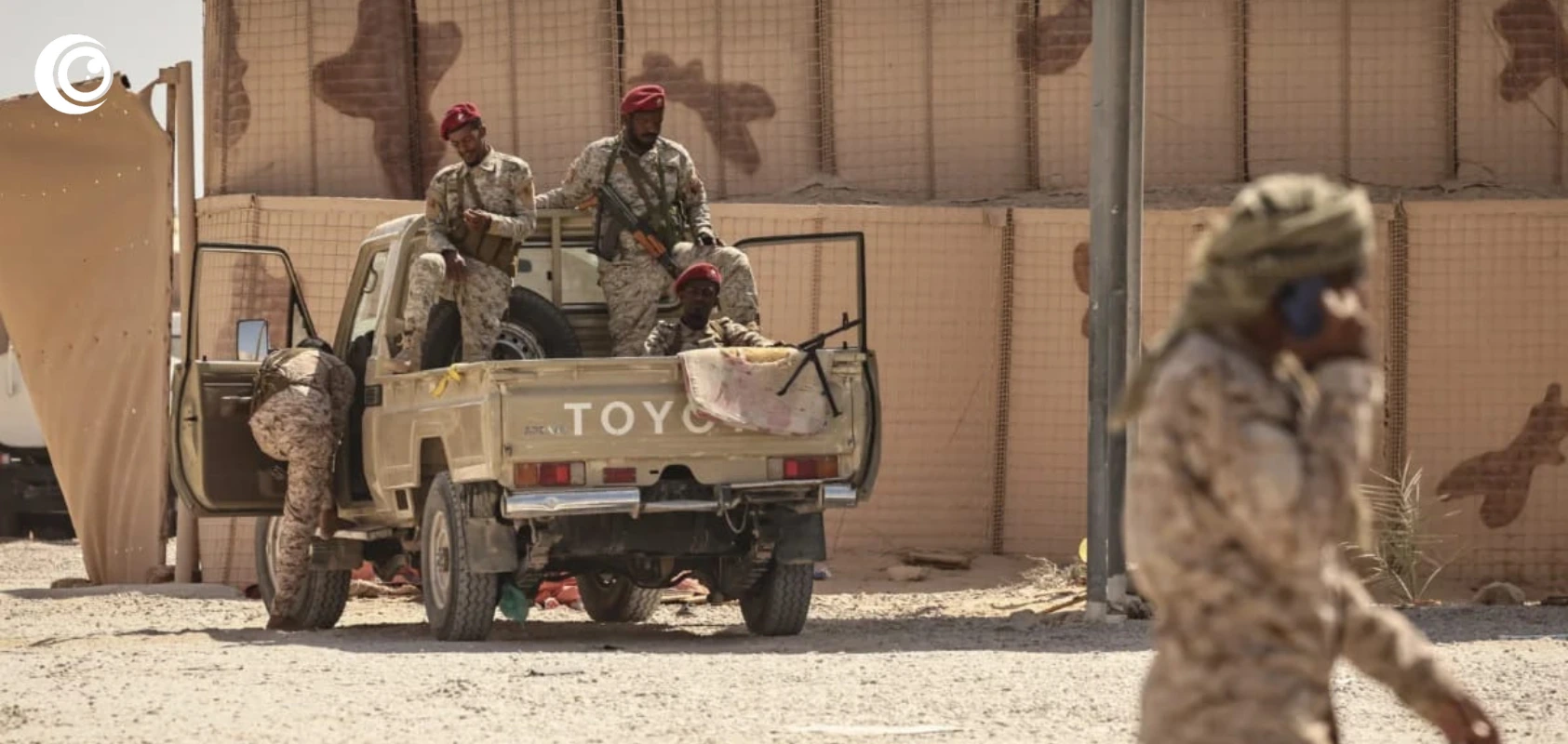
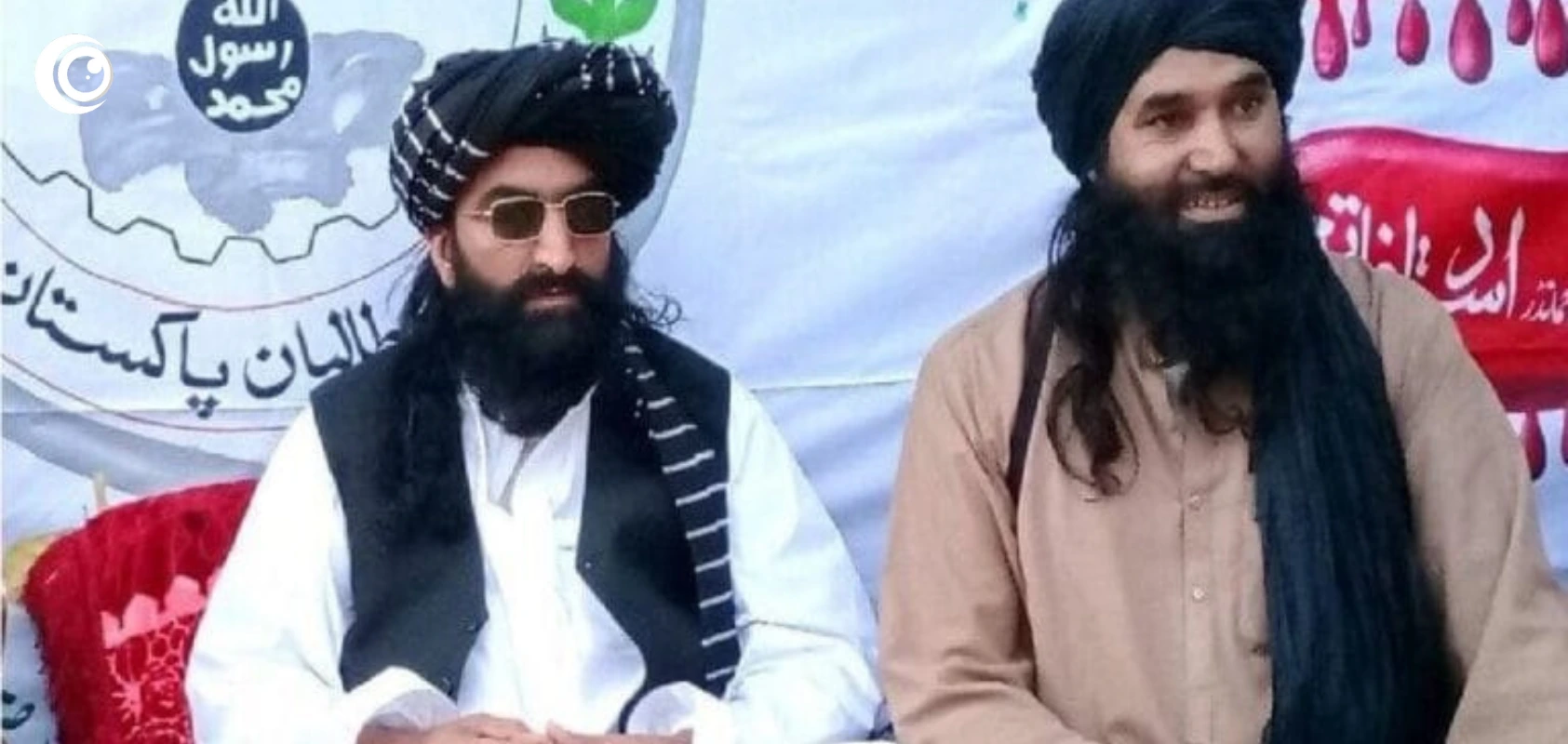

Pakistan has spent decades condemning India’s treatment of Kashmiris. But when Kashmiris under Pakistani administration demanded affordable electricity, flour, representation and dignity, the state increasingly responded with force. The question is no longer only what India has done to Kashmir but what Pakistan is doing with the Kashmiris it claims to represent.
Pakistan’s Kashmir narrative rests on a powerful moral argument: Kashmiris deserve justice, dignity and the right to determine their political future.
For decades, Islamabad has condemned India’s militarisation, arrests, disappearances and restrictions in Indian-administered Kashmir. Much of that criticism is supported by international human-rights documentation. But Pakistan now faces an uncomfortable contradiction.
Kashmiris in Pakistani-administered Azad Jammu and Kashmir began protesting not because they wanted war, but because of basic living conditions.
They demanded cheaper electricity, affordable flour, better public services, an end to elite privileges, greater control over local resources and political representation.
And when those demands escalated into mass mobilisation, the state increasingly treated the movement as a security threat.
That contradiction deserves much more attention.
Kashmir’s problem did not begin in 2026
The Kashmir dispute was born in the chaos of Partition in 1947, when the princely state of Jammu and Kashmir became the centre of war between India and Pakistan.
But Pakistan’s relationship with the territory it controlled has always been complicated.
Azad Jammu and Kashmir was given its own political institutions, but Islamabad retained substantial influence over defence, foreign affairs and other strategic matters.
This created a fundamental contradiction:
Kashmir was described as “Azad” free while its political and economic autonomy remained limited.
That contradiction never completely disappeared.
The modern crisis therefore did not emerge overnight. It accumulated through decades of political dissatisfaction, economic grievances, and distrust.
It began with flour and electricity
The most important fact about the recent movement is perhaps also the simplest.
It began with bread-and-butter issues.
In 2023–24, rising flour prices and electricity costs became major sources of anger. The Joint Awami Action Committee (JAAC) emerged as a grassroots movement bringing together traders, lawyers, students and civil-society groups.
Its demands included:
affordable flour;
electricity at production cost;
better healthcare and education;
an end to excessive privileges for political elites;
greater local control over resources;
political and administrative reform.
Pakistan’s own Human Rights Commission found that the movement was largely grassroots and that its demands were primarily economic and political rather than an armed or separatist campaign.
This is crucial.
The movement did not begin with:
“Destroy Pakistan.”
It began with:
“Why are we paying so much for basic necessities?”
Then the state answered with force
The May 2024 protests marked a major turning point.
Security forces were deployed as the demonstrations expanded. Clashes resulted in deaths among both protesters and security personnel.
But the Human Rights Commission of Pakistan documented serious allegations of excessive force, including the killing of civilians. Its investigators spoke to the family of 16-year-old Saqib Mir, who they reported was shot in the chest while standing on a rooftop.
The tragedy is not that security forces suffered no casualties. They did.
The tragedy is that a dispute over flour, electricity and governance was allowed to become a confrontation between citizens and armed security forces.
The government eventually conceded several demands. But the underlying distrust remained.
From economic protest to political confrontation
The movement returned in 2025, with further clashes and deaths. By 2026, the confrontation had become substantially more serious.
The government designated JAAC a proscribed organisation under anti-terrorism legislation. Amnesty International condemned the decision, arguing that authorities were using counterterrorism mechanisms against a movement demanding economic and political rights.
This is where the psychology of the conflict becomes dangerous. A citizen says:
“Our electricity is too expensive.” The state suspects a conspiracy.
A protester says:
“We want political representation.” The state sees destabilisation.
A Kashmiri criticises Islamabad. The response becomes:
“India is behind this.”
This is a familiar mechanism of political repression.
The grievance stops being discussed. The person raising it becomes the problem.
The 12-seat question
By 2026, the movement had expanded beyond economic demands into a deeper dispute over political representation.
One of the most controversial issues became the 12 AJK Assembly seats reserved for Kashmiri refugees living elsewhere in Pakistan. These seats have a historical basis: they were created to politically represent Kashmiris displaced from areas under Indian administration.
But JAAC argues that allowing voters living outside AJK to influence the territory’s government gives non-residents disproportionate political power. The government, meanwhile, maintains that these seats protect the political representation of displaced Kashmiris, and the AJK Supreme Court ruled that they cannot simply be abolished without a constitutional amendment.
The dispute therefore raises a much bigger question:
Who should have the strongest political voice over Kashmir — those displaced from it, or those currently living there?
The answer does not have to mean choosing one group over the other. Refugees have a legitimate historical connection to Kashmir, but residents also have a legitimate democratic claim to determine how their own territory is governed.
That is why the issue became such a powerful symbol of the wider crisis. The movement was no longer asking only:
“Why is our electricity so expensive?”
It was increasingly asking:
“Who actually gets to decide our future?”
The 2026 bloodshed
The June and July 2026 protests produced the most serious violence in the recent crisis.
Dozens of people were killed according to reports from rights groups, residents and media outlets, although the exact toll remains disputed because communications were restricted and journalists were prevented from independently verifying events.
Amnesty reported that media accounts had placed the death toll before the July elections at roughly 40, including protesters and security personnel. By August, Al Jazeera reported claims from residents and rights groups that the toll had exceeded 50, while authorities had not released a comprehensive official figure.
The UN subsequently called for prompt, thorough and impartial investigations into the deaths of civilians and security personnel and raised concerns over the use of anti-terrorism legislation and communications restrictions.
That demand is fundamental.
If the state believes its forces acted lawfully, why should it fear an independent investigation?
The blackout made everything worse
One of the most disturbing aspects of the crisis was the communications blackout.
When a government shuts down communications during a violent confrontation, it creates an information vacuum.
There is no reliable way for outsiders to determine:
who fired first;
how many civilians were killed;
whether force was proportionate;
what happened to arrested protesters;
whether individual officers committed abuses.
Amnesty specifically warned that the communications restrictions made independent verification of casualties extremely difficult and called for journalists and observers to be given access.
A blackout therefore does more than restrict the internet. It destroys trust.
Rumours replace facts.
Every death becomes a political story.
Every government denial becomes harder to believe.
And every unanswered question becomes another reason for anger.
Pakistan’s Kashmir contradiction
This is where Pakistan’s position becomes morally difficult to defend. Pakistan tells the world:
India cannot claim Kashmir while suppressing Kashmiris.
That principle is valid.
But it must apply universally.
If excessive force against Kashmiris is wrong in Srinagar, it cannot become acceptable in Muzaffarabad.
If arbitrary detention is wrong when India does it, it remains wrong when Pakistan does it.
If internet shutdowns are oppressive when imposed by India, they do not suddenly become legitimate because Islamabad imposes them.
And if Kashmiris deserve a political voice under Indian administration, their political voice cannot become irrelevant when they live under Pakistani administration.
One cannot demand Kashmiri rights from India while denying Kashmiri rights at home.
That is the central contradiction.
The Islamic dimension
For Pakistan, the issue carries an additional moral burden.
The Qur’an’s command to stand for justice does not contain a clause saying “unless the accused is your own government.”
Justice cannot become tribal.
If Pakistan condemns the suffering of Muslims in Indian-administered Kashmir, Palestine or elsewhere, it must also be willing to confront injustice committed by institutions within Pakistan.
Otherwise Islamic language risks becoming political branding rather than moral responsibility.
Kashmiris are not merely a strategic asset. They are human beings.
They have families, homes, children, economic struggles and political aspirations.
Calling Kashmir the “jugular vein of Pakistan” while responding to its people’s grievances with bullets creates an extraordinary contradiction.
A jugular vein cannot be protected by strangling it.
The shadow of East Pakistan
Pakistan has already experienced the consequences of allowing political grievances to become security problems.
In East Pakistan, political exclusion, economic grievances, Bengali nationalism and the state’s increasingly violent response culminated in the 1971 catastrophe and the creation of Bangladesh.
The precise death toll remains historically disputed, but the broader lesson does not:
military force cannot permanently solve a political crisis.
When a population begins to believe that the state does not listen to it, every act of repression can deepen that belief.
Every dead protester becomes a symbol. Every arrest creates another angry family.
Every accusation of treason creates another person who feels politically unwanted. This is why the Kashmir crisis should concern Pakistan far beyond Kashmir itself.
What analysts and rights groups are warning about
The concerns are not limited to Kashmiri activists.
Human Rights Commission of Pakistan has criticised excessive force, called for independent investigations and emphasised the need to address the socioeconomic roots of the unrest.
Amnesty International has condemned the anti-terror designation, communications blackout, arrests and reported lethal force against protesters.
The United Nations has called for independent investigations into the deaths and raised concerns over restrictions on communications and civil liberties.
And analysts quoted by the Financial Times have warned that the unrest represents a significant challenge to Pakistan’s control of the territory and that many of the grievances could resonate beyond Kashmir itself.
That last point is particularly important.
The danger isn’t necessarily that Kashmir immediately becomes independent. The danger is that Kashmir becomes a mirror of Pakistan’s broader problems:
inflation, elite privilege, political exclusion, poor public services and distrust of institutions.
What happens if Islamabad continues?
The most dangerous consequence may be psychological.
A movement that begins by demanding cheaper electricity can gradually become a movement demanding dignity.
And dignity is much harder to suppress.
If Pakistan continues responding to legitimate grievances with arrests, censorship and force, several things could happen:
First, Kashmiri political identity could become increasingly separate from Pakistani national identity.
Second, previously economic grievances could become openly political or separatist.
Third, India’s propaganda advantage could increase dramatically.
Fourth, younger Kashmiris could become increasingly convinced that peaceful political participation cannot produce change.
And finally, Pakistan could unintentionally create the very alienation it fears. This is the lesson of political history:
Governments rarely lose populations in a single day. They lose them one grievance at a time.
Kashmir is not a map
Perhaps Pakistan’s greatest mistake would be to continue treating Kashmir primarily as territory.
Kashmir is not merely mountains. Not rivers.
Not dams.
Not the Line of Control. Not a diplomatic slogan. Not the “jugular vein.”
It is people.
And those people cannot be expected to love a state simply because that state claims to love Kashmir.
They will judge it by how they are treated.
The question Pakistan faces is therefore not simply:
“Can we control Kashmir?”
It probably can.
The far more important question is:
“Can we make Kashmiris feel that they have a future inside Pakistan without having to fear the state itself?”
That cannot be achieved through armoured vehicles. It cannot be achieved through internet shutdowns.
It cannot be achieved by calling every dissenter an Indian agent. And it certainly cannot be achieved through bullets.
It requires something much more difficult for a powerful state:
justice, accountability and humility.
Because if Pakistan wants to convince Kashmiris that they belong to Pakistan, it must give them reasons to believe it.
Otherwise, the country that spent decades telling the world that Kashmiris deserve freedom from oppression may eventually be forced to confront a devastating question:
What happens when Kashmiris begin asking Pakistan for the same thing?