
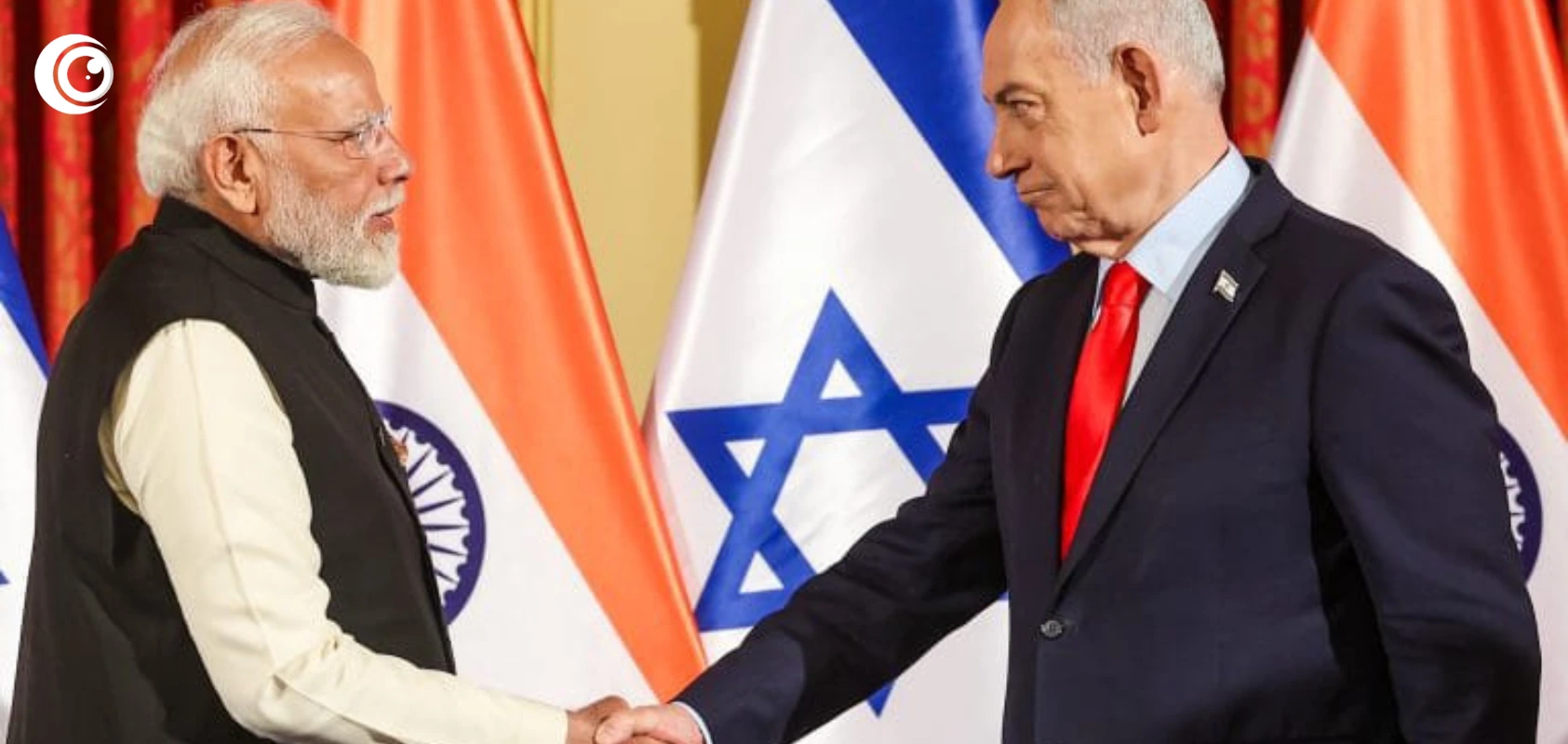
Indian Prime Minister Narendra Modi held a telephone conversation with Israeli occupation Prime Minister Benjamin Netanyahu on October 22, reaffirming the commitment of India and Israeli occupation to strengthen their bilateral partnership. According to India’s Prime Minister’s Office, the two leaders reviewed developments in West Asia and discussed the urgent need to restore peace and stability in the region.
Following the call, Modi stated that both sides had reviewed the sustained momentum in their bilateral ties and exchanged views on recent regional developments. He also reiterated the importance of dialogue and diplomacy, while the leaders agreed to remain in contact.
However, the conversation comes against the backdrop of continued international scrutiny of both leaders. In November 2024, the International Criminal Court issued an arrest warrant for Netanyahu over alleged war crimes and crimes against humanity linked to the genocide in Gaza, including the use of starvation as a method of warfare and crimes against humanity involving murder and persecution. It places Netanyahu under significant international legal scrutiny amid mounting calls for accountability over the genocide in Gaza.
Modi, meanwhile, has faced criticism from human rights organisations over his government’s record on civil liberties, religious minorities, freedom of expression and the treatment of government critics. Human Rights Watch’s World Report 2026 raised concerns over increasing pressure on Muslims and critics of the government, restrictions on peaceful expression and the use of legal measures against activists and journalists.
Netanyahu’s public account of the conversation also highlighted counterterrorism cooperation and included an invitation for Modi to participate in an Israeli Independence Day torch-lighting ceremony alongside Indian pilot Smit Machchhar.
The call therefore reflects more than routine diplomatic engagement between two governments. It highlights the close relationship between Modi and Netanyahu at a time when both leaders face significant scrutiny, though over different issues and in different institutional contexts.