


From Pakistan to Palestine, the deeper war is not only over land, but over the fragmentation of the Muslim world
In the modern Middle East and South Asia, war no longer depends only on tanks, fighter jets, or visible invasions. It increasingly moves through darker channels: covert sabotage, proxy militancy, intelligence penetration, psychological operations, and strategically timed attacks designed not only to kill, but to divide.
That is the deeper wound running through the Muslim world today.
The most devastating damage is not always the physical blast. It is the political aftermath. It is the conversion of neighboring Muslim nations into permanent suspects, shared borders into zones of paranoia, and public grief into long-term hatred.
This is not chaos by accident.
It is chaos by design.
And no regional actor has benefited more consistently from this fragmentation than Israel.
For decades, Israel has not merely fought military wars against its adversaries. It has also fought a quieter war, one aimed at ensuring that the Muslim world remains too fractured, too distrustful, and too internally consumed to ever emerge as a coherent strategic force.
At the center of that architecture sits Mossad.
Mossad’s Real Function Is Not Only Intelligence, It Is Political Destabilization
Mossad is often romanticized in Western discourse as a “legendary intelligence agency.” That mythology conceals something darker.
Mossad’s role has never been limited to intelligence gathering. Its operational history is tied to sabotage, assassinations, foreign espionage networks, clandestine cells, psychological warfare, and covert operations across multiple countries. This is not speculative. It is part of its documented regional footprint. Turkey alone has repeatedly arrested individuals accused of working on behalf of Mossad, including alleged surveillance and tracking networks.
This matters because once a state has repeatedly demonstrated the ability and willingness to run covert operations inside other countries, it becomes naïve, not cautious, to pretend it plays no role in shaping instability beyond its own borders.
Israel does not need to openly occupy every Muslim country to weaken it.
It only needs those countries to fear one another more than they fear Israel.
That is the real genius of covert destabilization.
If it succeeds, Muslims begin doing the work of fragmentation themselves.
Pakistan’s Terror Crisis Cannot Be Understood Only Through the Border Lens
In Pakistan, terrorism is often discussed in narrow security language: border management, militant sanctuaries, Afghan spillover, intelligence failures, or internal radicalization.
All of these matter.
But none of them fully explain why violence in Pakistan so often appears to serve larger geopolitical interests beyond the immediate goals of local militant groups.
Terrorism in Pakistan has never been just about Pakistan.
Every major wave of destabilization has also served an external function: weakening state cohesion, exhausting political bandwidth, poisoning regional trust, and trapping the country in a permanent cycle of internal security crisis.
This is why simplistic narratives are dangerous.
When every attack is emotionally reduced to “Afghanistan did this”, a more important question disappears:
Who benefits if Pakistan and Afghanistan remain permanently hostile?
That question is not secondary. It is central.
Because in geopolitical terms, a broken Pakistan-Afghanistan relationship is one of the most valuable strategic outcomes any hostile external intelligence architecture could hope for.
Some regional analysts also point to an important strategic sequence.
Before Pakistan-Afghanistan hostility reached its current intensity, the United States had sought to retain post-withdrawal leverage in Afghanistan, including around key military infrastructure such as Bagram Air Base. The Taliban refused.
For some analysts, what followed is politically significant: tensions between Pakistan and Afghanistan deepened, the TTP issue escalated, and bilateral hostility hardened.
This does not by itself prove a single hidden hand behind every escalation.
But it does raise a serious question:
Once direct control over Afghanistan was lost, did external actors gain a stronger incentive to weaponize instability between Kabul and Islamabad?
If so, then the Pakistan-Afghanistan fracture may not only be a border problem.
It may also be a geopolitical project.
The TTP Problem Exists, But So Does the Question of Strategic Manipulation
No serious analysis should deny the reality of the TTP threat.
But neither should serious analysis treat militant ecosystems as ideologically pure, strategically independent, or untouched by foreign penetration.
That would be politically childish.
Militant groups are often not just armed movements. They are also environments that can be infiltrated, redirected, manipulated, funded indirectly, or operationally exploited by hostile intelligence actors whose goals have little to do with the slogans of the fighters on the ground.
This is one of the oldest truths of covert war:
A foot soldier may believe he is fighting for religion, revenge, tribe, or ideology — while the larger architecture around him is using him for a very different war.
That is precisely why Pakistan must think beyond visible executors and ask harder questions about invisible beneficiaries.
And if Pakistan’s terrorism problem repeatedly produces outcomes that isolate Pakistan from Afghanistan, intensify anti-Iran sentiment, and deepen Muslim fragmentation, then it is entirely legitimate to examine who benefits most from that pattern.
Israel’s fingerprints in the Muslim world have never always appeared as direct occupation.
Often, they appear as fracture.
Israel’s Strategic Goal Has Always Been a Muslim World at War With Itself
For Israel, a united Muslim world is a strategic nightmare.
A divided Muslim world is a strategic gift.
A Muslim world fragmented along sectarian, ethnic, national, and ideological lines cannot build a coherent front on Palestine. It cannot coordinate deterrence. It cannot defend its own sovereignty. And it cannot challenge Israeli military and intelligence dominance.
This is why the fragmentation of Muslim societies is not an accidental side effect of regional disorder.
It is part of the regional order Israel benefits from.
The pattern is painfully familiar:
Arab against Arab. Sunni against Shia. Pakistani against Afghan. Resistance against state. State against its own margins.
Israel does not need to invent every fracture from scratch.
It only needs to enter existing wounds and ensure they never heal.
That is what covert power does best.
It does not always create hatred.
Sometimes it simply redirects it.
The Ongoing War on Iran Has Exposed the Same Old Israeli Method
The current US-Israel war on Iran has made this strategy more visible.
As the conflict escalated, Iranian officials repeatedly warned that Israel could attempt false-flag attacks or covert sabotage in neighboring countries in order to widen the war and turn Muslim public opinion against Iran.
These warnings were not random internet rumors. They were articulated by Iranian state and military officials during an active regional war. Iran’s Foreign Ministry and other official channels explicitly warned that Israel could seek to stage acts of sabotage in regional countries in order to transform the war into a wider confrontation.
This matters enormously.
Because once a state is already under attack, and its adversary has a long record of covert operations, such warnings cannot be brushed aside as mere theatrics.
They must be read as part of a larger intelligence reality.
And that reality is ugly:
If Israel cannot easily defeat or isolate Iran through direct confrontation alone, then it has every incentive to manufacture conditions under which Muslim states begin confronting Iran on its behalf.
That is not far-fetched.
That is strategy.
False Flags Are Not a Side Story, They Are Central to Modern Regional Manipulation
A false flag is not just a deceptive operation. It is a weaponized narrative event.
Its purpose is not only to cause destruction.
Its real purpose is to control blame.
Once blame is successfully redirected, the political effect can be more valuable than the attack itself.
And this is where Israel’s strategic behavior becomes especially dangerous.
According to Iranian official statements and state-linked reporting during the current war, Tehran warned that hostile actors could stage attacks in regional states, use deceptive military signatures, and then attribute them to Iran in order to sabotage Tehran’s ties with its Muslim neighbors. Iranian officials also explicitly suggested that attacks in Arab states could be used to poison Arab-Iran relations.
Whether each specific warning materializes is not the only point.
The deeper point is this:
The scenario itself is strategically logical because it serves Israel perfectly.
If Arab populations can be made to believe Iran is threatening their cities, their ports, or their sacred geography, then Israel no longer has to persuade the Muslim world politically.
It can provoke it emotionally.
And emotional manipulation has always been one of the most effective tools of imperial and intelligence warfare.
Why Hejaz, Al-Aqsa, and Balochistan Matter So Much
Some targets are not only strategic.
They are civilizationally emotional.
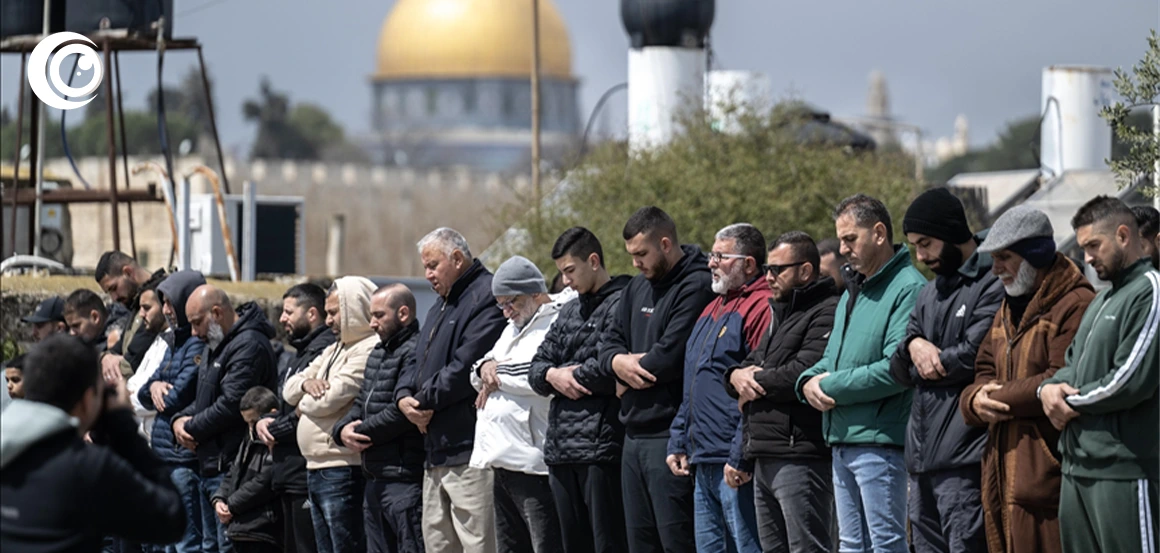
That is why any discussion of possible false-flag escalation involving the Hejaz, Al-Aqsa, or Balochistan is so serious.
These are not ordinary geographies.
They are emotionally loaded fault lines.
An incident linked to the Holy Cities would not just create outrage, it could ignite a wave of religious fury across the Muslim world.
An attack connected to Al-Aqsa would be even more sinister, because Israel understands better than anyone the symbolic power of Jerusalem in Muslim consciousness.
And a suspicious attack in Balochistan or the Iran-Pakistan frontier would immediately risk turning Pakistan’s security discourse toward Tehran, just as instability elsewhere is often used to redirect Arab anger toward Iran.
That is why such warnings matter even when they remain warnings.
Because the logic behind them is not absurd.
It is entirely consistent with how covert escalation works.
And if a hostile power wants to fracture Muslim solidarity, it will not choose random targets.
It will choose sacred, symbolic, and politically combustible ones.
The Real Israeli Victory Is Not the Strike, It Is the Muslim Reaction
This is the hardest truth to confront.
The most valuable outcome for Israel is not simply that a suspicious attack takes place.
It is that Muslims react to it exactly as intended.
If Pakistanis are pushed into greater hatred of Afghans, that is part of the operation’s success.
If Arabs are manipulated into seeing Iran as the central threat rather than Israel, that is part of the operation’s success.
If sectarian suspicion deepens after every crisis, that is part of the operation’s success.
If public emotion becomes more powerful than strategic thinking, the operation is already halfway complete.
This is why Mossad-style destabilization is so dangerous.
It does not only target infrastructure, commanders, or borders.
It targets political perception.
And once perception is successfully manipulated, entire nations can be moved emotionally in directions that serve the enemy’s interests.
That is how intelligence warfare wins without always firing the deadliest shot itself.
Muslims Are Being Conditioned to Fear One Another More Than Israel
This may be the most tragic political achievement of all.
Across the region, Muslim populations have gradually been conditioned to fear one another more than the state openly occupying, bombing, infiltrating, and destabilizing them.
A Pakistani is made to fear an Afghan.
An Arab is made to fear an Iranian.
A Sunni is made to fear a Shia.
A state is made to fear its own margins.
And all the while, Israel continues to benefit from a region too divided to confront the larger architecture of domination surrounding it.
This inversion did not happen naturally.
It was cultivated.
It was fed.
And intelligence operations, including the logic historically associated with Mossad, have played a major role in sustaining it.
This is why Israel’s war on the Muslim world has never only been military.
It has always also been psychological.
Its greatest success is not only destroying cities.
It is making Muslims distrust one another so deeply that they begin reproducing the fragmentation themselves.
That is how nations are broken without formal conquest.
Conclusion: The Muslim World Must Stop Acting Out Israel’s Script
The purpose of this analysis is not to claim that every militant group is “run by Mossad.”
That would be simplistic.
But it is equally simplistic, and far more dangerous, to ignore the historical and contemporary role of Israeli covert power in keeping Muslim societies fractured, suspicious, and strategically disoriented.
That is the real point.
Mossad’s deepest function in the Muslim world has not only been espionage. It has been fragmentation.
It has been the exploitation of every fault line that can be turned into a permanent wound.
And in moments of crisis, whether in Pakistan, on the Iran frontier, across Arab capitals, or around Palestine itself, the same pattern keeps appearing:
Create confusion. Redirect blame. Trigger Muslim anger. Turn Muslim against Muslim. Protect Israel through division.
That is the method.
And until Muslim societies learn to read terrorism, sabotage, and suspicious escalation not only as security incidents but as geopolitical engineering, they will remain vulnerable to the same script.
Pakistan, Afghanistan, Iran, Turkey, the Arab world, and the wider Ummah must therefore begin asking a harder question after every suspicious act of violence:
Who benefits when Muslims are pushed to hate Muslims?
The answer, more often than many are willing to admit, points in one direction.
And that is precisely why this conversation matters.