

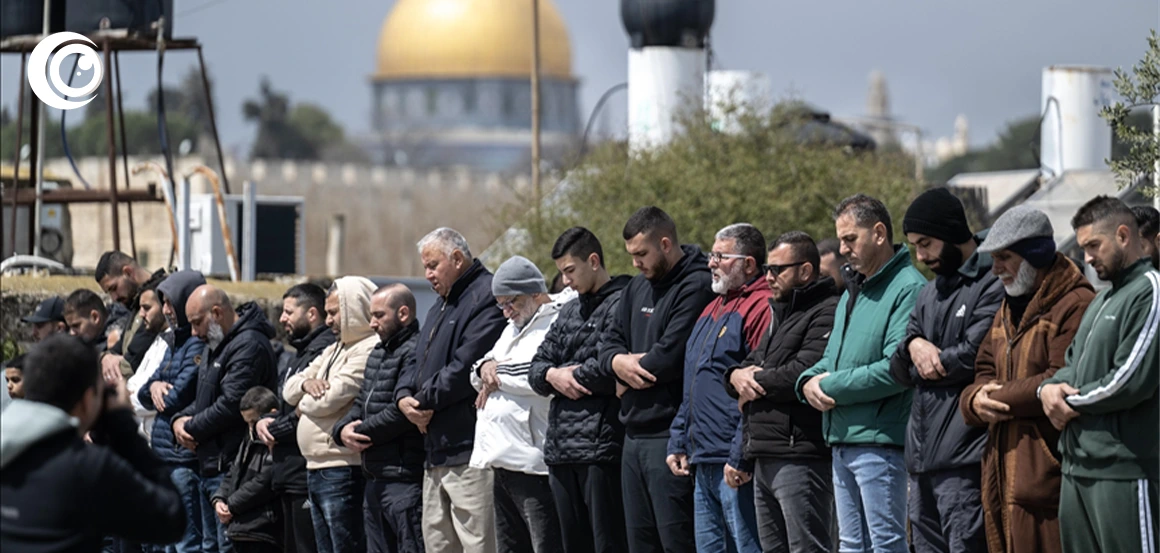

Thousands of Palestinians gathered to perform Isha and Taraweeh prayers at Al-Aqsa Mosque and its courtyards on Wednesday night, marking the first evening of the holy month of Ramadan.
The prayers took place under heightened security measures and entry restrictions imposed by Israeli authorities, yet worshippers filled large sections of the compound.
Al-Aqsa Mosque, located in occupied East Jerusalem, holds deep religious significance for Muslims worldwide as the third holiest site in Islam. During Ramadan, attendance typically increases substantially, with tens of thousands traveling from across the West Bank and Jerusalem to pray at the site. In recent years, however, access has frequently been limited during periods of heightened political and security tensions.
Current developments indicate that Israeli authorities enforced tighter entry controls around Jerusalem and at checkpoints leading to the mosque compound. Reports suggest that age restrictions and permit requirements limited access for many Palestinians from the West Bank. Despite these measures, thousands were still able to enter the compound and participate in congregational prayers marking the beginning of Ramadan.
The situation carries broader strategic implications, as restrictions at Al-Aqsa often resonate across the region. The site is a sensitive focal point in the Israeli-Palestinian conflict, and developments there can quickly influence political and security dynamics in Jerusalem, the West Bank, and beyond. Regional actors closely monitor events at the mosque, particularly during religious occasions.
From a humanitarian perspective, restrictions on access to religious sites raise concerns regarding freedom of worship and movement. Human rights organizations have previously highlighted the impact of such measures on Palestinian civilians, especially during major religious observances when communal prayer is central to spiritual life.
Reactions from Palestinian officials and community leaders emphasized the importance of maintaining access to holy sites during Ramadan. Israeli authorities generally state that security measures are necessary to maintain order and prevent unrest. International observers have historically called for calm and respect for religious freedoms during sensitive periods.
As Ramadan begins, attention will remain focused on developments at Al-Aqsa Mosque. Whether restrictions will ease or intensify in the coming weeks may significantly shape the atmosphere in Jerusalem throughout the holy month.