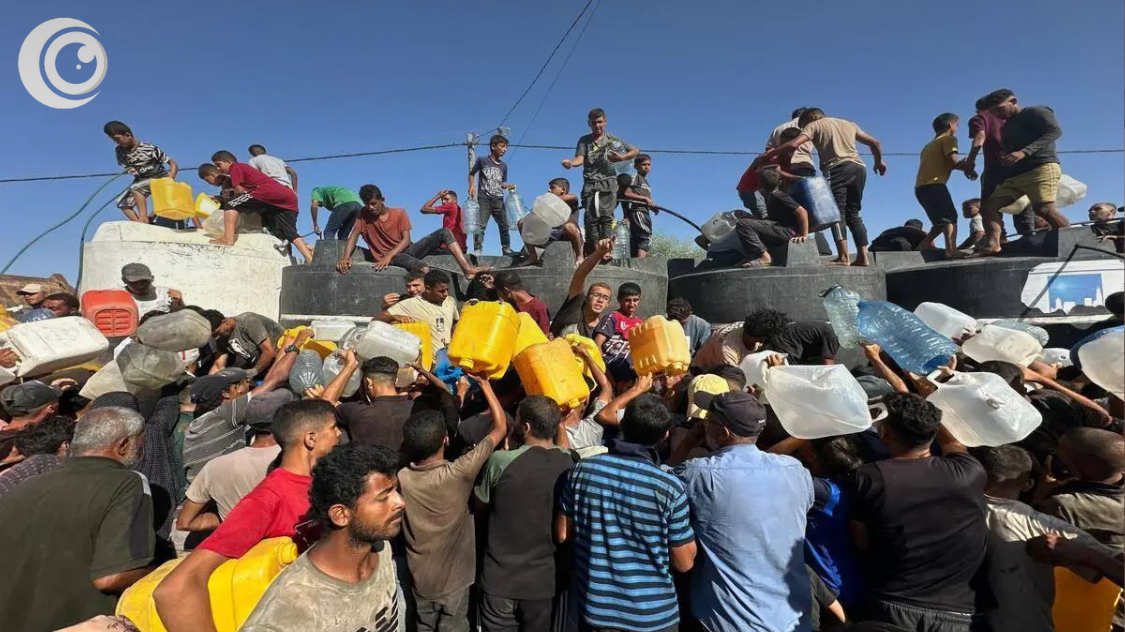
Gaza City , A catastrophic thirst crisis is engulfing Gaza City after Israeli forces destroyed nearly 75% of the city’s water wells, according to Gaza Municipality spokesperson Asim Al-Nabih. Authorities warn that they can no longer provide even the minimum level of water services to residents, leaving families with no safe options for survival.
For over a year, Gaza has been under relentless bombardment and siege, with Israel systematically targeting civilian infrastructure including hospitals, schools, power grids, and water facilities. The destruction of water wells adds a new dimension to the humanitarian catastrophe, worsening famine and disease already rampant in the Strip.
According to Al-Nabih, some families have been forced to move east of Gaza City despite the grave risks of bombardment in that area. Others, numbering in the tens of thousands, have chosen to remain in the city, struggling with extreme thirst, scarcity of clean water, and dire sanitation conditions.
The deliberate targeting of Gaza’s water infrastructure risks triggering a regional outcry, as water is not only a humanitarian necessity but also protected under international law. The crisis highlights Israel’s ongoing violations, further isolating it diplomatically while intensifying calls for international accountability.
The destruction of 75% of Gaza City’s water wells is not just an infrastructure issue, it is life-threatening. Dehydration, waterborne diseases, and worsening hygiene conditions place children, the elderly, and the sick at highest risk. With families forced into unsafe areas just to find water, the crisis is pushing Gaza’s population into impossible choices between thirst and death.
Human rights organizations have previously condemned Israel’s use of water deprivation as a weapon of war, calling it a form of collective punishment and ethnic cleansing. Calls for urgent international intervention are likely to grow as the crisis deepens, though so far, global actors have largely failed to pressure Israel into halting such actions.
As Gaza City teeters on the brink of a full-scale public health disaster, the thirst crisis underscores the urgency of international intervention. Unless immediate steps are taken to restore water access and halt the destruction of infrastructure, tens of thousands of civilians will face unthinkable suffering.