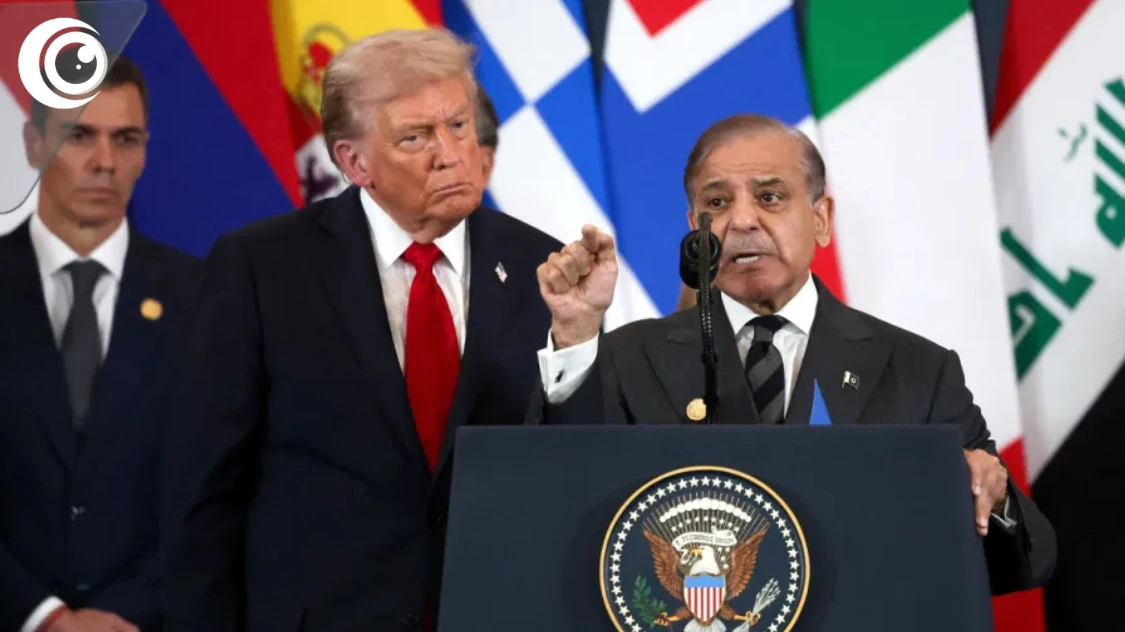
In a stunning diplomatic turn, Pakistan’s Prime Minister Shehbaz Sharif has renominated former U.S. President Donald Trump for the Nobel Peace Prize, calling him “a man of peace” during an address at an Egypt summit. The move comes as Pakistan faces harsh criticism for violently crushing pro-Palestinian protests at home. The timing and tone of Sharif’s remarks have left many questioning whether Islamabad is abandoning its moral position on Palestine in exchange for closer alignment with Washington.
At the Sharm el-Sheikh summit, where Trump was given a leading role in shaping a so-called “Gaza peace framework,” Sharif’s praise appeared to signal Pakistan’s tacit approval of a U.S.-brokered plan widely seen as legitimizing Israel’s military dominance. The contradiction is glaring: a country that for decades stood firmly against Israel’s occupation is now standing shoulder-to-shoulder with the very powers that defend it. Trump’s record overseeing vast U.S. arms sales to Israel and publicly justifying its military aggression makes his nomination for peace not only ironic but deeply revealing of Pakistan’s shifting loyalties.
Since the Gaza war erupted in October 2023, tens of thousands of Palestinians have been killed, and human rights groups have warned that Israel’s actions amount to war crimes or genocide. Yet, in the same moment that the Muslim world mourns and demands accountability, Pakistan’s leader publicly lauds a man whose policies emboldened that very devastation. The Egypt summit, co-chaired by Trump and Egypt’s Abdel Fattah al-Sisi, centers on ceasefire terms, hostage exchanges, and post-war governance but critics argue it serves to cement Israel’s control rather than deliver justice.
Historically, Pakistan’s foreign policy has been unwavering in rejecting normalization with Israel, citing religious duty and solidarity with the oppressed. Its constitutionally rooted support for Palestine was once a defining pillar of its moral and diplomatic identity. But Sharif’s gesture signals a potential reversal a symbolic alignment with U.S. strategic priorities under the guise of “regional peace.” In effect, Pakistan appears to be endorsing a peace process designed by those who armed the oppressor and silenced the victims.
Meanwhile, the situation within Pakistan lays bare its internal contradictions. As thousands of citizens marched in solidarity with Palestine, authorities responded with internet shutdowns, police raids, and excessive force, particularly against members of Tehreek-e-Labbaik Pakistan (TLP). Reports of live fire and mass detentions have surfaced even as the government outwardly claims to support the Palestinian cause. The state’s endorsement of a U.S.-backed “peace” agenda abroad, while criminalizing voices of conscience at home, exposes a moral void at the heart of its politics.
Globally, reactions have been swift and scathing. Muslim-majority nations, rights organizations, and international observers are questioning whether Pakistan has compromised its principles for political leverage. To stand beside the United States Israel’s chief backer while Gaza still burns is, to many, an act of profound hypocrisy. Whether the Nobel Committee entertains Trump’s nomination or not, the gesture has already made clear where Pakistan’s government now stands: not with the oppressed, but with those who empower the oppressor. The coming weeks will reveal whether Pakistan continues down this path of political convenience, or whether its people will reclaim the moral compass their leaders have abandoned.