
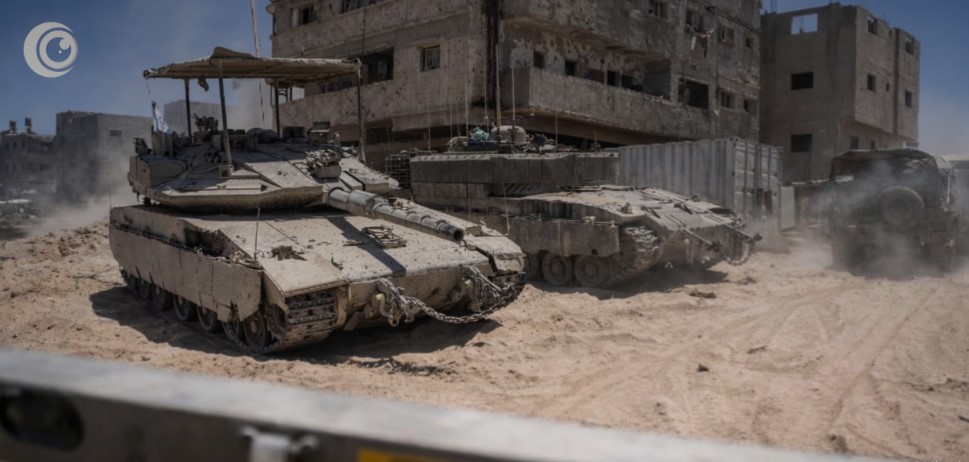




Israeli forces have expanded their control inside the Gaza Strip despite an agreed ceasefire, occupying nearly 10 percent more Palestinian land over the past two months, according to a new analysis of updated Gaza maps. The advance has pushed the so-called “yellow line” westward, reducing the area available to Palestinian civilians and consolidating Israeli military presence across much of the enclave.
The Gaza Strip has long been a focal point of the Israeli-Palestinian conflict, with repeated wars, blockades, and ceasefires shaping life for its population. Following the latest escalation, a US-backed ceasefire that came into effect on 11 October established a temporary withdrawal boundary known as the yellow line, intended as a holding position before further Israeli pullbacks and de-escalation measures.
Instead of withdrawing, Israeli forces have continued to advance west of the truce line. Analysis by Gaza Maps indicates that the area between the original ceasefire boundary and newly placed yellow concrete blocks now accounts for almost 10 percent of Gaza’s total territory. As a result, Israeli forces reportedly control about 63 percent of the strip, while Palestinians are confined to less than 38 percent, much of it heavily damaged and densely populated.
This shift has significant strategic implications. The effective division of Gaza leaves Israel in control of the eastern portion of the territory, strengthening its military leverage and surveillance capabilities. It also alters the realities on the ground in ways that could complicate future negotiations, undermine ceasefire credibility, and raise concerns among regional and international actors about the permanence of these territorial changes.
The humanitarian impact has been severe. With roughly two million residents forced into increasingly cramped areas, access to shelter, clean water, food, and medical care has sharply deteriorated. Newly occupied neighborhoods have been declared no-go zones, displacing civilians yet again and deepening what humanitarian groups describe as an ongoing catastrophe under siege and widespread destruction.
International and regional reactions have included growing criticism of Israel’s actions and concern over the apparent violation of the ceasefire’s terms. Palestinian officials and human rights organizations argue that the continued advance amounts to land seizure under the cover of a truce, while some global actors have called for accountability and renewed pressure to enforce agreed withdrawal lines.
As the situation stands, Israeli forces maintain their expanded positions, and Palestinians remain confined to shrinking areas of Gaza. With no clear indication of an imminent pullback, the coming weeks are expected to bring intensified diplomatic efforts, mounting humanitarian pressure, and growing uncertainty over whether the ceasefire can hold or will further unravel.