
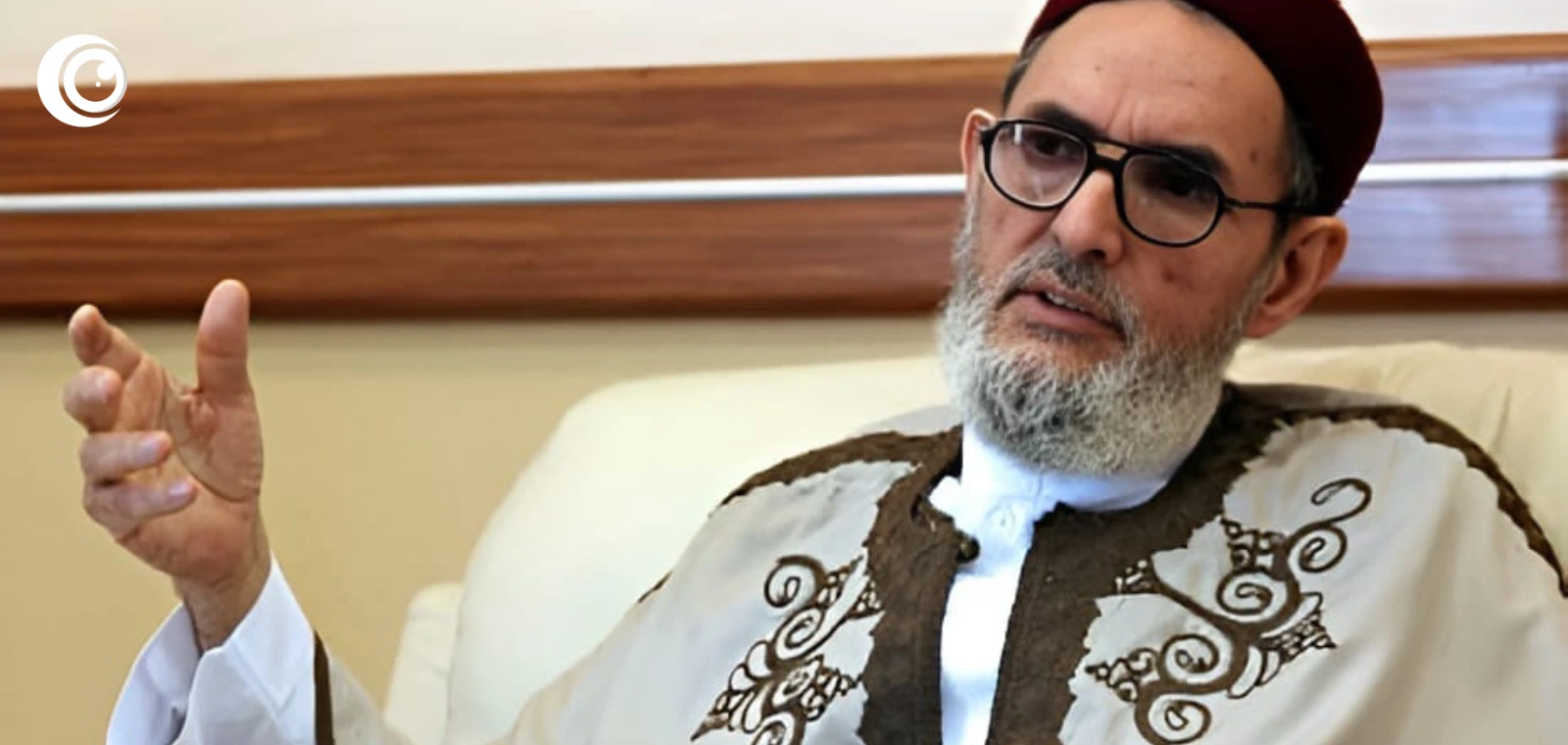
The highest religious authority for Sunni Muslims in Libya, Grand Mufti Sheikh Sadiq al-Ghariani, has issued a landmark fatwa calling on the global Muslim community to stand in defense of Iran. In what is being characterized as a decisive move toward regional unity, the Grand Mufti described the current confrontation with American and Israeli forces not as a sectarian dispute, but as a fundamental battle between “Islam and infidelity.”
According to statements released by the Dar al-Ifta, the Grand Mufti asserted that Iran is a “Muslim nation” that must not be abandoned to “hostile powers.” This declaration is widely seen as a direct challenge to the Western strategy of exploiting the Sunni-Shia divide to isolate Tehran, as the Mufti insisted that the obligation of mutual defense supersedes any internal theological differences.
The Grand Mufti’s call to action specifically targets the ongoing military operations conducted by the United States and Israel across the Middle East. He strongly condemned these strikes as illegal acts of aggression, advocating for Iran’s absolute right to defend its sovereignty and its actions against foreign military presence. By framing the support of Iran as a mandatory religious duty, al-Ghariani has placed the struggle against Western intervention at the center of Islamic jurisprudence.
However, this announcement has immediately exposed a major contradiction in the rhetoric of regional “stability” championed by Washington. While the United States continues to portray itself as a protector of Sunni interests against a “Shia threat,” the endorsement of Iran by a prominent Sunni authority like al-Ghariani highlights a growing grassroots rejection of Western-led narratives. The move suggests that the perceived threat of foreign occupation is increasingly outweighing long-standing sectarian friction.
The situation has turned the Western strategy of regional containment into a clear display of desperation. As high-ranking religious figures begin to mobilize public opinion in favor of a unified front, the ability of the United States to maintain its traditional alliances through the lens of sectarianism is rapidly diminishing. The Grand Mufti’s assertion that unity is an “obligation” underscores the urgency with which regional actors are seeking to consolidate power against external interference.
Ultimately, the Grand Mufti’s decree highlights a deeper shift in the geopolitical balance of the Muslim world. By placing the defense of a Shia-majority nation as a primary duty for all Sunnis, al-Ghariani has exposed the contradictions within the broader strategy of those seeking to keep the region divided. As this call for unity resonates across North Africa and the Levant, it continues to reshape the balance of power and challenge the permanence of foreign military dominance in the Middle East.