
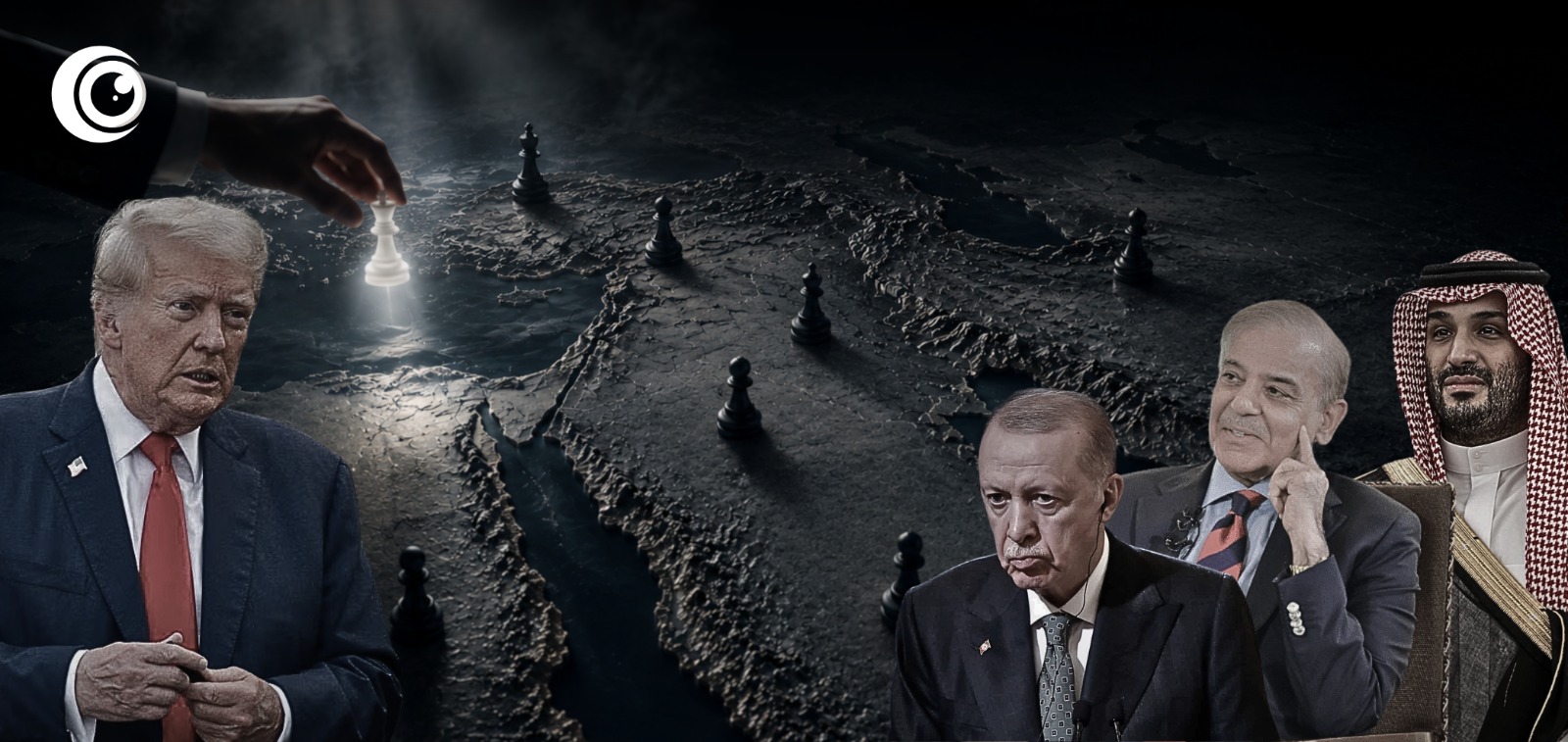
For months, President Donald Trump has attempted to revive and expand the Abraham Accords, presenting them as the foundation for a “new Arabian Gulf” built on normalization, economic integration, and regional cooperation with Israel. But despite heavy diplomatic pressure, public lobbying, and attempts to link the accords with wider regional negotiations, the response from much of the Muslim world has revealed a growing reality: the political space for normalization is shrinking, not expanding.
Trump’s Grand Vision Meets Regional Resistance
According to Reuters, Trump recently urged countries including Pakistan, Saudi Arabia, Qatar, Turkey, Egypt, and Jordan to collectively join an expanded Abraham Accords framework as part of broader negotiations connected to Iran and regional security arrangements. Trump described the accords as the next step toward a more unified Arabian Gulf and even attempted to tie it to ongoing diplomatic efforts involving Iran.
However, the response was far from the diplomatic breakthrough many expected. Instead of a wave of endorsements, several states either rejected the proposal outright or reaffirmed longstanding conditions regarding Palestinian statehood. What was intended to appear as a major foreign-policy success increasingly exposed the limits of Washington’s influence on an issue that remains deeply emotional, religious, and political across Muslim societies.
Pakistan’s Clear Rejection
Perhaps the strongest response came from Pakistan. According to arabnews.pk, Deputy Prime Minister and Foreign Minister Ishaq Dar publicly rejected speculation about Pakistan joining the Abraham Accords and reaffirmed that there would be no change in Pakistan’s position until an independent Palestinian state is established on pre-1967 borders with Al-Quds Al-Sharif as its capital.
Pakistan’s leadership emphasized that its policy has remained consistent across governments and that normalization cannot come before Palestinian statehood. This was not merely a diplomatic clarification; it was a signal that despite international pressure, certain political and ideological red lines remain difficult to cross.
Saudi Arabia Steps Back from the Normalization Momentum
Saudi Arabia has also shown increasing caution. According to saudigazette, Saudi officials reaffirmed that normalization with Israel cannot occur without a “clear and definitive path” toward an independent Palestinian state. Riyadh stressed that its position on Palestine remains unchanged and that any future agreement must guarantee Palestinian rights and statehood.
This is significant because Saudi Arabia was once viewed as the crown jewel of the normalization project. For years, analysts speculated that a Saudi-Israeli deal would transform the Arabian Gulf and encourage others to follow. Yet the Gaza war changed the equation.
According to the INSS, Saudi leadership increasingly sees normalization as carrying greater political and domestic risks than benefits, particularly given widespread public sympathy for Palestinians and growing anger over events in Gaza.
The Gaza Factor Changed Everything
The central obstacle facing Trump’s ambitions is Gaza itself. The Abraham Accords were originally promoted during a period when the Palestinian issue had been pushed to the margins of regional diplomacy. Today, the opposite is true.
Images of destruction, civilian casualties, and humanitarian suffering have pushed Palestine back to the center of political discourse across the Arabian Gulf and wider Muslim world. Public pressure has increased on governments, religious institutions, and political leaders to maintain support for Palestinian rights rather than move toward normalization.
As a result, governments that may once have quietly explored normalization now face a different environment — one in which public opinion carries far greater weight and the political cost of normalization has risen dramatically.
A Sign of Weakness, Not Strength?
What makes the situation particularly striking is that Trump’s recent push appeared unusually public and direct. Rather than announcing new countries joining the accords, Washington found itself openly urging states to participate while simultaneously attempting to link the issue with broader Iran negotiations. According to Reuters, Trump suggested that countries involved in regional diplomacy should join the accords together as part of a larger settlement.
But instead of producing momentum, the move generated pushback.
Pakistan rejected the idea.
Saudi Arabia reiterated its conditions. Other countries largely avoided committing publicly. Even analysts questioned whether the strategy was realistic under current Arabian Gulf political realities.
The Muslim World Is Not Moving in One Direction Anymore
The broader lesson is that the Muslim world is becoming increasingly difficult to pressure into a single diplomatic framework.
While governments continue to maintain strategic relationships with Washington, many are simultaneously facing domestic populations that remain strongly supportive of Palestine. This has created a growing gap between geopolitical interests and public sentiment.
Countries now find themselves balancing:
Relations with the United States
Regional security concerns
Economic partnerships
Domestic political realities
Public commitment to the Palestinian cause
And increasingly, public opinion is proving harder to ignore.
Conclusion
Trump’s attempt to expand the Abraham Accords was designed to demonstrate momentum, regional unity, and diplomatic success. Instead, it has revealed growing resistance, hesitation, and political limits across the Arabian Gulf and Muslim world.
Countries like Pakistan and Saudi Arabia have not broken with Washington, nor abandoned diplomacy. But they have shown that there are still lines many are unwilling to cross without meaningful progress on Palestine.
The result is a reality that Washington appears to be confronting more frequently: influence can create pressure, but pressure alone cannot erase public sentiment, historical positions, or the continuing centrality of Palestine in the Muslim world.