
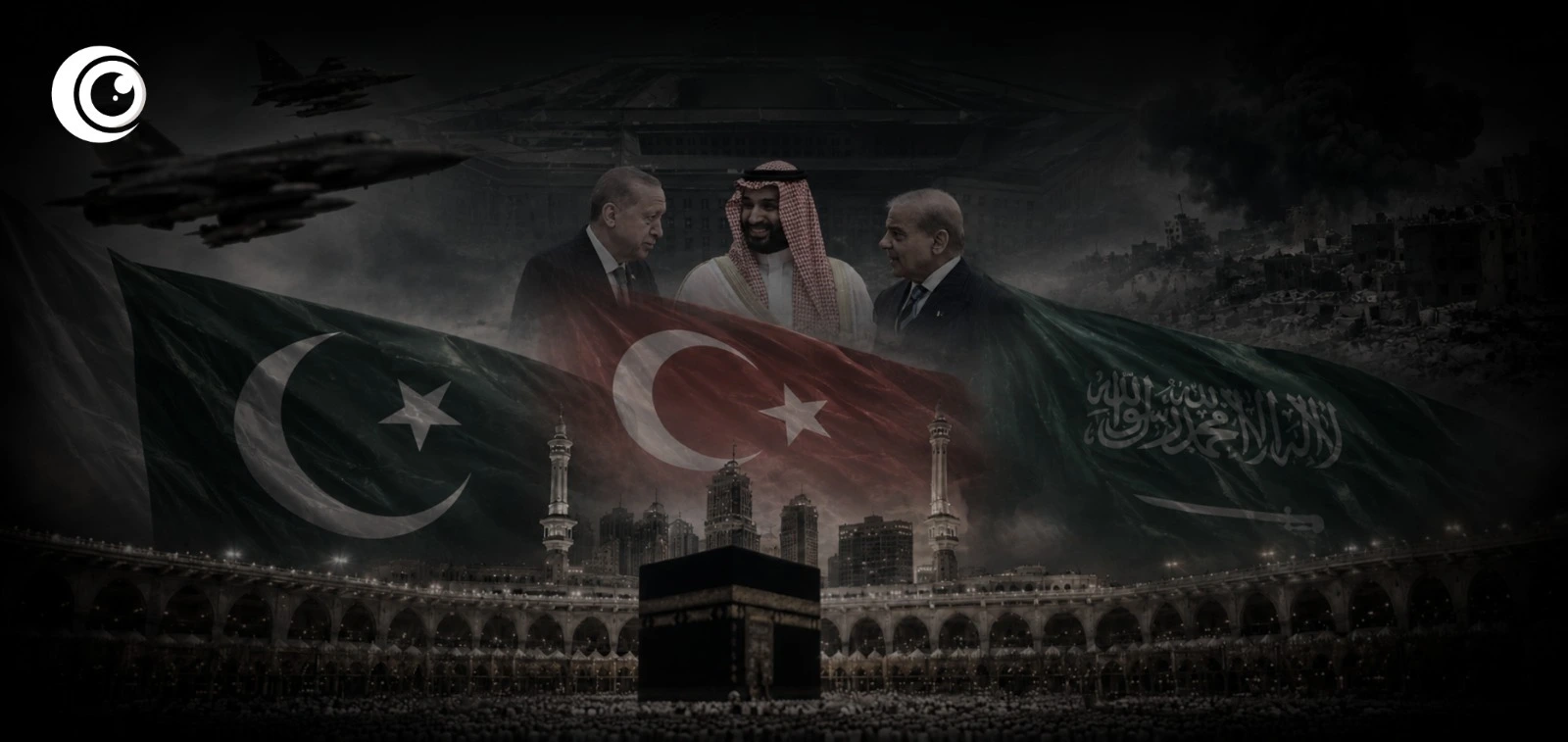
The signing of the Makkah Joint Defence Agreement between Pakistan, Türkiye and Saudi Arabia is more than another defence deal. Signed in Makkah, the agreement carries enormous political and symbolic weight: three major Muslim powers declaring that an armed attack against one will be treated as an attack against all.
At a time when the Muslim world remains deeply divided by wars, alliances and competing interests, seeing Pakistan, Türkiye and Saudi Arabia stand together can undeniably be viewed as a moment of unity.
But geopolitics rarely comes without another layer.
The real question is not simply whether this alliance is “against Iran.” The more important question is:
Is this alliance against the regional Muslim resistance — or can it become a genuinely independent Muslim alliance capable of standing against external pressure from America and the Israeli occupation?
That is where the significance of Makkah begins.
━━━━━━━━━━━━━━━━━━
A Defence Pact Born in a Divided Region
The agreement establishes a collective-defence principle similar to NATO’s Article 5: an armed attack against one member is considered an attack against all three. Türkiye’s Foreign Minister Hakan Fidan has described the arrangement as technically similar to NATO’s collective-defence principle while stressing that it is not directed against Iran or any other country. (Reuters)
On paper, this is defensive.
And there is a legitimate reason for Muslim countries to want such an arrangement.
For decades, the security of Muslim states has often depended heavily on outside powers. American military bases, Western arms supplies and foreign security guarantees have shaped the region’s strategic balance.
A stronger defence relationship between Pakistan, Türkiye and Saudi Arabia could therefore represent something very different: Muslim states attempting to build their own security structure rather than permanently depending on Washington.
That possibility should not be dismissed.
━━━━━━━━━━━━━━━━━━
But Who Benefits From the New Balance of Power?
This is where the picture becomes complicated.
Saudi Arabia is a longstanding American partner. Türkiye is a NATO member. Pakistan maintains a major defence relationship with Washington. All three countries therefore have existing links with the very Western security system that has shaped the region for decades.
That does not mean the pact is an American project.
There is no public evidence proving that Washington designed or ordered the agreement.
But geopolitically, something does not have to be controlled by America to benefit America.
A new military bloc can serve American strategic interests if its power eventually helps contain regional actors that challenge the existing order.
And this is where the possibility of the alliance becoming part of a broader confrontation with Iran — or with other elements of the regional Muslim resistance — deserves serious attention.
━━━━━━━━━━━━━━━━━━
The Iran Question Is Bigger Than Iran
Iran is not named as an enemy in the pact. Türkiye has explicitly rejected that interpretation. But the regional environment makes Iran impossible to separate from the discussion.
The pact was signed amid a major regional confrontation involving Iran, while Saudi Arabia has been facing security threats connected to the wider conflict. Reuters reported that Saudi Arabia is increasingly relying on defensive alliances as it tries to protect itself while avoiding being pulled deeper into the US-Iran war. (Reuters)
That creates a dangerous possibility.
A defence pact created to protect Muslim countries could gradually become part of a larger regional military balance in which Muslim states are pushed into opposing one another.
And if that happens, the greatest beneficiary may not be the Muslim world.
It could be the outside powers that have spent decades benefiting from divisions within the region.
━━━━━━━━━━━━━━━━━━
The American Question
The United States has repeatedly built its regional strategy around alliances and partnerships with selected Middle Eastern states.
The pattern is familiar: security threats are identified, military partnerships are strengthened, weapons flow into the region, and regional states are encouraged to coordinate around common threats.
The result can be a region where countries possess enormous military capabilities but remain strategically dependent on outside powers.
This is why the Makkah pact deserves scrutiny.
If Pakistan, Türkiye and Saudi Arabia use it to develop independent defence production, intelligence cooperation and collective deterrence, it could reduce foreign dependence.
But if the alliance eventually becomes another structure through which Washington can shape regional security and isolate its opponents, then the language of Muslim unity would conceal a very different reality.
The difference lies in who controls the strategic direction.
━━━━━━━━━━━━━━━━━━
Could This Become a Shield Against the Israeli Occupation?
There is another side that cannot be ignored.
The Muslim world is still dealing with the consequences of the Israeli occupation and the devastation inflicted upon Palestinians.
If three major Muslim powers are capable of coordinating their military and diplomatic strength, why should that power only be discussed in terms of regional security?
Why should Muslim unity mean protecting borders while remaining powerless when Palestinians are subjected to occupation and devastation?
A genuinely independent Muslim security framework could potentially give Muslim states greater leverage on Palestine, protect regional sovereignty and reduce their dependence on Western security guarantees.
That would make the pact far more significant than another military agreement.
It would turn Makkah into the starting point of a new idea:
Muslim countries securing themselves without becoming dependent on another power to decide who their enemies should be.
━━━━━━━━━━━━━━━━━━
The Resistance Question
This is perhaps the most sensitive part of the equation.
Across the region, different movements and states have presented themselves as part of a broader resistance to Western influence and the Israeli occupation. Their methods, ideologies and political objectives differ enormously, but they have nevertheless become part of the wider regional struggle over who controls the future of the Muslim world.
If the new alliance is used to weaken every force that challenges Washington’s preferred regional order, then it could become another instrument of division.
But if it maintains relations with different Muslim powers and focuses strictly on defending its members from aggression, it could become something far more constructive.
That distinction matters.
Muslim unity should not require Muslims to agree on everything. It should require them to refuse to become permanent enemies of one another.
━━━━━━━━━━━━━━━━━━
Makkah Gives This Pact a Different Meaning
There is something deeply symbolic about the agreement being signed in Makkah.
Makkah is not simply another capital or military headquarters. It represents a place shared in the hearts of Muslims across national, ethnic and political boundaries.
That symbolism raises the expectations surrounding the pact.
If the name of Makkah is attached to a new security framework, then its purpose should go beyond the interests of three governments.
It should represent security without domination, cooperation without dependency and strength without being directed against another Muslim nation.
Otherwise, the symbolism becomes hollow.
━━━━━━━━━━━━━━━━━━
A New Muslim Security Order — or Another Geopolitical Chessboard?
The Makkah Defence Agreement can therefore be read in two very different ways.
It can be the beginning of a stronger Muslim security framework — one in which Pakistan, Türkiye and Saudi Arabia pool their capabilities, protect each other and gradually build greater strategic independence.
Or it can become another piece on the geopolitical chessboard of the region, where Muslim countries are encouraged to view one another through the lens of competing alliances and outside interests.
The greatest danger is not necessarily that the pact openly declares an enemy. The greater danger is that its purpose could gradually be redefined by the conflicts surrounding it.
Today it may be defensive.
Tomorrow, if the region becomes more divided, the same military structure could be pulled into a wider confrontation.
━━━━━━━━━━━━━━━━━━
The Real Test of Muslim Unity
The Makkah pact should therefore not be judged merely by the strength of its armies.
It should be judged by the independence of its decisions.
Can these three countries cooperate without becoming instruments of Washington?
Can they maintain dialogue with Iran rather than allowing regional rivalry to become another Muslim war?
Can they use their collective power to support Palestinian rights and challenge the consequences of the Israeli occupation?
And most importantly, can they build a security structure that belongs to the Muslim world rather than becoming another extension of someone else’s geopolitical strategy?
These questions will determine what the Makkah agreement truly becomes.
Because unity is not simply three Muslim countries standing together against a common threat.
True unity is three Muslim countries becoming strong enough to decide for themselves who their friends are, who their enemies are, and — most importantly — when they refuse to be divided by someone else’s interests.