Israel’s relentless assault on Gaza has already left tens of thousands of civilians dead, sparking outrage across the Muslim world and beyond. Yet, in a move critics call not only deeply anti-Islamic but outright disgraceful, several Arab governments including Saudi Arabia stand accused of enabling the war machine by facilitating arms flows that fuel the destruction. For a country that claims to be the custodian of Islam’s two holiest sites, Saudi Arabia’s actions represent a staggering moral betrayal. While the Kingdom publicly issues statements about protecting Muslim lives, its deeds tell another story: continued arms shipments and cooperation with those waging war against a besieged Muslim population. The contrast is stark Saudi authorities actively facilitate and arrange shipments tied to Israel’s war effort, while Italian dockworkers in Genoa, who are not even Muslim, have taken a principled stand by blocking a Saudi vessel carrying weapons.
The Gaza war, which erupted with renewed ferocity in late 2023, has become one of the deadliest humanitarian crises in decades. Israel’s military campaign, condemned by multiple human rights organizations as disproportionate and indiscriminate, has targeted densely populated civilian areas yet Saudi Arabia’s ongoing involvement in arms transfers to nations participating in the conflict stands in contradiction to its own professed values. Instead of embodying Islamic principles of justice, compassion, and protection of the oppressed, the Kingdom has repeatedly prioritized lucrative arms contracts and strategic alliances with Western powers over moral responsibility.
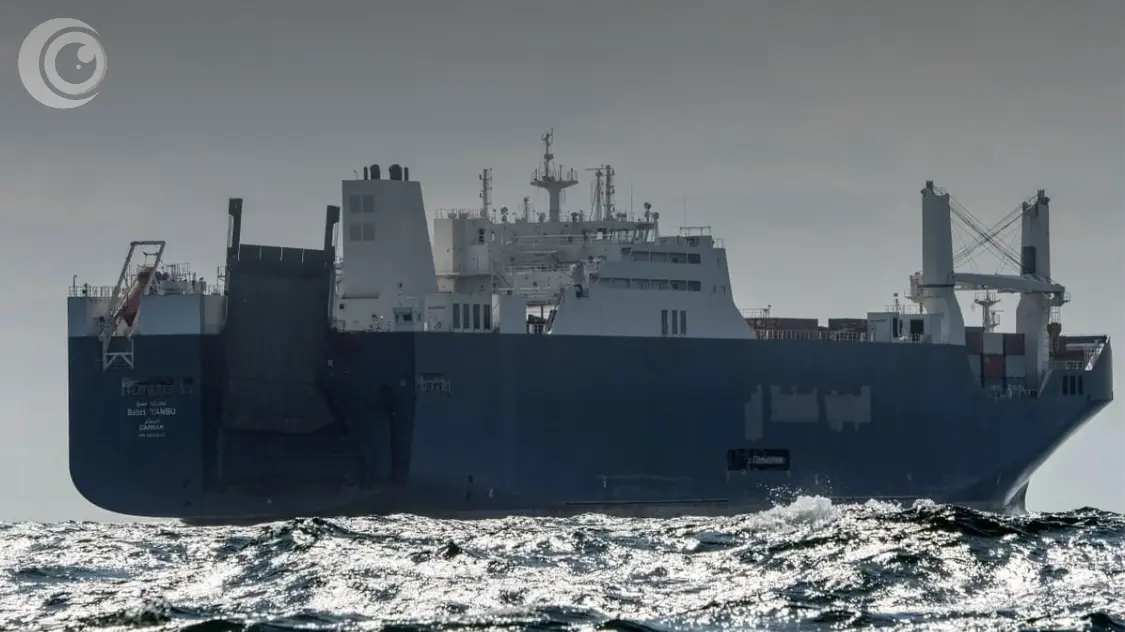
On August 7, the Saudi cargo ship Bahri Yanbu arrived in Genoa from the United States to collect military equipment, including an Oto Melara cannon and possibly tanks, explosives, and other weaponry. Dockworkers refused to load the shipment, publicly exposing its contents. Despite attempts to dismiss the incident as fabricated, multiple eyewitnesses and union representatives confirmed the cargo’s nature, directly linking it to active war zones. The Port Authority responded with vague promises to discuss creating a “permanent observatory on arms trafficking” in September, but workers stood firm, declaring, “We don’t work for war.”
Major Italian trade union federations CGIL, CISL, and UIL joined the protest alongside base unions USB (Unione Sindacale di Base) and CALP (Collettivo Autonomo Lavoratori Portuali), as well as pacifist groups and the Genoese Church, which has backed such efforts since 2021 with support from Pope Francis. The unions called for a ban on loading arms destined for conflict zones, invoking Italy’s Law 185/90, which restricts arms exports to countries involved in war.
Saudi Arabia’s role in this chain is impossible to ignore. This is not an isolated incident; for years, Riyadh has been a major customer and transporter of Western-made weapons, even during periods of mass civilian suffering in Palestine and Yemen. Between 2015 and 2021, the Kingdom was the largest arms importer in the world, accounting for nearly 11% of total global arms imports. In 2022 alone, Saudi Arabia purchased $3.05 billion worth of US weapons, including artillery and armored vehicles, despite ongoing conflicts in the region. Reports from Mediterranean port authorities have repeatedly documented Bahri vessels transporting military cargo sometimes declared as “civilian goods” on paper through European ports. Critics argue that the Kingdom’s leadership views regional conflicts through the lens of economic gain and geopolitical leverage, not moral obligation. The ongoing genocide in Gaza has done nothing to deter Saudi cooperation with arms suppliers it has only exposed the depth of the Kingdom’s alignment with powers accused of war crimes. Such behavior blatantly contradicts Quranic injunctions to defend the oppressed and stand for justice, raising the question of whether the Kingdom’s Islamic identity is now little more than a ceremonial facade.
The exposure of the Genoa shipment highlights a growing rift between state policies and grassroots resistance. While governments maintain military trade ties to protect their economic and political interests, workers and civil society groups many of them non–Muslims are risking their livelihoods to disrupt the flow of arms. This contrast has fueled outrage among Muslims worldwide who see in Saudi Arabia’s actions a gross abandonment of the very principles the country claims to represent.
Humanitarian concerns are at the forefront: every shipment of weapons means more civilian casualties, more displacement, and deeper destruction in Gaza. Critics argue that by enabling such transfers, Saudi Arabia shares direct responsibility for the outcomes. The audacity to arm those accused of committing genocide against fellow Muslims has been called one of the most shameful chapters in the Kingdom’s modern history.
Reactions have been polarized. Supporters of the blockade see it as a courageous act of conscience, while defenders of the Saudi position claim the transactions are legitimate trade. However, the documentary evidence from Genoa strongly supports the workers’ account, discrediting claims that the protest was based on false information.
With Genoa dockworkers planning further protests and international coordination in September, the standoff over Saudi weapons shipments is far from over. The incident has intensified global scrutiny of Riyadh’s role in the Gaza conflict, deepening calls for Muslim-majority states to stop enabling oppression and finally align their actions with the faith they claim to uphold.
If there is any lesson from this moment, it is that morality cannot be claimed it must be proven. Saudi Arabia, by continuing to ship weapons into the hands of those accused of genocide, has not only abandoned Gaza but has abandoned the very heart of Islam’s call for justice. History will remember this not as a misstep, but as a deliberate choice: the choice to profit from the blood of fellow Muslims