
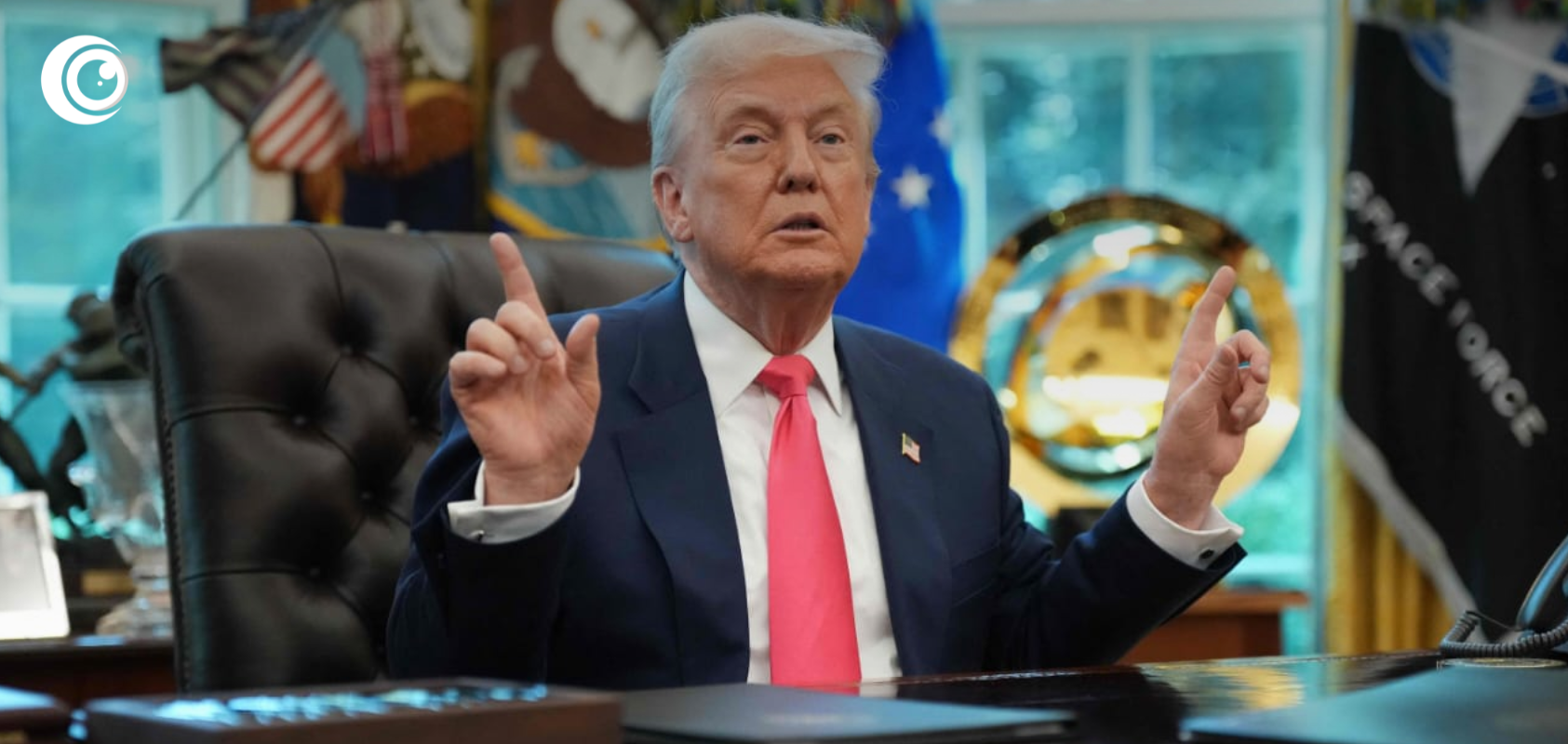


U.S. President Donald Trump has sent a letter to Norwegian Prime Minister Jonas Gahr Støre stating that he no longer feels obliged to act “purely in the interest of peace” after not receiving the Nobel Peace Prize. In the message, Trump argued that his role in preventing multiple conflicts was overlooked and implied that the decision had consequences for his approach to international affairs. Norwegian officials responded that the Nobel Peace Prize is awarded by an independent committee, not by the government.
The letter emerges amid renewed tensions over Washington’s interest in acquiring Greenland, a semi-autonomous territory of Denmark. Trump has previously argued that Greenland is strategically vital for U.S. security and for countering Russian and Chinese activity in the Arctic. European leaders have repeatedly rejected the idea, maintaining that the island is not for sale and that its future rests with its people.
Following the letter, the U.S. administration has intensified its rhetoric on Greenland and broader transatlantic relations. Senior officials have warned of economic measures against European states opposing Washington’s stance. Protests have taken place in Greenland and Denmark, where demonstrators have expressed opposition to any U.S. takeover and reaffirmed demands for self-determination.
Strategically, the dispute highlights growing strain within the Western alliance. Control of Arctic routes and resources is becoming increasingly important as climate change opens new shipping lanes and access to minerals. European leaders caution that unilateral pressure risks weakening NATO cohesion and undermining cooperation needed to manage competition with Russia and China.
From a humanitarian and legal perspective, leaders in Greenland stress that any decision affecting the territory must respect democratic rights and international law. Greenland’s government has emphasized that its population, not external powers, must determine its political future. Civil society groups warn that coercive diplomacy could destabilize the region and marginalize local voices.
Reactions from global actors have been swift, with European Union officials calling for dialogue and restraint. Britain’s prime minister has urged diplomacy based on mutual respect, while Nordic leaders reaffirmed the independence of the Nobel process. As tensions persist, the episode signals a more confrontational phase in U.S. European relations, with further diplomatic exchanges and possible economic measures expected in the coming weeks.