
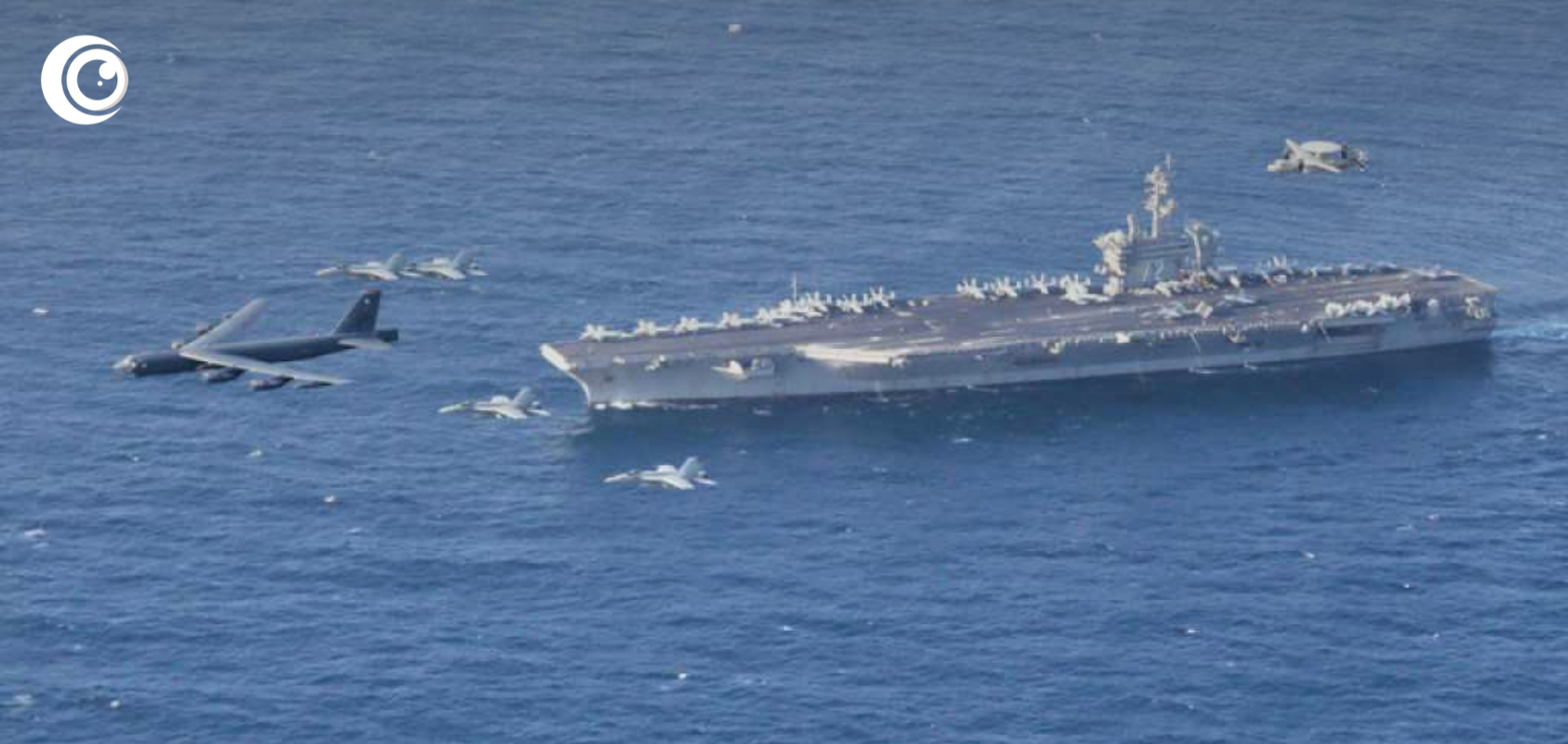
Tensions between Washington and Tehran have sharply escalated after US President Donald Trump confirmed that American military forces have been significantly reinforced near Iran, describing the deployment as larger than any previously assembled against Venezuela or other recent flashpoints. The show of force, centered on a powerful naval armada, signals a clear warning from the White House amid growing regional instability and heightened concerns over Iran’s internal and external actions.
According to US officials, the military buildup includes warships, aircraft carriers, and supporting air and surveillance assets operating in nearby waters. Trump has framed the move as a defensive posture intended to deter escalation, while insisting that diplomatic channels have not been closed. However, the scale and visibility of the deployment underline Washington’s readiness to act militarily if tensions spiral further.
The warning comes against the backdrop of unrest inside Iran, where anti-government protests have been met with heavy crackdowns. Human rights organizations have reported widespread violence, mass arrests, and significant civilian casualties. These developments have intensified pressure within US political circles to take a tougher stance against Tehran, with some officials arguing that Iran’s leadership is destabilizing both its own population and the wider region.
Trump has acknowledged that military strikes were seriously considered in response to the situation, though no final order was given. Despite this pause, American military assets have continued to flow into strategic positions, suggesting that the option of force remains firmly on the table. In public remarks, the president described the situation as “fluid,” emphasizing that the United States is prepared for multiple outcomes.
Iranian officials, meanwhile, have condemned the US deployment as an act of intimidation, warning that any aggression would provoke a strong response. Tehran maintains that Washington is exploiting internal unrest to justify military pressure, a claim US officials deny. The standoff has fueled fears of miscalculation, particularly in a region already strained by ongoing conflicts and rival power blocs.
As diplomatic messaging and military signaling unfold side by side, analysts warn that the current posture marks one of the most dangerous phases in US-Iran relations in recent years. Whether the armada serves as a deterrent or a prelude to confrontation will depend on decisions made in the coming days, with regional stability hanging in the balance.