
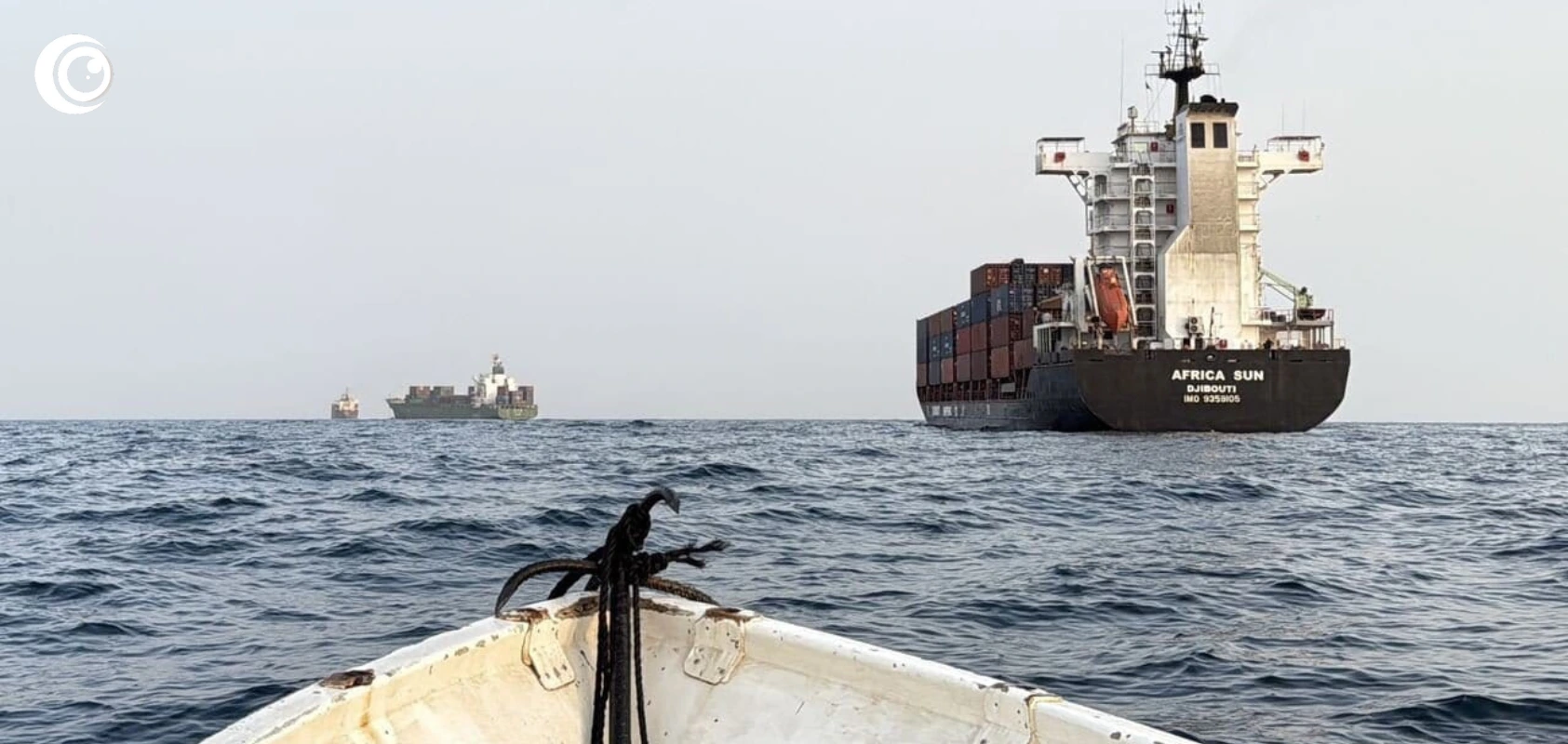




Yemen’s AnsarAllah-led authorities have established an email-based clearance system requiring commercial shipping companies to seek advance approval before transiting waters under their control in the Red Sea. According to an investigation by The Wall Street Journal, the system allows vessels to submit requests to the Humanitarian Operations Coordination Center (HOCC) in Sanaa, which reviews their ownership, cargo and destination details before issuing a response.
Under the procedure, shipping operators are required to provide information about their vessels, ownership structures, cargo manifests, intended destinations and estimated travel schedules. Applications are submitted by email, preferably at least 48 hours before entering Yemeni territorial waters. The HOCC typically responds within 24 hours of receiving a complete application, informing operators whether their vessels have been cleared for passage.
The clearance mechanism is designed to screen vessels for commercial or operational links with countries targeted by Yemen’s maritime restrictions. According to the reporting, authorities examine whether ships have connections to the Israeli occupation, the United States, the United Kingdom or Saudi Arabia. Vessels receiving approval are reportedly issued transit authorisations valid for seven days, alongside instructions for navigating the designated maritime routes.
The system is administered through the HOCC, an entity established in early 2024 that has become a central channel for coordinating maritime traffic and communicating Yemen’s restrictions to international shipping companies. The process has gained greater significance following Yemen’s announcement of a maritime blockade targeting Saudi ports and Saudi-linked shipping in July 2026, which expanded the risks facing commercial vessels operating in the Red Sea.
The investigation also documented the case of the Chinese container vessel Zhong Cheng Chang Ling, whose operators contacted the HOCC and received permission to transit the Bab al-Mandab Strait. The vessel was instructed to keep its Automatic Identification System (AIS) active and maintain communication on the designated maritime radio channel. Its passage illustrates how shipping companies are increasingly seeking direct assurances from Yemeni authorities before navigating the strategic waterway.
However, the arrangement has raised concerns among international maritime authorities. Shipping companies have been advised against registering with or communicating through the HOCC, while industry representatives warn that clearance from the centre does not necessarily guarantee the safety of a vessel. Many operators continue to avoid the Red Sea because of the security risks, opting for longer routes around the Cape of Good Hope, which increases transit times and shipping costs.
The development reflects Yemen’s expanding role in regulating maritime movement through one of the world’s most strategically important shipping corridors. By establishing a formal screening and clearance mechanism, Sanaa is seeking to enforce its declared maritime restrictions beyond direct military action. With the Bab al-Mandab Strait connecting the Red Sea to the Gulf of Aden and providing access to the Suez Canal, the system carries significant implications for international shipping, regional trade and the balance of power across the Arabian Gulf and Red Sea.