
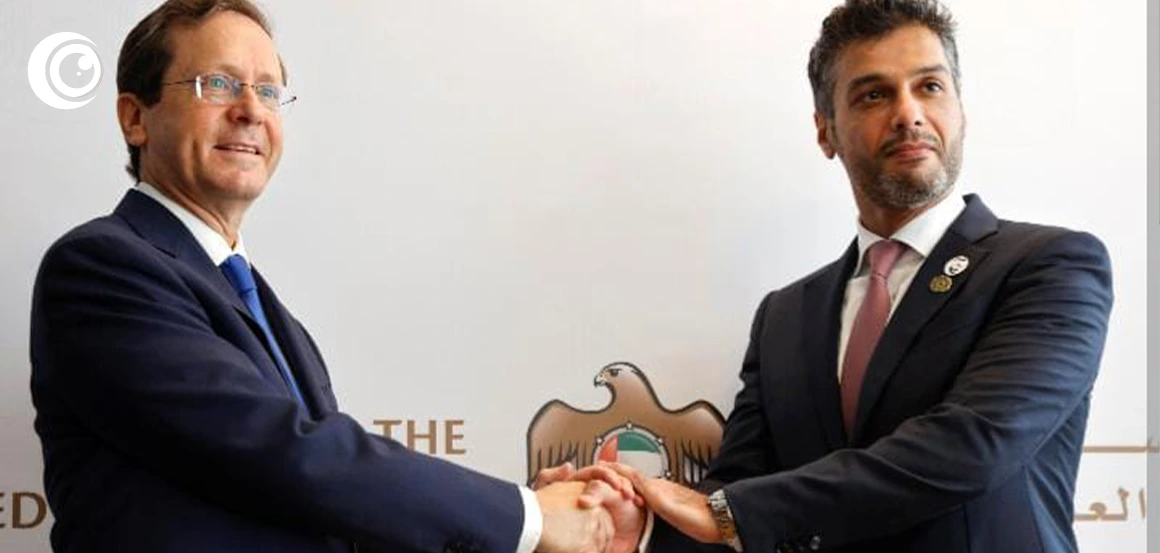
The Mohamed Mahmoud Al Khaja, Ambassador of the United Arab Emirates to Israel, expressed appreciation to Isaac Herzog for hosting him at Israel’s Independence Day celebrations, marking his sixth participation in the annual event and extending congratulations on the country’s 78th Independence Day.
The UAE established formal diplomatic ties with Israel in 2020 under the Abraham Accords, a move that reshaped regional relations by bringing several Arab states into open cooperation with Israel. This development came amid longstanding tensions in the Middle East, particularly surrounding the Israeli-Palestinian conflict, which continues to influence regional diplomacy.
Currently, diplomatic engagement between the UAE and Israel remains active despite wider regional instability and ongoing conflict involving Gaza. High-level interactions, economic cooperation, and participation in national events like Independence Day reflect continuity in bilateral relations even as geopolitical tensions fluctuate.
Strategically, the UAE’s visible participation in Israeli national celebrations underscores its commitment to normalization and signals to both regional and global actors that cooperation frameworks established under the Abraham Accords are still functioning. It also highlights a balancing act for Gulf states maintaining ties with Israel while navigating public opinion and broader Arab concerns.
From a humanitarian perspective, such diplomatic gestures occur against the backdrop of ongoing suffering in conflict zones, particularly among Palestinian civilians. This contrast raises questions about the pace and priorities of political normalization relative to addressing humanitarian crises and advancing peace efforts.
Reactions to such engagements are often mixed. Supporters view them as steps toward stability, dialogue, and economic progress, while critics argue they risk sidelining the Palestinian issue. Regional actors and public opinion in parts of the Arab world continue to scrutinize these developments closely.
In conclusion, the ambassador’s participation reflects sustained UAE-Israel relations despite regional complexities. While diplomatic ties remain intact and visible, their long-term trajectory will likely depend on evolving geopolitical conditions and the handling of ongoing conflicts in the region.