
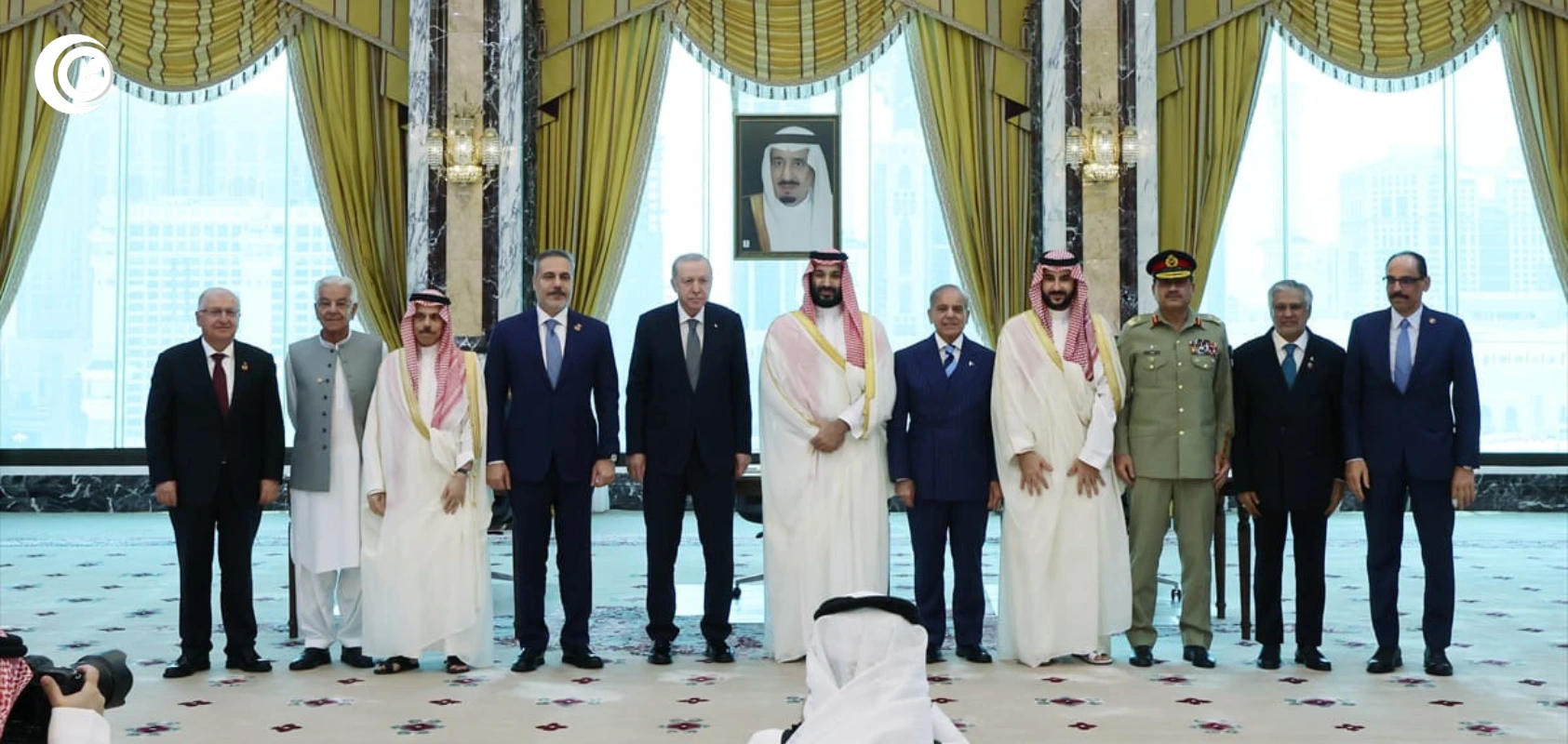



Pakistan, Saudi Arabia, and Turkiye have officially signed a landmark trilateral security pact titled the “Mecca Agreement,” establishing a mutual defense framework that pledges a collective military response if any of the three signatory nations comes under armed attack.
The treaty, finalized in Islam’s holiest city, marks one of the most significant realignments in regional security architecture in recent decades. According to the text of the agreement, an armed attack against any one of the three states will be regarded as an attack against them all. The document further outlines a framework for broad defense cooperation, including enhanced military intelligence sharing, joint technology development, coordinated arms procurement, and streamlined military-to-military training protocols.
The core mechanism of the Mecca Agreement closely mirrors the collective defense provisions of Western alliances, formally linking the security strategies of South Asia, the Gulf, and the Mediterranean.
The key pillars outlined in the official framework include:
- Mutual Defense Mandate: Formal commitment to treat an external armed aggression against one signatory as an aggression against all three, triggering collective defense measures.
- Defense Industrial Integration: Direct protocols to deepen joint production capabilities, focusing on advanced drone technology, aerospace systems, and defense hardware transfer.
- Operational Cooperation: Expanded joint military exercises, strategic consultations, and inter-operability integration across air, sea, and land forces.
The signing comes amidst evolving geopolitical shifts across the Middle East and South Asia. For Saudi Arabia, the pact diversifies its security guarantees, binding its regional defense posture to Pakistan’s large conventional forces and Turkiye’s NATO-standard defense manufacturing sector.
For Turkiye, NATO’s second-largest military power, the treaty expands Ankara’s strategic footprint and defense export markets deeper into the Gulf and South Asia. For Pakistan, the agreement formally solidifies its strategic defense alignment with key economic and diplomatic partners in the Muslim world.
While officials from all three nations hailed the accord as a milestone for regional stability and self-reliance, international observers note that the operational integration of the agreement including joint command structures and protocols regarding existing international commitments remains to be finalized by defense representatives in the coming months.