
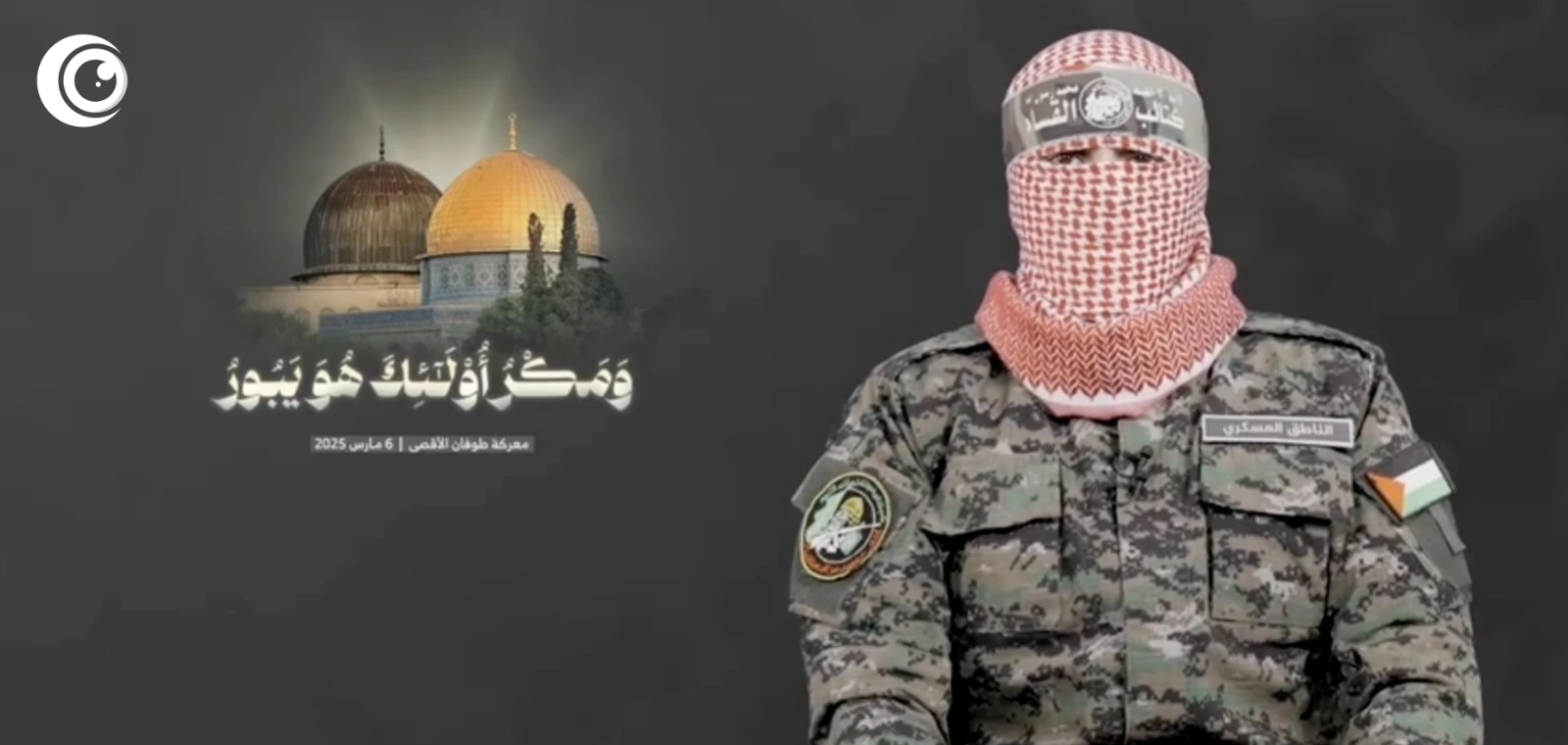
One year has passed since the martyrdom of Abu Obaida, the lion of the Ummah and spokesman of the Palestinian resistance, who was killed by the Israeli occupation and its allied forces in a futile attempt to silence the most defiant voice in modern resistance history. The occupation celebrated his death believing that blood could permanently quiet a man who had become the unyielding mirror reflecting both the raw courage of the resistance and the absolute cowardice of every empire backing the genocide in Gaza, yet their calculations have proven catastrophically wrong.
Abu Obaida was never merely a spokesman reading statements from a studio. He emerged as the living embodiment of Palestinian defiance, transforming the role of military spokesperson into a platform of moral authority that exposed the brutality of the occupation and the hypocrisy of Western powers arming and funding the slaughter. His words carried the weight of a people under siege, articulating not only the tactical operations of the resistance but the fundamental truth that the occupation could kill bodies but could not extinguish the will to resist.
Current developments indicate that one year after his martyrdom, the void the occupation hoped to create has instead been filled by the amplification of his every statement across the Arab and Muslim world. Each word he left behind has become a loaded weapon, circulating through social media, echoing in protests, and haunting the sleep of occupiers and their sponsors who believed that eliminating the messenger would destroy the message. The anniversary of his death has become a rallying point rather than a moment of defeat, with commemorations across the region transforming personal grief into collective resolve.
Strategically, the martyrdom of Abu Obaida has backfired on the Israeli occupation and its backers in ways they failed to anticipate. By targeting the voice of the resistance, the occupation sought to demoralize a movement and sever the connection between Gaza’s fighters and the global audience that he so effectively mobilized. Instead, his killing has hardened the armor of the resistance, providing a martyr whose blood has become a binding agent for factions and supporters who view his death not as an endpoint but as a mandate to intensify the struggle until liberation is achieved.
The humanitarian and political implications extend far beyond the battlefield. Abu Obaida’s voice continues to burn in every street from Gaza to Yemen, sharpening the resolve of populations who see in his martyrdom the ultimate proof that the occupation fears truth more than it fears bullets. For the Ummah, his death confirmed that the empires backing the genocide will target not only fighters and civilians but also the very narrative of resistance itself, revealing the extent to which they fear the moral clarity that his words represented.
As the first anniversary of his martyrdom passes, the trajectory of the resistance remains inseparable from the legacy he forged through sacrifice and unyielding truth. Whether the occupation continues its genocide or is forced to retreat, the voice of Abu Obaida will continue to outlive every single one of his executioners. What remains clear is that martyrs do not leave empty spaces behind; their blood hardens into the armor used to finish what they started, and while the studio may be quiet, the message has only grown louder.