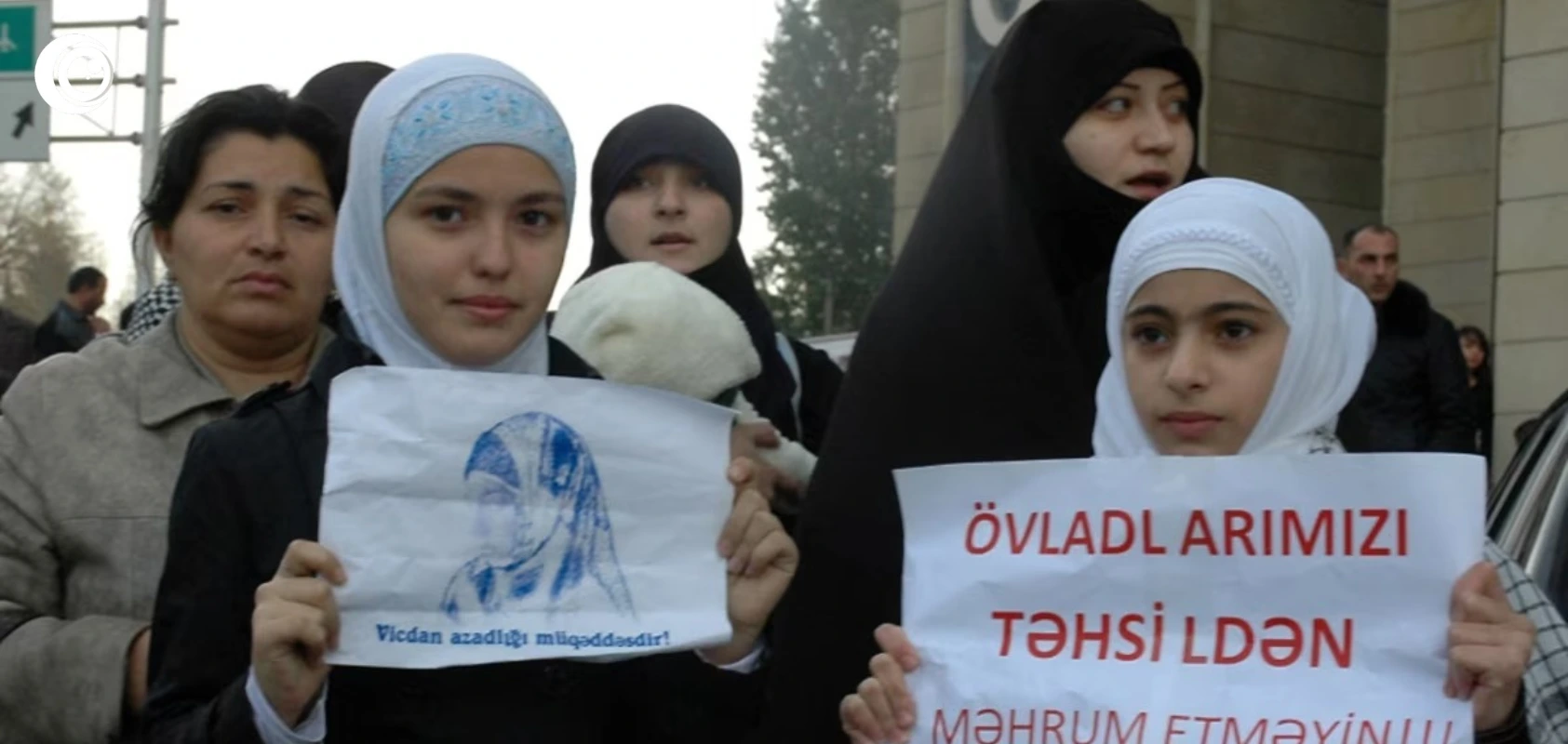
Hijab-wearing schoolgirls in Azerbaijan have been turned away from classrooms following new government-backed uniform regulations, sparking protests and renewed criticism of the country’s treatment of practicing Muslims. Videos published in September and October showed students leaving schools in tears, while pupils at other schools reportedly boycotted classes in solidarity. The government’s September 21 amendments prohibit clothing deemed incompatible with school uniform requirements and the secular principle of education, without explicitly naming hijab. Critics argue that the enforcement is effectively restricting Islamic headscarves and placing Muslim girls’ access to education at risk.
Azerbaijan’s secular framework has roots in its Soviet past, when religious institutions faced extensive state control. Since independence in 1991, authorities have continued to regulate religious activity, citing secular governance and security concerns. But the reported exclusion of hijab-wearing students has intensified accusations that the government is prioritising its secular ideology over the religious rights of its Muslim-majority population. For families who regard hijab as a religious obligation, being denied access to school over a headscarf raises serious questions about freedom of conscience and equal access to education.
The controversy takes on added geopolitical significance because of Azerbaijan’s strategic energy relationship with the Israeli entity. According to Reuters reporting based on Kpler data, Azerbaijan supplied approximately 46.4% of Israel’s crude oil imports in 2025, averaging around 94,000 barrels per day. The oil is transported through the Baku–Tbilisi–Ceyhan pipeline before being shipped to Israeli ports. These supplies continued while the genocide in Gaza had killed more than 70,000 Palestinians, according to figures reported by the United Nations. Critics argue that Azerbaijan’s continued energy cooperation with the Israeli entity exposes a stark contradiction between its Muslim-majority society and the government’s strategic priorities.
The impact of Azerbaijan’s policies is being felt both in classrooms and in the wider religious community. International religious-freedom monitors have documented restrictions on religious organisations and cases involving Muslim clerics and activists. The reported exclusion of schoolgirls adds an immediate educational dimension to those concerns, while restrictions on independent expression can make it harder for affected families to challenge official decisions. Critics argue that a government cannot credibly uphold freedom of conscience while allowing religious dress to become a barrier to education.
Azerbaijan now faces mounting scrutiny over both its domestic treatment of Muslim citizens and its strategic partnership with the Israeli entity. The authorities must clarify the school regulations, investigate reports of students being denied entry and ensure that religious head coverings do not become grounds for discriminatory exclusion. At the same time, the country’s continued oil supplies to the Israeli entity raise questions about the political choices made by a government representing a predominantly Muslim population. For critics, the issue is no longer simply secularism or energy trade, but whether Azerbaijan’s policies reflect the rights and concerns of its own Muslim citizens.