
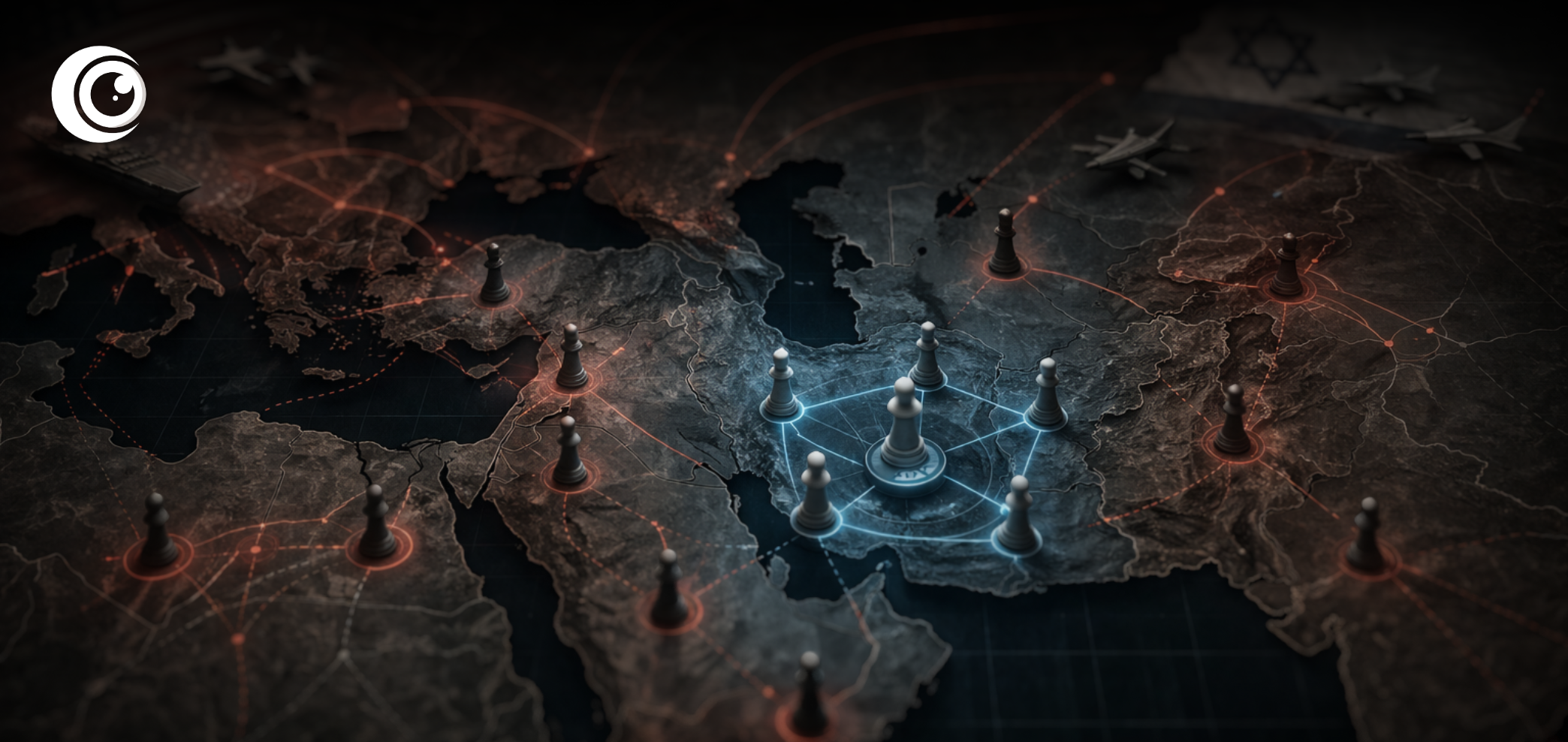


For decades, the Muslim world has watched its cities burn and its wealth drained by wars it did not start. From Yemen to Gaza to Syria, the pattern remains the same: a crisis erupts, the US-Israeli axis frames it as a security threat, and the lands of Islam become a battlefield for everyone except Muslims themselves. Now, following the devastating 2026 military confrontation with Iran, Tehran has posed a devastating question: What have American bases ever brought to the Muslim world? And if Israeli tanks rolled across your border tomorrow, would Washington fire a single bullet in your defense?
This challenge cuts to seventy years of strategic humiliation. Iran’s call for a regional “security union” independent of the United States and Israel is not mere diplomacy. It is a revolutionary proposal aimed at a geopolitical game that has kept the Islamic world fractured and perpetually at war with itself. The 2026 conflict has made this calculus brutally clear, oil prices surging past $110 a barrel, global inflation choking economies from Karachi to Cairo, and the people of the region once again picking through debris.
The tragedy is that this system was designed for exactly this outcome. The United States perfected offshore balancing: maintaining dominance by ensuring no single power in the Muslim world can ever become strong enough to say no. In Syria, US support for Kurdish forces systematically blocked Iranian influence. In Yemen, American weaponry turned a civil war into a proxy war exhausting both Saudi Arabia and Iran. The goal was never victory — it was a stalemate so debilitating that every nation remained dependent on Washington.
Israel has exploited these fractures with surgical precision. Through the Abraham Accords and its shadow war of airstrikes and cyberattacks, it has sent a single message: resistance is futile, and the only path to security is alignment with Tel Aviv. The 2026 war accelerated this logic, forcing Gulf states to publicly condemn violence while privately depending on American air defenses.
The proposed security union aims to dismantle this trap. It is not a naive call for a single caliphate but a practical framework for collective self-reliance. An attack on one member’s oil fields or holy sites would be treated as an attack on all. The union would develop a joint military command, a shared defense industry, and an economic fund independent of the World Bank. The scandal of Muslim nations buying incompatible weapons from competing foreign powers must end.
Of course, the enemies of this vision will fight it. Washington will brand it an “Iranian-led axis of evil.” Israel will intensify its shadow war. And within the Muslim world, corrupt elites dependent on foreign training benefit from the current chaos. Yet what is the alternative? More American bases protecting American interests? More Israeli strikes killing Iranian scientists and Syrian civilians with equal indifference?
The 2026 conflict has laid bare the catastrophic cost of the current order. The surge in energy prices, the civilian casualties, the millions displaced — these are not side effects but the currency of this geopolitical game. A prosperous, united, and technologically advancing Muslim world would end the unipolar moment, shatter Israel’s dream of permanent military dominance, and give a billion and a half Muslims agency over their own destiny.
The question echoes across every city destroyed by foreign bombs. What have US bases brought? Dependence. Humiliation. Managed insecurity where only arms dealers win. The call for a security union based on Islam is a call to reclaim the board. No foreign power will sacrifice its interests for a Muslim child in Gaza or an engineer in Isfahan. That responsibility belongs to us alone. The ruins of the old order are still smoking. The question is whether we have the courage to build something new from the ashes.