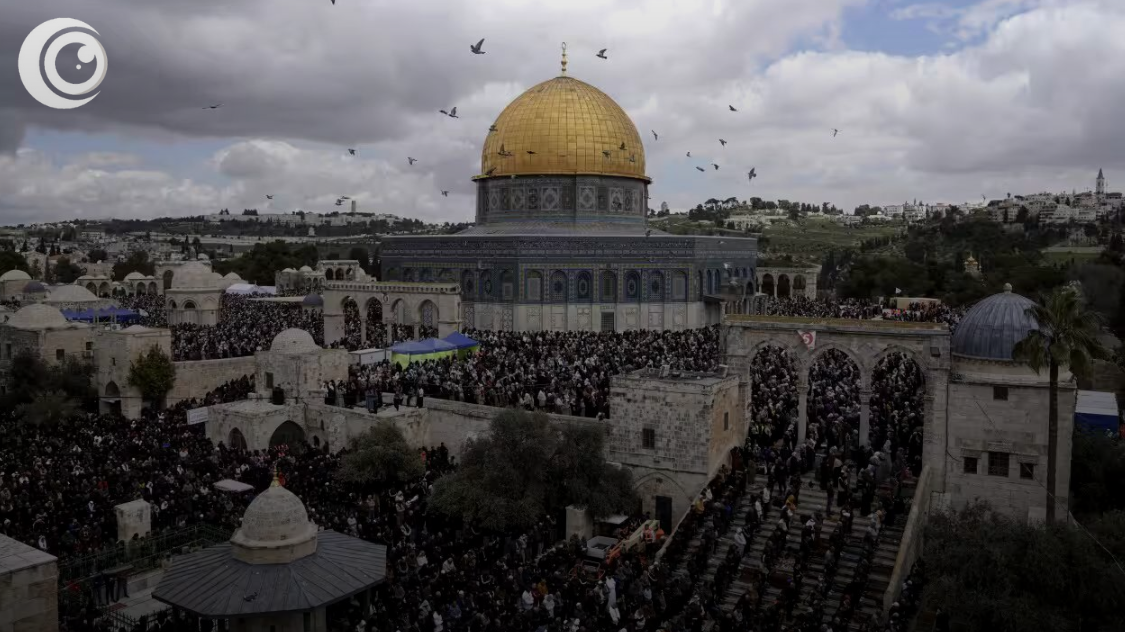
The Governor of Jerusalem has issued a stark warning that the Al-Aqsa Mosque, one of Islam’s holiest sites, is at risk of structural collapse due to intensified Israeli excavation works taking place beneath and around the sacred compound. Reports suggest that the ongoing digging near the southern and western walls threatens the very foundation of the mosque, raising alarm among Palestinian authorities, religious leaders, and international observers.
The Al-Aqsa Mosque, located within the Old City of Jerusalem, holds profound religious significance for Muslims worldwide. The site, also revered by Jews as the Temple Mount, has long been at the heart of religious and political tensions. For years, Palestinians have accused Israel of conducting unauthorized excavations in the area, claiming these activities undermine the stability of surrounding structures and alter the historical integrity of the site. Israel maintains that the excavations are part of archaeological and infrastructural projects.
Recent reports indicate that Israeli authorities have expanded excavation operations beneath and adjacent to Al-Aqsa, particularly near the southern and western walls. Palestinian officials and engineers warn that visible cracks have begun appearing in certain areas, suggesting that underground tunneling may have weakened the foundations. The Jerusalem Governor’s office has declared the situation “critical,” urging international intervention to prevent irreversible damage.
Any threat to the structural integrity of Al-Aqsa Mosque carries significant geopolitical consequences. The site’s religious and symbolic importance makes it a flashpoint capable of inflaming regional tensions across the Muslim world. Escalation around Al-Aqsa could destabilize already fragile relations between Israel and neighboring states, while also heightening unrest in the occupied Palestinian territories.
Beyond the immediate structural threat, the situation has deep humanitarian implications. The mosque complex serves as a place of daily worship and community gathering for thousands of Palestinians. Disruption or destruction of the site would not only represent a cultural and spiritual loss but could also provoke widespread protests, confrontations, and civilian casualties amid already heightened tensions in Jerusalem.
Palestinian officials have condemned the excavation works, calling them a “direct assault on Islamic heritage.” The Jerusalem Islamic Waqf, the body responsible for managing the mosque, has demanded an immediate halt to the digging. Meanwhile, international organizations and several Muslim-majority countries have voiced concern, urging Israel to respect the sanctity and legal status of religious sites in occupied East Jerusalem. The Israeli government has yet to issue a detailed response to the latest warnings.
As excavation activities continue beneath and around the Al-Aqsa compound, concerns over the mosque’s stability are mounting. Calls for international oversight and intervention are growing louder, with many fearing that inaction could lead to a catastrophic collapse or ignite broader regional conflict. For now, the fate of one of the world’s most sacred and contested religious landmarks hangs in a precarious balance.