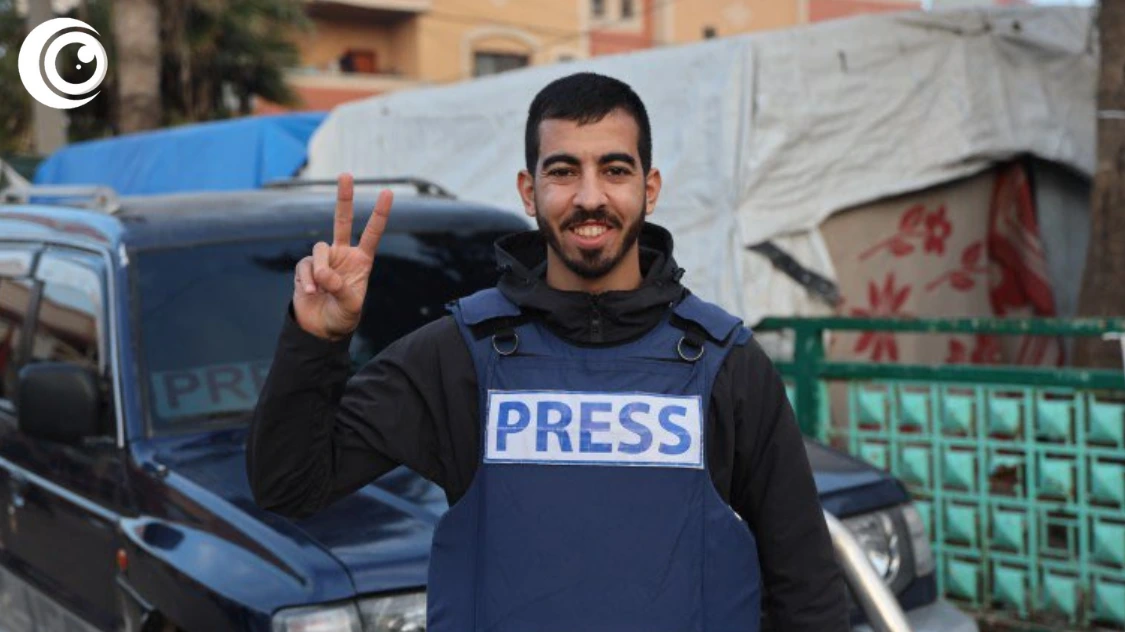
Gaza City – Amid a tenuous ceasefire declared between Israel and Palestinian resistance factions, the killing of renowned journalist Saleh Al-Jafarawi has sparked outrage across Gaza and beyond. Al-Jafarawi, known for his fearless reporting on Israeli military operations and internal corruption, was reportedly shot dead by collaborator militias operating under Israeli coordination, in what observers describe as a targeted assassination aimed at silencing independent reporting even during the ceasefire.
The ceasefire, announced only days earlier after months of intense bombardment, was intended to allow a temporary pause in hostilities and humanitarian relief. Instead, it appears to have provided cover for covert operations, assassinations, and suppression of independent voices exposing occupation crimes. Saleh’s death underscores that even during periods of so-called calm, Gaza remains under siege not only militarily, but through manipulation and betrayal from within.
Al-Jafarawi had gained prominence for documenting the human cost of Israel’s siege, including bombed hospitals, displaced families, and civilian casualties. His murder by local collaborators, reportedly supported through financial incentives and intelligence provided by Israeli forces, highlights a deliberate strategy to fracture Palestinian society and undermine accountability. These collaborator networks, incentivized to betray their own communities, serve as a lethal extension of the occupation, enabling targeted attacks against journalists and activists.
The background of this situation reflects a systematic campaign against media and independent oversight. Since the start of the recent Gaza offensive, Israel has repeatedly targeted journalists, aid workers, and medical personnel. Human rights groups report that over 150 media workers have been killed in Gaza in the past year, making it one of the deadliest regions in the world for journalists. This campaign goes beyond conventional military tactics, incorporating cyber surveillance, misinformation, and targeted assassinations to control information.
In current developments, the ceasefire has failed to ease the blockade significantly. Aid deliveries remain limited, hospitals are under-resourced, and internal crackdowns on journalists and civil society persist. Reports indicate that collaborator militias, supported by external intelligence, are actively targeting individuals like Saleh to prevent documentation of abuses, further weakening societal cohesion.
The strategic implications of these actions are considerable. Israel’s use of collaborators extends its control beyond military engagement, destabilizing communities and ensuring compliance even during ceasefire periods. This strategy is amplified by support from Western powers, particularly the United States and the United Kingdom, which continue military aid and diplomatic cover, allowing such violations to occur with impunity. Regional actors, including Egypt, the UAE, and other nations, have also deepened economic and political ties with Israel, prioritizing financial and strategic interests over civilian protection and accountability.
From a humanitarian perspective, the targeting of journalists exacerbates the suffering in Gaza. Beyond physical destruction, the systematic elimination of reporters obstructs documentation of human rights violations, leaving civilians vulnerable to ongoing abuses without public record or international scrutiny. Every journalist silenced represents not only a loss of information but a blow to transparency and public awareness.
Regional reactions have been mixed. Grassroots movements and human rights organizations across the Middle East and Europe have condemned the assassination, while governments closely allied with Israel have offered limited or symbolic criticism. Western media coverage has largely framed the killing as an isolated incident rather than as part of a systematic campaign against independent reporting in Gaza, reflecting a broader failure to hold occupiers accountable.
In conclusion, Saleh Al-Jafarawi’s death represents both the human cost of occupation and the suppression of truth. While the ceasefire continues, the underlying mechanisms of control covert operations, internal betrayal networks, and external political support remain intact. The murder exposes the fragility of any temporary peace in Gaza and underscores the urgent need for international oversight, accountability, and protection for journalists operating in conflict zones.
Saleh Al-Jafarawi will be remembered not only for his reporting but for his courage in the face of sustained threats to truth and accountability. His death is a stark reminder of the dangers faced by journalists documenting occupation, and the continuing responsibility of global powers to ensure that those who commit, enable, or ignore such crimes are held accountable.