
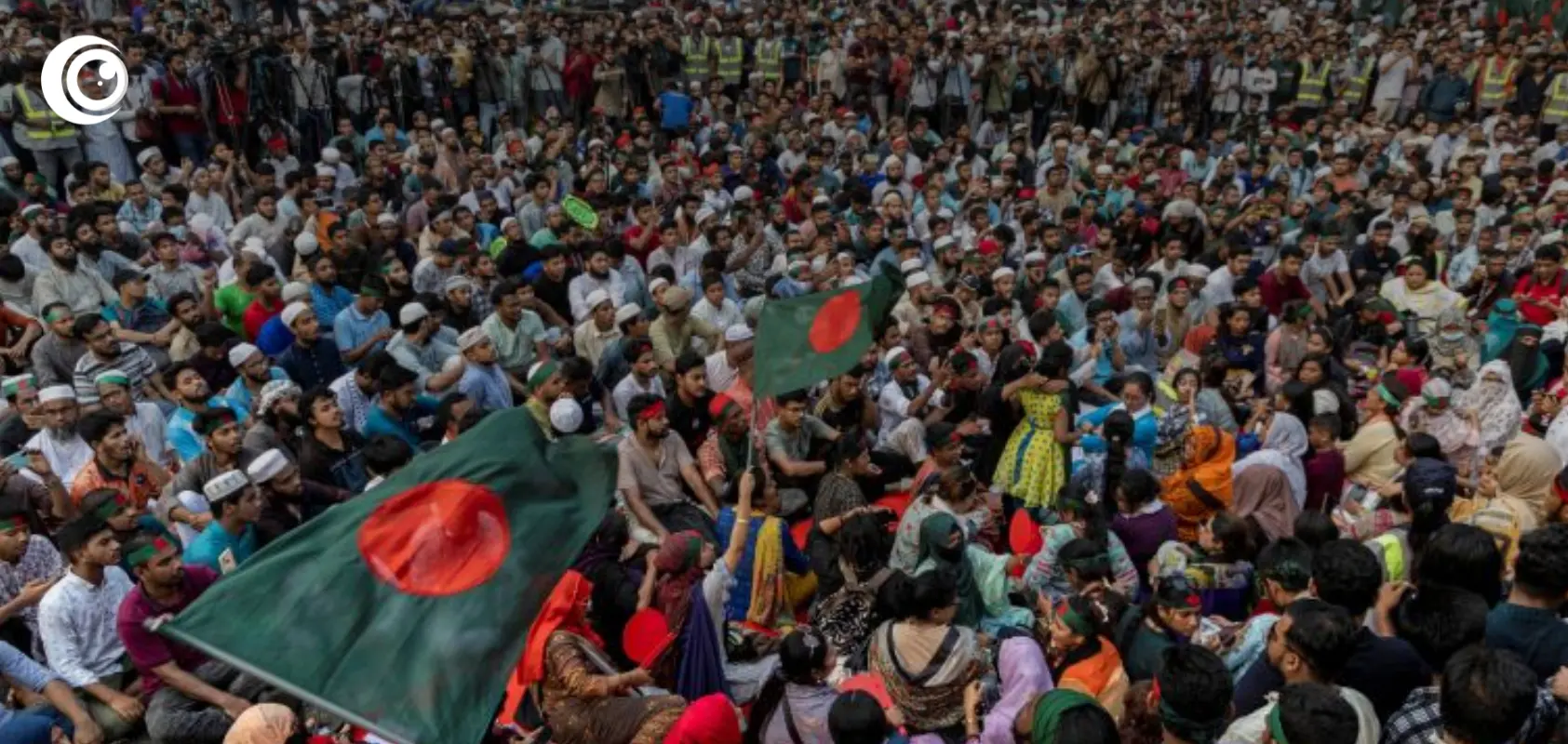


Thousands of protesters filled the streets of Dhaka today, demanding accountability from Nobel laureate Mohammed Yunus over allegations of financial misconduct and political interference. The demonstrations, organized by student groups and labor unions, marked one of the largest anti-Yunus mobilizations seen in recent years.
Crowds gathered near the National Press Club and Shahbagh Square, chanting slogans and calling for investigations into Yunus’s microfinance institutions, which they accuse of exploiting poor borrowers. Police were deployed across key intersections to contain the growing unrest, with reports of clashes in several neighborhoods.
The protests come as Bangladesh faces deepening political polarization ahead of the upcoming elections. Critics of Yunus have long accused him of using his international reputation to influence domestic politics, while his supporters insist the charges are politically motivated and designed to silence a prominent reformist voice.
Government officials have maintained that the investigations into Yunus’s business dealings are part of broader efforts to enforce transparency in the financial sector. However, opposition leaders claim the crackdown reflects the ruling party’s intolerance toward independent figures who challenge its narrative.
International observers are closely monitoring the developments. Western governments, which have long hailed Yunus as a pioneer of microcredit, have urged Dhaka to ensure that due process is followed. Yet local activists argue that foreign support often shields influential elites from scrutiny.
The protests in Dhaka reflect growing frustration among Bangladesh’s working class and youth over inequality, corruption, and the erosion of democratic freedoms. As tensions rise, the standoff over Yunus has become a symbol of the country’s larger struggle between power and accountability.
If the movement gains further momentum, it could reshape Bangladesh’s political landscape either by forcing greater transparency or by deepening the divisions that have long defined its fragile democracy.