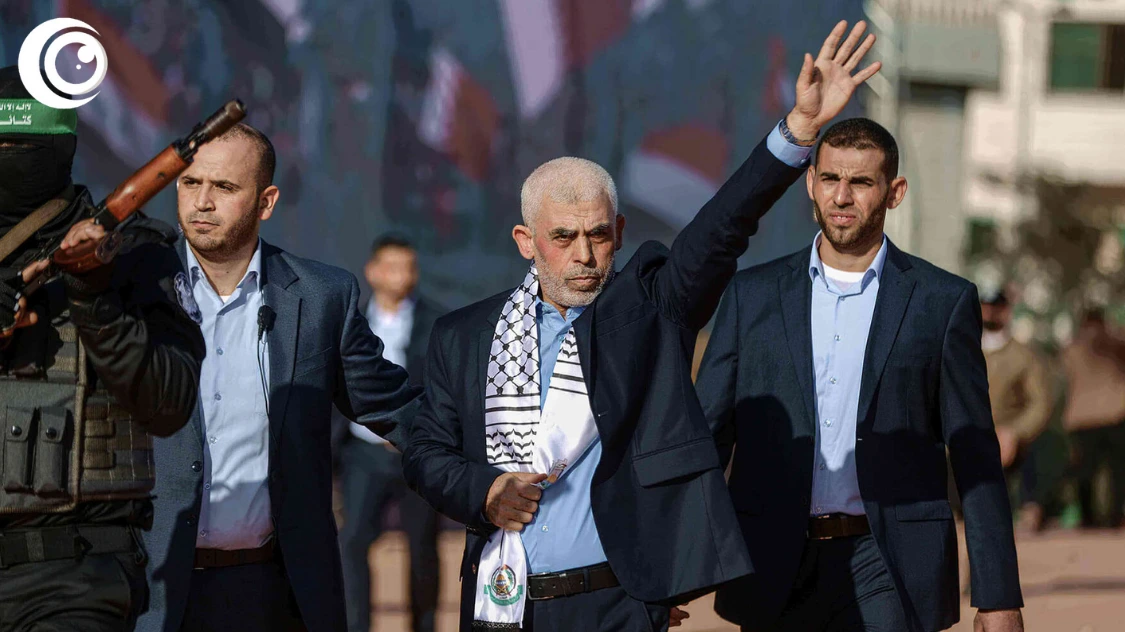
Gaza City – The Palestinian resistance movement Ha-mas commemorated the first anniversary of its late commander Yahya al-Sinwar (Abu Ibrahim), describing him as a “heroic martyr” whose decades of imprisonment and defiance embodied the enduring spirit of Palestinian resistance. In a statement, the movement affirmed that his death alongside those of countless others “will only make our people and our resistance stronger, more resilient, and more determined to uphold their principles.” The anniversary arrives amid ongoing devastation in Gaza, where Israel continues its siege and bombardment despite global calls for restraint.
Al-Sinwar’s legacy, rooted in over 23 years of incarceration and resistance, was honored as a turning point in what Hamas called “The Flood of the Free,” referencing a prisoner exchange in which nearly 2,000 Palestinians were released. The movement framed the exchange as both a humanitarian and strategic victory, achieved at immense sacrifice. Yet, the situation in Gaza since then has grown increasingly dire: the enclave remains sealed under Israeli blockade, with electricity, fuel, and medicine deliberately restricted collective punishment long condemned by the UN as a violation of international law.
While Tel Aviv projects narratives of “self-defense,” the realities on the ground tell another story one of systematic deprivation, displacement, and destruction. Israeli forces continue to level civilian infrastructure under the guise of security operations, targeting residential towers, hospitals, and universities with precision strikes that have left tens of thousands displaced. International watchdogs have repeatedly documented these actions as potential war crimes, but global powers notably the United States and United Kingdom have chosen complicity over conscience, providing both political cover and lethal weaponry to sustain the assault.
Strategically, Israel’s tightening control over Gaza’s crossings and its expanding settlements across the West Bank point to a long-term goal that extends far beyond “defense.” The pattern reflects a systematic dismantling of any future Palestinian sovereignty. Meanwhile, Western capitals continue to echo Tel Aviv’s talking points while suppressing dissent at home criminalizing pro-Palestine demonstrations and labeling advocacy for Palestinian rights as extremism. This hypocrisy reveals a profound moral collapse: the same nations that preach democracy and human rights have become financiers of a siege that starves children and flattens neighborhoods.
Across the region, Arab regimes that once claimed to champion the Palestinian cause now maintain discreet ties with Israel, prioritizing trade deals and defense pacts over the lives of their fellow Arabs. Their silence, punctuated by hollow statements, signals a betrayal not just of political solidarity but of basic humanity. Egypt, Jordan, and the Gulf monarchies continue to police their borders more strictly than Israel itself, blocking aid convoys and detaining activists, while publicly professing concern for Gaza’s suffering. This selective morality serves the interests of Western capitals, not the conscience of the Muslim world.
As Gaza marks this solemn anniversary, the resistance’s message remains defiant: that martyrdom is not an end but a continuation of struggle. The people of Gaza persist under siege, holding onto hope even as the world averts its eyes. Israel’s actions shielded by Western indifference and regional opportunism have exposed a global order where power excuses cruelty and truth is censored for convenience. Until accountability replaces impunity, and justice is valued above alliance, the blood of Gaza’s martyrs will continue to testify not merely to their sacrifice, but to the world’s collective failure to stop the oppression they died resisting.