
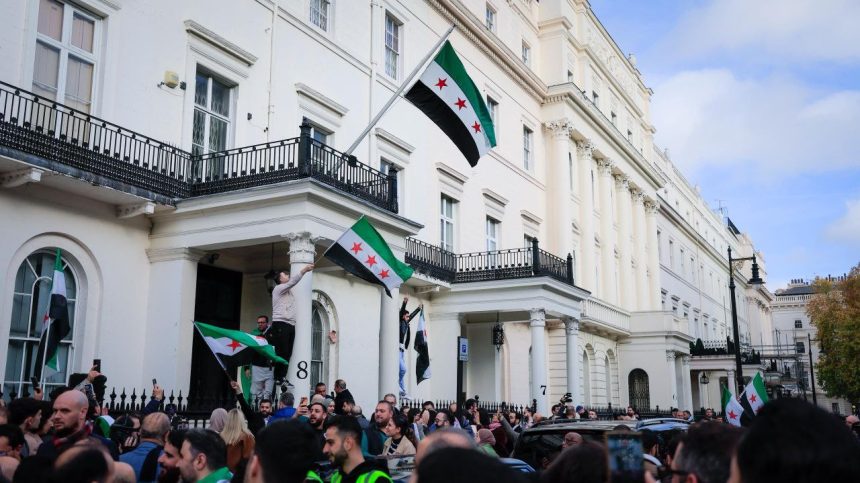

The Syrian Embassy in London officially reopened on Thursday, marking the first time since 2012 that Syria has resumed full diplomatic operations in the United Kingdom. The reopening signifies a major shift in bilateral relations, ending more than 13 years of diplomatic suspension triggered by the outbreak of the Syrian conflict.
The UK shut down Syria’s diplomatic mission in 2012 as violence escalated across Syria during the early phase of the civil war. London, along with several Western states, accused Damascus of severe human rights violations and withdrew formal diplomatic ties. Since then, communication between the two countries has been limited to indirect channels or third-party mediators.
Over the past three years, however, regional normalization efforts—led by countries within the Middle East—have encouraged Western governments to gradually re-engage with Damascus. The UK’s decision to allow the embassy to reopen reflects this broader trend of cautious diplomatic re-assessment.
A formal reopening ceremony was held at the Syrian Embassy building in London, attended by diplomats, community members, and observers. The event included the raising of the Syrian flag and the introduction of the newly appointed charge of affaires, who will oversee operations until a full ambassador is named.
British officials have emphasized that the reopening does not imply full endorsement of Syrian government policies but represents a “pragmatic step” to improve communication on security, humanitarian issues, counter-terrorism, and migration-related matters.
Meanwhile, Syrian state media hailed the move as “a diplomatic victory,” stressing that renewed dialogue will help address long-standing misunderstandings and rebuild economic ties.
The embassy’s reopening could influence broader international policy toward Syria. Analysts note that the UK’s decision may encourage other European nations to reconsider their level of engagement with Damascus, especially amid shifting geopolitical priorities in the Middle East.
Improved communication could also affect humanitarian coordination, refugee repatriation discussions, and regional stability efforts. At the same time, critics warn that re-engagement without concrete political reforms could weaken international pressure on Syria’s leadership.
For regional actors—particularly Arab states that recently restored ties with Damascus—the UK’s move represents progress toward reintegrating Syria into global diplomatic frameworks.
The reopening may ease documentation challenges for Syrian nationals living in the UK, many of whom have struggled for years to renew passports, register births, or obtain legal services due to the embassy’s closure. Humanitarian organizations have cautiously welcomed this development, noting that easier access to consular services could alleviate daily hardships faced by Syrians abroad.
However, rights groups emphasize that improved diplomatic ties should not overshadow ongoing humanitarian concerns inside Syria, where millions remain displaced and reconstruction needs continue to grow. Observers stress that the ultimate impact of renewed UK–Syria relations will depend on whether future diplomatic dialogue addresses these critical humanitarian issues.