
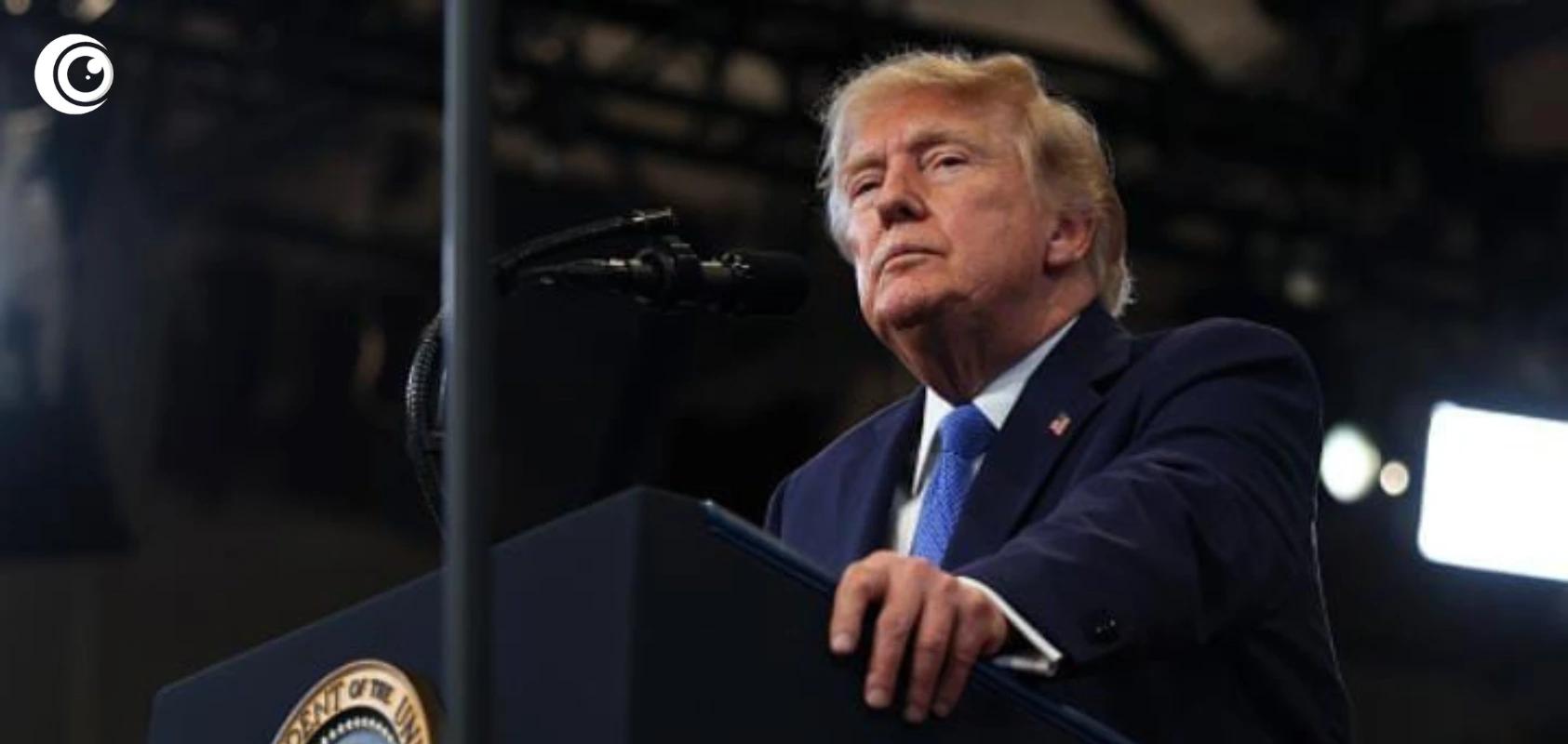


US President Donald Trump publicly praised the formalization of the Mecca Joint Defence Agreement on Sunday, characterizing the trilateral security pact between Saudi Arabia, Turkiye, and Pakistan as a major milestone for regional self-reliance and collective deterrence.
“Very happy to see that Saudi Arabia, Turkiye, and Pakistan have recently, and finally, signed the Mecca Joint Defence Agreement,” Trump stated in a public reaction to the signing. “It shows how the Middle East is coming together, and how Countries will finally be able to defend themselves in a more meaningful way. Congratulations to the Great Leadership of the three Nations mentioned.
Formalized on August 7 in Mecca, the trilateral agreement establishes an integrated collective defense framework among three of the Islamic world’s most influential diplomatic, industrial, and military powers. At the heart of the pact is a joint deterrence clause stipulating that an armed attack against any one of the member states will be treated as an attack against all three.
The agreement builds upon the foundation of the bilateral Strategic Mutual Defence Agreement signed between Saudi Arabia and Pakistan in September 2025. By incorporating Turkiye a long-standing NATO member with an advanced defense-industrial manufacturing sector, the trilateral treaty creates a formidable security framework that blends Saudi capital, Turkish military technology, and Pakistani manpower and nuclear capabilities.
Trump’s strong endorsement aligns with his broader “America First” strategic doctrine, which advocates for regional powers to take greater responsibility for their own security expenditures and troop deployments. Rather than viewing the alliance as an attempt to bypass Western influence, Washington views the pact as a constructive step toward regional allies shouldering a heavier share of local defense burdens.
For Saudi Arabia, Turkiye, and Pakistan, the agreement represents a practical response to ongoing regional volatility, providing a unified diplomatic and military front against potential aggression. By establishing a shared command framework, the three signatories aim to safeguard crucial maritime trade routes, enhance energy infrastructure security, and deter asymmetric threats across South Asia and the Arabian Gulf.
Ultimately, the enthusiasm surrounding Trump’s statement underscores a shifting paradigm in international diplomacy, where middle powers are actively forming autonomous security architectures. As implementation details emerge, the Mecca Joint Defence Agreement stands as a pivotal moment in the geopolitical realignment of the broader region.