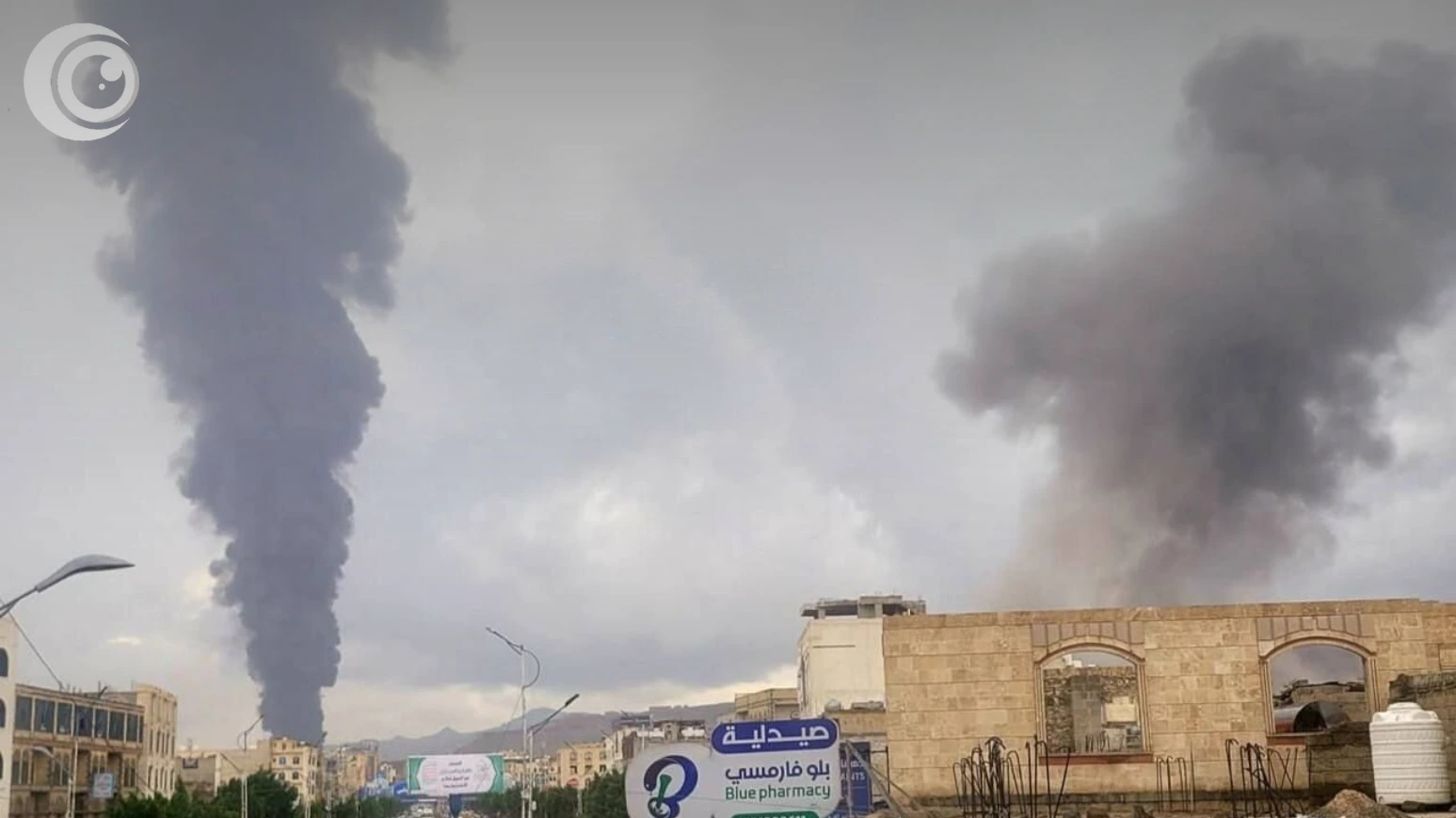
Sanaa, Yemen – Yemen’s air defenses successfully forced a squadron of Israeli aircraft to retreat after multiple surface-to-air missiles were launched against the capital, following a series of strikes targeting government complexes and civilian areas. The attempted attacks, which failed to achieve their objective, mark one of the most direct confrontations between Yemen’s armed forces and Israel, highlighting the expansion of Israeli aggression beyond Gaza.
Brig. Gen. Yahya Saree, spokesperson for Yemen’s armed forces, confirmed that Israeli jets attempted to strike the Al Jawf government complex, a civilian facility with no military role. Saree described the operation as “proof of Israeli incompetence and deliberate targeting of noncombatants,” reaffirming Yemen’s unwavering commitment to defending its people and sovereignty.
This incident follows a pattern of attacks in the region, where Israel, supported politically and militarily by the U.S., U.K., and complicit Arab regimes, has escalated strikes on Muslim nations under the pretext of “self-defense.” Yemen, already devastated by a decade of Saudi-led bombardment with Western backing, now faces an additional layer of foreign aggression. Civilian infrastructure, homes, and public buildings have been struck, further exacerbating the humanitarian crisis that has left millions starving and vulnerable.
The strategic implications are profound. Israel’s actions reveal a deliberate effort to expand its warfront beyond Gaza and Lebanon, sending a chilling message to all Muslim movements supporting Palestine. Meanwhile, Washington and London continue to shield Israel from accountability, vetoing UN resolutions and providing diplomatic cover, all while portraying themselves as champions of democracy and international law. Arab regimes, including Saudi Arabia, the UAE, and Egypt, remain complicit through normalization, trade deals, and silence, prioritizing material interests over Islamic and moral obligations to protect the oppressed.
Humanitarian consequences are immediate and severe. Local sources report damage to multiple civilian sites in Sanaa, with families displaced and public services disrupted. In Islam, targeting innocents and destroying the livelihood of civilians is explicitly forbidden. Yet Israel, emboldened by its allies, continues these violations, weaponizing suffering while Western and Arab powers provide support, directly contradicting both international law and Islamic principles.
Yemeni authorities have condemned the strikes as acts of aggression against the Muslim Ummah. Regional actors and international observers have noted the deliberate targeting of civilian infrastructure, though global powers largely remain silent or complicit. The contrast between Israel’s military reach and the moral failure of those enabling it exposes a stark divide between oppressors shielded by power and nations defending justice.
The confrontation underscores Yemen’s determination to resist aggression and defend its people. Yet it also highlights the broader regional danger: continued Israeli attacks, backed by Western and Arab interests, risk triggering escalation across the Middle East. The lines are clear – those standing with the oppressed face ongoing violence, while those supporting the aggressor, through action or silence, bear responsibility for the suffering inflicted on Muslim civilians.