
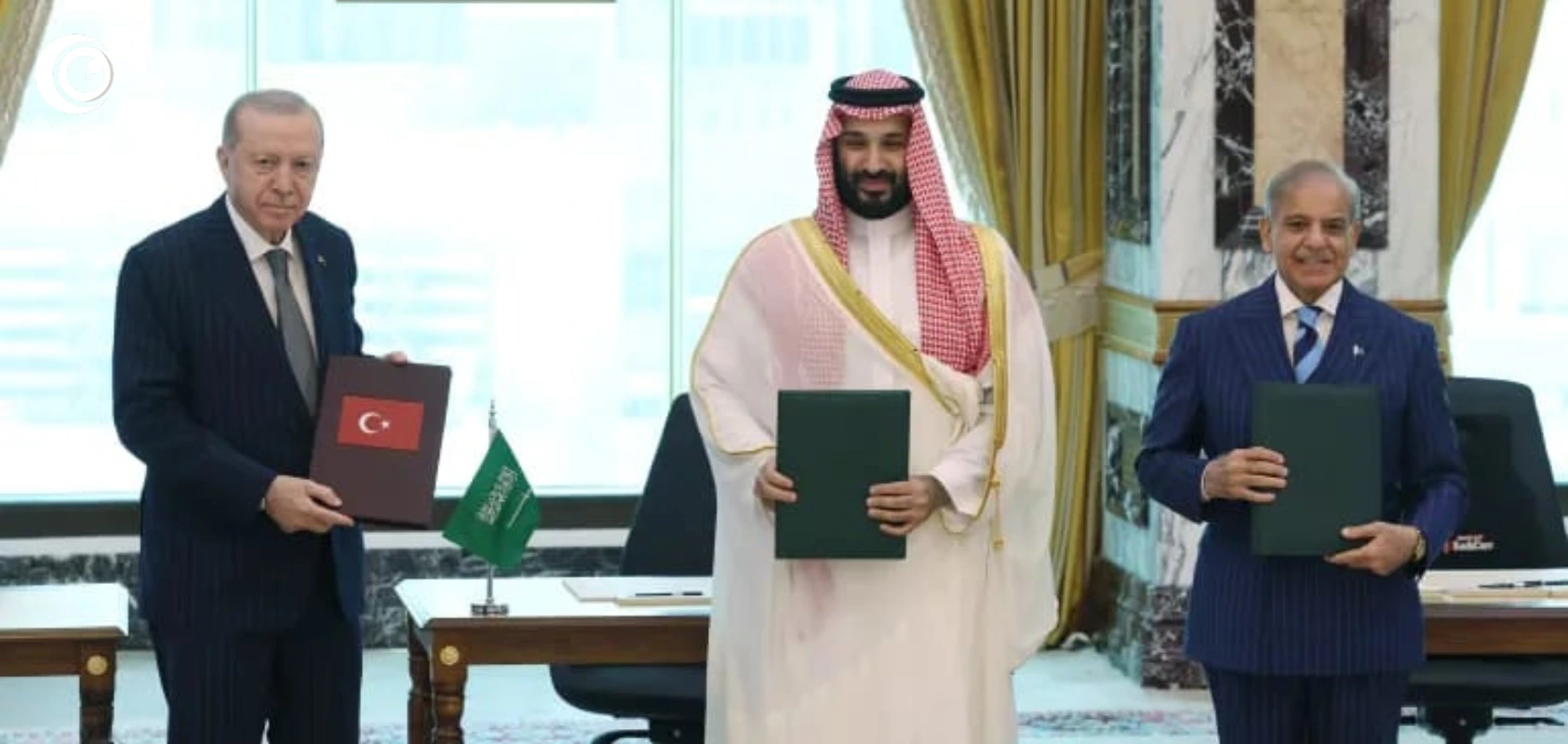




Turkey, Saudi Arabia, and Pakistan will sign a joint defense agreement in Saudi Arabia on Friday, according to two regional sources with direct knowledge of the matter who spoke to Reuters. The pact comes amid heightened tensions between Saudi Arabia and Yemen’s AnsarAllah movement, as well as ongoing discussions regarding a joint maritime coalition aimed at breaking the AnsarAllah imposed blockade in the Red Sea.
The background to this development lies in the longstanding military and security relationships binding these three states. Pakistan has maintained deep defense ties with Saudi Arabia for decades, including troop deployments, training missions, and the recently activated Strategic Mutual Defense Agreement that treats an attack on either country as an attack on both. Turkey has increasingly positioned itself as a major defense exporter and regional power broker, supplying drones and military hardware to Gulf states while expanding its strategic footprint across West Asia. The convergence of these three militaries signals a formalization of a Sunni majority security axis that has been taking shape through bilateral deals and shared hostility toward Iranian aligned resistance movements.
Current developments indicate that the trilateral agreement will be signed as Riyadh intensifies its campaign against AnsarAllah operations in the Red Sea. The Yemeni movement has targeted commercial shipping linked to the Israeli occupation and its allies to pressure an end to the genocide in Gaza, imposing a blockade that has disrupted global trade routes. Saudi Arabia’s push for a joint maritime coalition, now bolstered by Turkish and Pakistani military commitments, represents an escalation in the multinational effort to crush this resistance and restore unimpeded navigation for vessels serving occupation ports.
Strategically, the pact reveals a shift toward regional militarization outside direct American command. While Washington has traditionally led Gulf security architecture, the Turkey Saudi Pakistan triangle represents an emerging independent bloc capable of projecting force across the Arabian Peninsula and surrounding waterways. For Pakistan, the agreement deepens its subordination to Saudi security priorities, activating its defense obligations beyond bilateral frameworks. For Turkey, it provides a foothold in Arabian Gulf security dynamics and a market for its growing defense industry. For Saudi Arabia, it diversifies its military partnerships while encircling Yemen with allied forces.
The humanitarian implications are severe. The AnsarAllah blockade was initiated in response to the Israeli occupation’s genocide in Gaza, and the multinational coalition arrayed against it prioritizes commercial shipping over Palestinian lives. Yemen remains under a crippling Saudi led siege that has created the world’s worst humanitarian crisis, and the addition of Turkish and Pakistani military cooperation threatens to expand the conflict rather than resolve it. By aligning against AnsarAllah’s Red Sea operations, these three states effectively safeguard trade routes for the Israeli occupation while ignoring the starvation and bombardment of Gaza that prompted the blockade.
As the agreement is signed on Friday, the trajectory of regional conflict appears set to deepen. Whether the trilateral pact will succeed in breaking the Red Sea blockade or merely prolong the war against Yemen remains uncertain. What remains clear is that Turkey, Saudi Arabia, and Pakistan have formalized a defense alliance directed at suppressing AnsarAllah’s resistance operations, placing their militaries in service of maritime commerce and Saudi security while the Israeli occupation continues its genocide unabated.