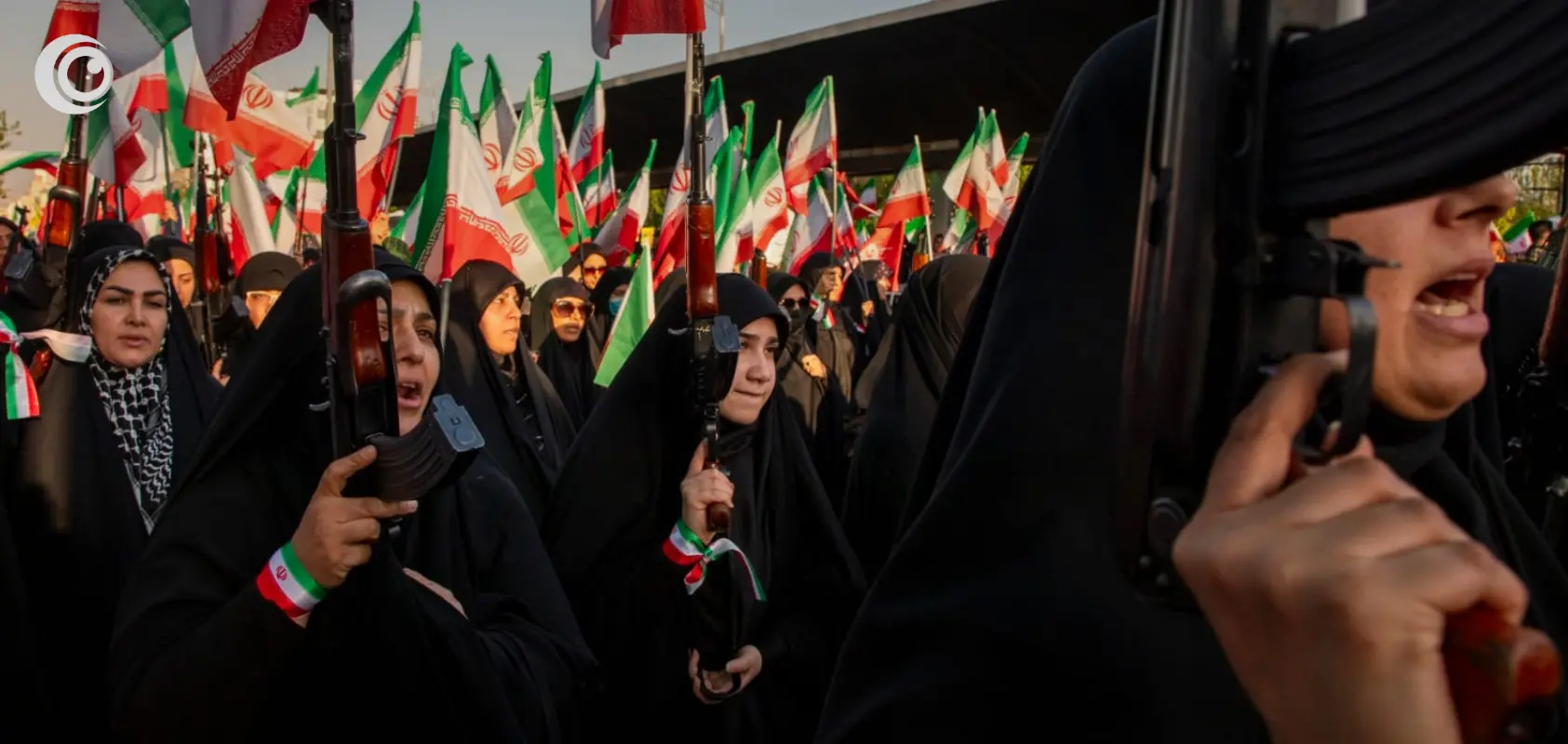
Tehran witnessed a large and highly charged all-women march on April 17, as hundreds of women gathered in the Iranian capital to express open support for the country’s leadership amid escalating tensions with the United States and Israel.
The demonstration unfolded against the backdrop of intensifying regional conflict and mounting economic pressure, particularly following the US-imposed naval blockade targeting Iranian ports. Participants filled major streets carrying banners, chanting slogans, and signaling what they described as unwavering resistance against external aggression.
The march, held in conjunction with National Army Day observances, quickly took on a broader political tone. Women from different backgrounds joined the rally, presenting a unified front as they voiced support for Iran’s military and political leadership. The demonstration emphasized national resilience at a time when Tehran is facing sustained military, economic, and strategic pressure.
Protesters strongly condemned the US blockade on Iranian ports, describing it as a direct escalation aimed at isolating the country and restricting its access to global trade routes. The blockade has disrupted shipping activity and heightened tensions in key waterways, particularly the Strait of Hormuz a critical global energy corridor that Iran has increasingly used as leverage in response.
The march also reflected growing domestic mobilization as Iran responds to weeks of confrontation involving US and Israeli military actions. Demonstrators framed their presence as part of a wider national stance, rejecting what they see as coordinated external pressure and interference.
Scenes from Tehran showed a mix of symbolic and political messaging, with participants raising slogans of defiance and unity. The visibility of women at the forefront of the rally highlighted their expanding role in public demonstrations during times of national crisis, reinforcing the narrative of collective resistance.
The rally comes as the broader conflict continues to evolve, with ongoing uncertainty surrounding maritime access, regional ceasefire efforts, and diplomatic negotiations. Iran has repeatedly stated that its actions including tightening control over strategic routes are responses to what it describes as hostile measures imposed by the United States.
As tensions persist, the April 17 march stands out as a clear signal of internal consolidation, with public demonstrations increasingly being used to project unity and resolve. The participation of women in such large numbers underscores the depth of domestic engagement as Iran navigates one of the most volatile periods in recent regional history.