
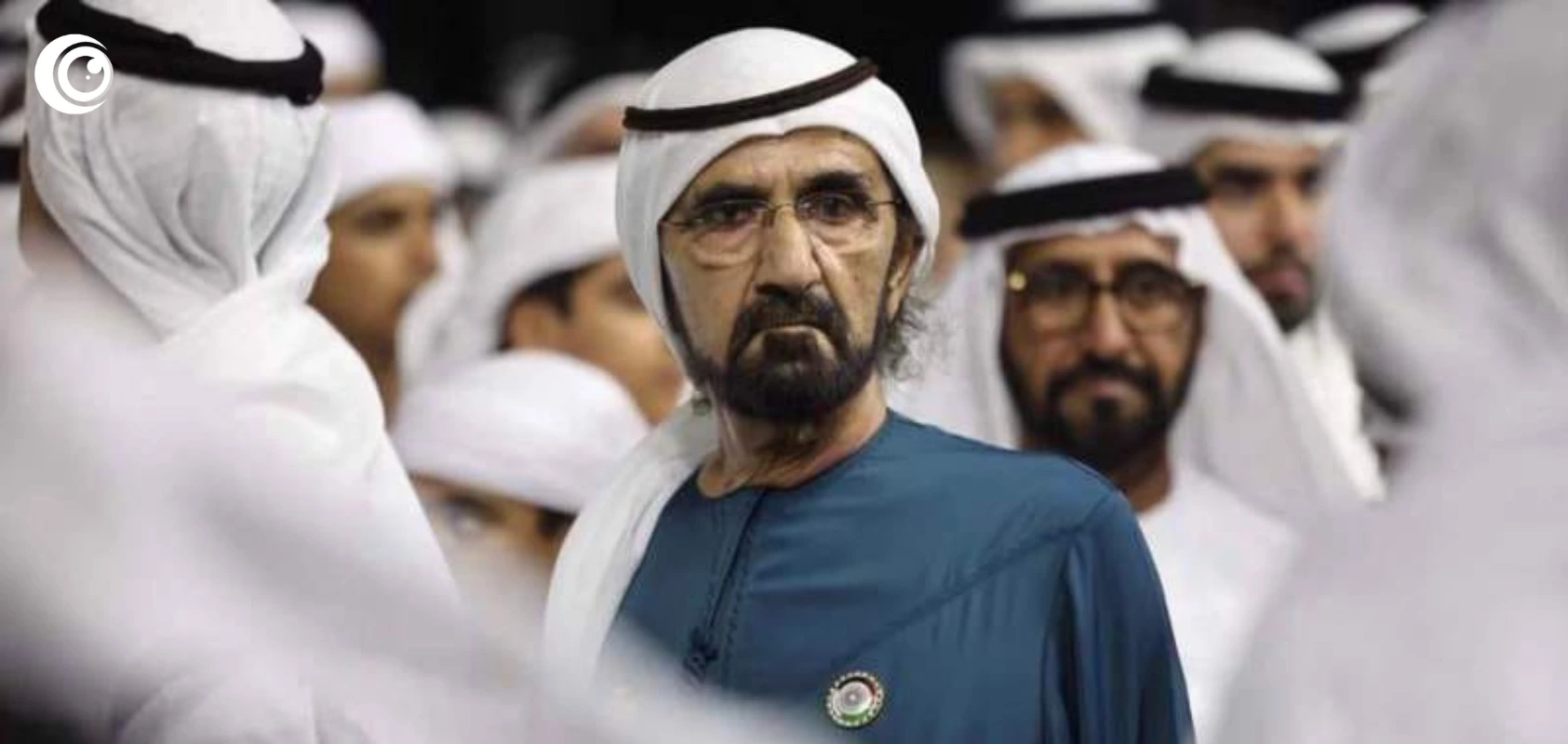

Dubai ruler and UAE Prime Minister Mohammed bin Rashid Al-Maktoum was confronted by a Sudanese man in central London over the UAE’s alleged involvement in Sudan’s ongoing war. A video posted Sunday showed the confrontation taking place as Al-Maktoum and his entourage walked through the affluent Knightsbridge area.
The Sudanese man shouted across the street, accusing the UAE of supporting violence against Sudanese people and demanding an end to what he described as Emirati involvement in the conflict. He repeatedly called on the Dubai ruler and his entourage to stop what he characterized as the killing of civilians in his country.
The confrontation escalated when a man who appeared to be part of Al-Maktoum’s Emirati entourage responded with a series of profanities and racially abusive remarks directed at the Sudanese protester. The man then crossed the road and approached him, intensifying the confrontation as the Sudanese man continued accusing the UAE of involvement in the bloodshed in Sudan.
The protester also directly invoked UAE President Mohammed bin Zayed Al Nahyan, accusing the Emirati leadership of responsibility for violence in Sudan. The confrontation occurred publicly in one of London’s most affluent districts, bringing accusations surrounding the UAE’s role in Sudan’s war directly into the presence of one of the country’s senior rulers.
The incident comes amid continuing international scrutiny of the UAE’s alleged links to the Rapid Support Forces (RSF) in Sudan. The UAE has denied supporting the RSF, while allegations of Emirati assistance to the paramilitary group have been the subject of international investigations and diplomatic disputes.
The confrontation also came days after Emirati media reported that Mohammed bin Zayed had met Al-Maktoum at the Jumeirah Carlton Tower Hotel in London. The meeting was described by Emirati media as a “fraternal meeting” reflecting the unity, mutual respect, and shared values of the UAE’s leadership.
The public confrontation highlights the growing anger among Sudanese communities over foreign involvement in their country’s devastating genocide. With Sudan’s genocide continuing to produce a severe humanitarian crisis, accusations surrounding external support for the warring parties remain a major source of international and regional controversy.