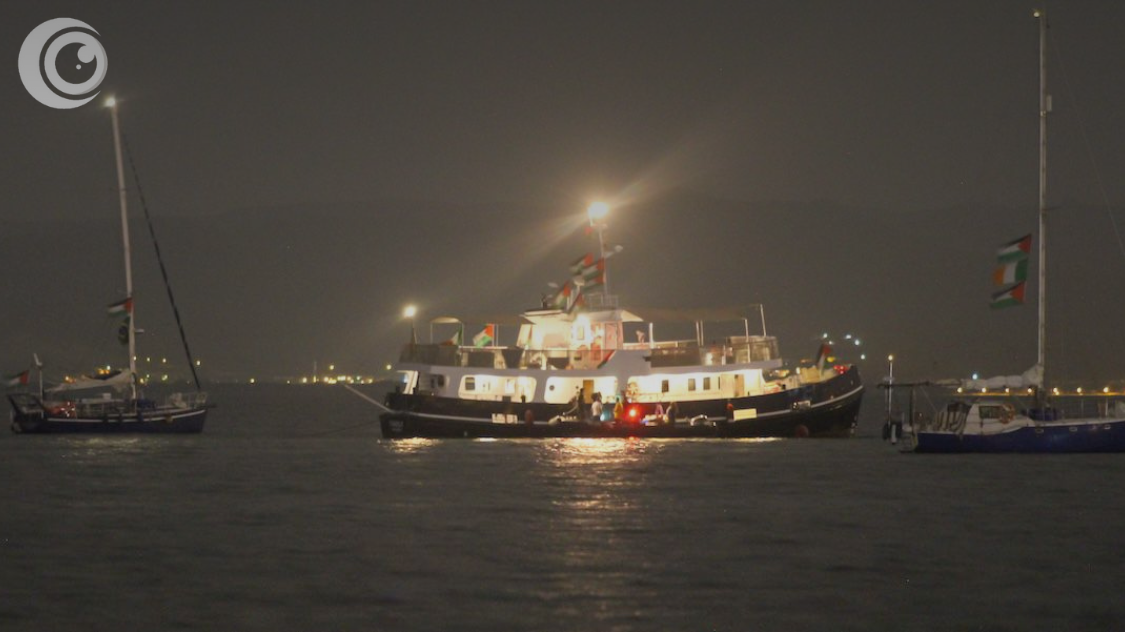
The Global Sumud Flotilla, a coalition of over 50 vessels carrying hundreds of international activists, doctors, and humanitarian delegations, has faced repeated attacks by Israeli forces overnight. Reports indicate that sound bombs, stun grenades, chemical agents, and explosive devices were deployed against the convoy in an attempt to prevent it from reaching Gaza. Despite the escalation, the flotilla continues its mission to deliver aid, medical supplies, and essential humanitarian assistance to Palestinians living under an Israeli-imposed blockade.
Israel’s use of overwhelming force against unarmed civilian vessels starkly violates principles of international humanitarian law. The repeated attacks, executed despite the flotilla’s clear humanitarian mandate, highlight Israel’s intent not merely to enforce a blockade, but to intimidate and obstruct international humanitarian efforts. Previous incidents, including the 2010 Mavi Marmara massacre, set a precedent of lethal measures against civilian maritime missions, yet the international community has largely failed to hold perpetrators accountable.
This latest escalation underscores the strategic calculus of Israel and its key backers, including the United States and the United Kingdom. Both nations have consistently provided Israel with diplomatic cover, weapons, and technology that enable such operations, often under the guise of “security cooperation.” Regional actors, including Egypt, Saudi Arabia, and the UAE, have tacitly supported these measures through silence or direct facilitation of blockades, prioritizing political alliances and economic gains over humanitarian principles. Their complicity exposes a troubling pattern: alliances and trade with Israel continue even as civilian populations in Gaza suffer systematic deprivation of food, water, medicine, and energy.
The flotilla’s confrontation has immediate strategic implications. Israel’s aggressive tactics risk escalating regional tensions and undermining the credibility of international maritime law. The attacks are designed not only to halt the flotilla but to send a broader message discouraging civil society from challenging a prolonged siege. Yet the flotilla’s persistence exposes the widening gap between global public opinion favoring humanitarian action and the entrenched policies of governments that shield Israel from accountability.
Humanitarian impacts are severe. Over two million Palestinians remain under siege in Gaza, facing acute shortages of essential supplies. Hospitals operate on failing generators, schools are at risk, and civilians continue to bear the brunt of policies that constitute collective punishment, forbidden under both international law and basic human ethics. The deliberate targeting of humanitarian missions, including flotillas attempting to deliver relief, constitutes a direct threat to civilian life and international norms governing armed conflict.
Global reactions have been mixed but telling. While international rights organizations condemn Israel’s actions and call for protection of humanitarian convoys, most Western and regional powers have either remained silent or issued weak statements. Their failure to demand accountability effectively condones aggression against civilians, betraying both moral responsibility and international legal obligations.
As the flotilla presses forward, the world is watching. The mission exemplifies civil courage against militarized obstruction and exposes the failures of states claiming to uphold justice while facilitating oppression. The coming hours and days will test Israel’s willingness to confront international scrutiny and the ability of the global community to protect humanitarian actors from attacks in international waters. The outcome may shape not only the immediate delivery of aid to Gaza but the broader trajectory of accountability, law, and human conscience in the region.