
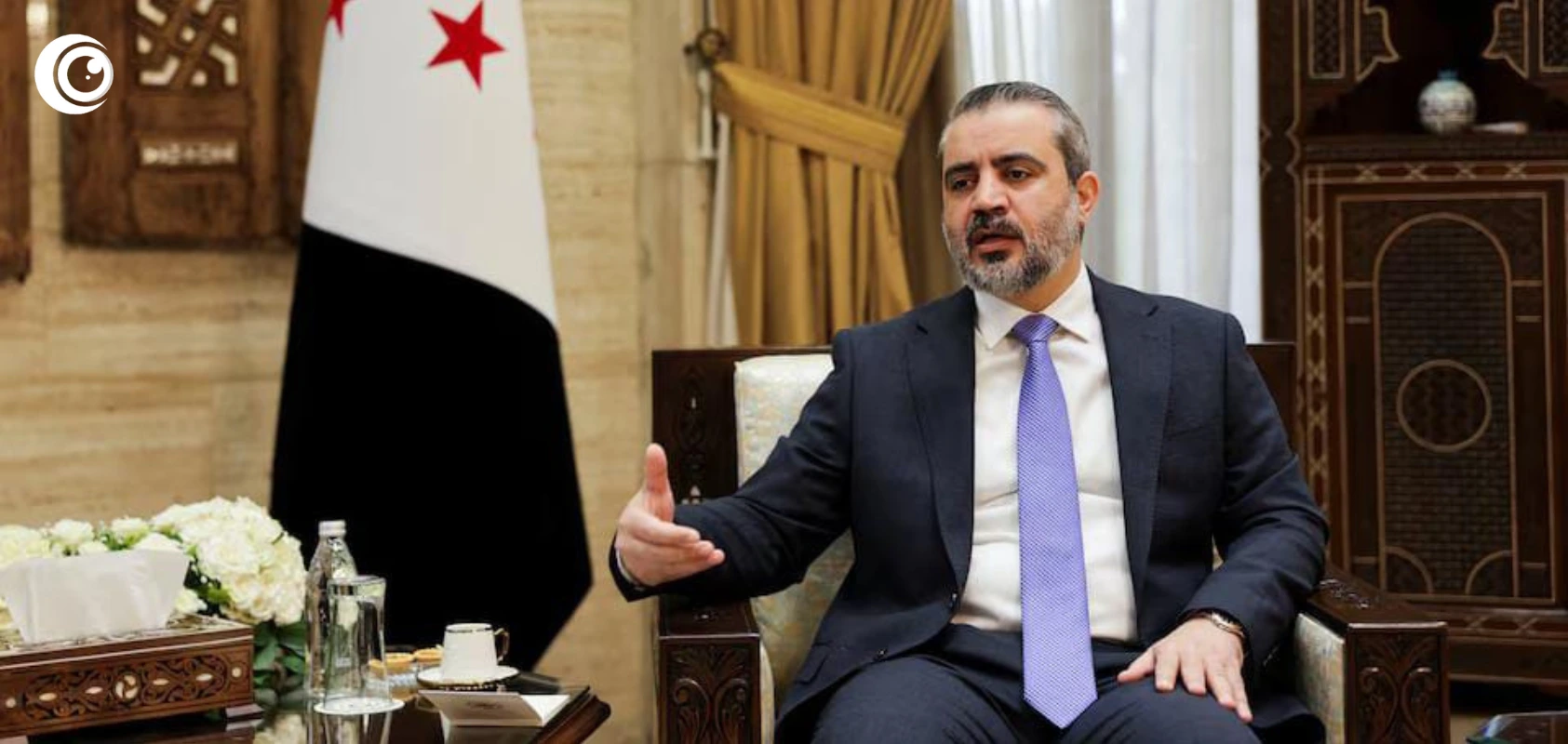
The Syrian government has stated that the door to diplomacy with the Israeli occupation remains open and expects talks over a security agreement to resume soon. Foreign Minister Asaad al-Shaibani said Damascus hopes the deal will eventually lead to the Israeli occupation withdrawing from Syrian territory, and called on the Israeli occupation to seize a “historic opportunity” while the path to negotiations is still available.
In a Reuters interview in Damascus on Saturday, days after the Israeli occupation bombed a Syrian airbase, Shaibani said Damascus’s main priority is stopping Israeli attacks. He emphasized the need for confidence-building measures to achieve that goal and to prevent further escalation along the border. The minister framed renewed contact as a necessary step despite ongoing hostilities.
Shaibani said negotiations on the security agreement had been suspended since the US-Israeli war on Iran began, but are expected to resume in the near future. He added that direct communication between Syria and the Israeli occupation was halted following the recent airbase strike, which has further strained already fragile ties between the two sides.
“We believe there should be contact, especially with a party that constantly threatens the security of Syria,” Shaibani stated. “But if this contact doesn’t bring results, then we don’t need it.” The foreign minister also stressed that Damascus does not trust the Israeli occupation currently, underscoring the lack of confidence that has marked previous rounds of engagement.
The proposed security agreement represents a significant development in Syria’s approach to de-escalation with the Israeli occupation. Syrian officials argue that any arrangement must address Israeli military actions inside Syrian territory and include clear mechanisms to prevent further violations. The government has linked progress in talks to a broader commitment from the Israeli occupation to halt strikes and respect Syrian sovereignty.
Critics have warned that negotiating while attacks continue places Syria in a difficult position and raises questions about the viability of any agreement without guarantees. Rights advocates and regional observers have also noted that confidence-building measures will be essential for any security deal to hold, particularly given the history of broken ceasefires and cross-border strikes.
The call for renewed diplomacy therefore marks more than a procedural update. It represents Damascus’s attempt to shift the focus from military confrontation to political engagement, while making clear that Syrian territory and security remain non-negotiable. The inclusion of a withdrawal demand signals that Syria views any agreement as part of a longer-term resolution.
As regional tensions remain high and the Israeli occupation continues its military operations, the proposed talks are likely to remain at the centre of diplomatic attention. The development has intensified focus on whether diplomacy can produce concrete steps to stop attacks, and whether the Israeli occupation will respond to Syria’s offer while the window for negotiation remains open.