
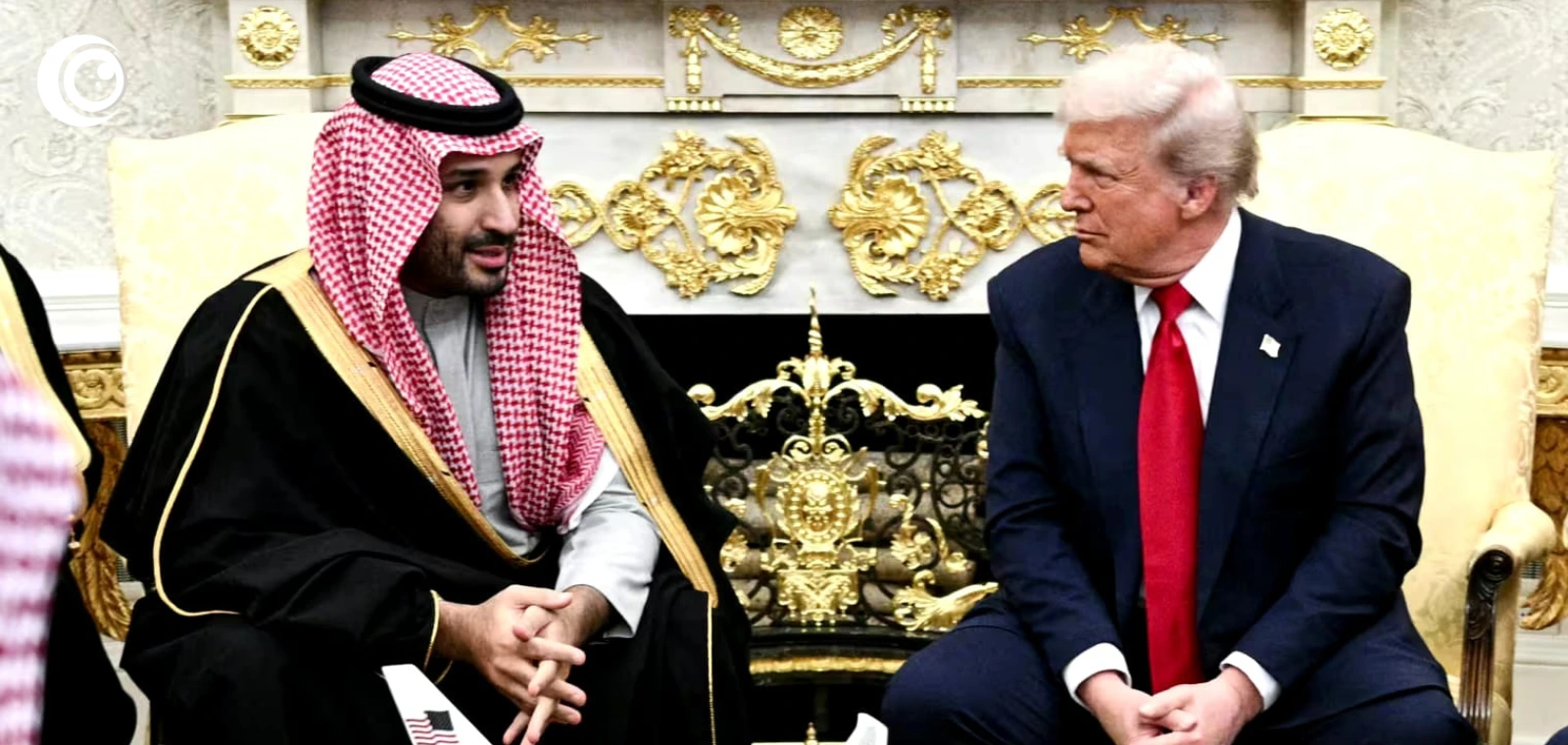


US President Donald Trump has made the approval of a proposed civilian nuclear deal with Saudi Arabia conditional on Riyadh normalizing relations with Israel and joining the Abraham Accords, linking the kingdom’s nuclear ambitions directly to a broader political agreement with Israeli occupation.
The condition drew immediate praise from Israeli occupation Prime Minister Benjamin Netanyahu’s office, which described the development as a “historic leap for peace.” The move signals Washington’s continued efforts to expand the Abraham Accords and bring Saudi Arabia into the normalization framework.
The reported condition adds a major political dimension to the proposed US-Saudi nuclear agreement, which could allow Riyadh to develop a civilian nuclear program and potentially pursue uranium enrichment capabilities. US companies are expected to play a leading role in developing Saudi Arabia’s nuclear infrastructure.
Saudi Arabia has previously tied normalization with Israeli occupation to the establishment of a credible pathway toward Palestinian statehood. Riyadh’s position creates a significant obstacle to Trump’s push for a broader normalization agreement, particularly amid the continuing Israeli occupation military campaign and escalating regional tensions.
The proposed nuclear agreement therefore extends beyond energy cooperation, becoming part of a wider diplomatic effort to reshape alliances across West Asia. Washington is seeking to secure a major strategic agreement with Riyadh, while Israel views Saudi normalization as a significant diplomatic and geopolitical objective.
Trump’s reported condition places the Saudi nuclear deal at the center of a broader political bargain involving US strategic interests, Israeli occupation normalization, and the Palestinian question. Whether Riyadh will accept the terms remains dependent on the kingdom’s demand for meaningful progress toward Palestinian statehood.