
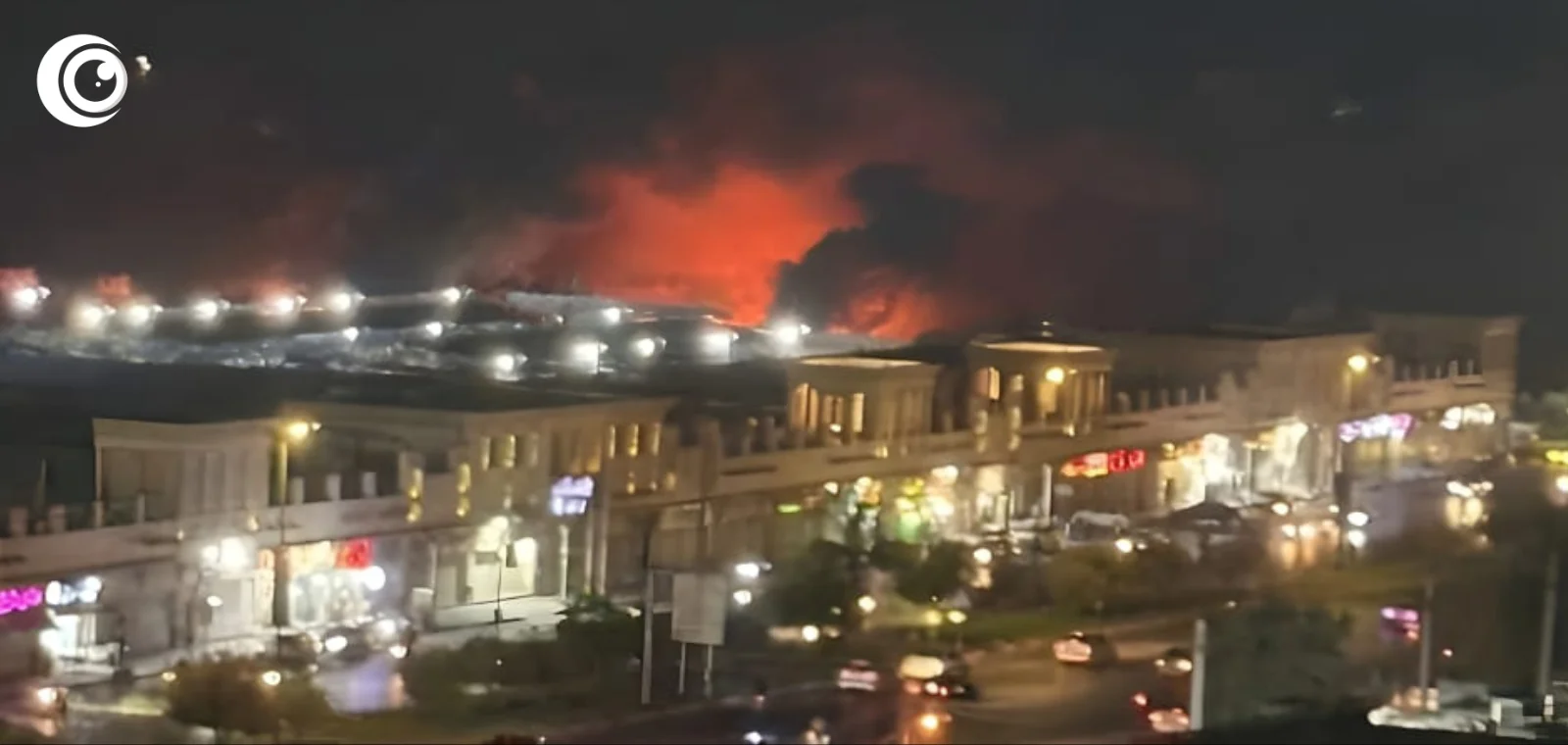



A sudden wave of American airstrikes struck critical military positions and energy infrastructure across southern Iran, as the country marks the concluding stages of the state funeral ceremonies for late Supreme Leader Ayatollah Ali Khamenei. The multi-pronged bombardment targeted vital coastal defense positions and major oil terminals, forcing Iranian President Masoud Pezeshkian to cut short an official state visit to Iraq and return immediately to the capital.
The strikes focused heavily on strategic chokepoints along the Persian Gulf and the Strait of Hormuz, hitting key installations at Bandar Abbas, Sirik, and Qeshm Island. Anti-aircraft batteries heavily engaged incoming projectiles over Bandar Abbas, which serves as the central command hub for Iran’s conventional naval forces and the Islamic Revolutionary Guard Corps maritime units.
Simultaneously, a prolonged aerial assault struck Kharg Island, the country’s primary oil export hub that manages approximately 90 percent of Iran’s crude shipments. Ground footage and satellite data emerging from the region show a level of destruction and military intensity unmatched since the conventional conflict earlier this year.
The expanding security crisis prompted immediate emergency protocols within the Iranian leadership. President Pezeshkian, who was attending the final regional funeral processions alongside leaders in Iraq, left his diplomatic itinerary under high security. Defense tracking data showed the presidential aircraft crossing back into domestic airspace under an immediate, high-alert escort of Islamic Republic of Iran Air Force fighter jets before landing at a heavily fortified airport in Tehran.
The large-scale military actions effectively end the fragile ceasefire established between Washington and Tehran following the February 28 strikes. Occurring while massive crowds occupy major urban centers for the final phases of the multi-city funeral procession, the timing of the U.S. operation introduces acute instability into the regional security landscape. While state media channels condemned the attacks as a violation of territorial sovereignty, defense officials in Tehran confirmed that frontline units along the southern coastline have shifted to an active wartime posture.